
Sparrow-Like Birds: Small and Agile Flyers
When you watch sparrow-like birds, you notice their small size and agile flight. Birds like the House Sparrow and American Tree Sparrow have strong bodies that help them move easily through different areas. They can adapt well and show great foraging skills. These birds play important roles in their ecosystems. By exploring how they behave and their sounds, we can learn more about their contributions to nature.
Key Takeaways
Sparrow-like birds have small and strong bodies. These traits help them fly quickly and easily. They have different types of beaks for various feeding methods, adapting their habits to find food effectively. Many of these birds have streaky feathers that blend with their surroundings, which helps them avoid predators.
During breeding seasons, they show complex behaviors, such as nesting together and making calls to mark their territory. These actions reflect their social nature. Additionally, sparrow-like birds play key roles in their ecosystems. They help disperse seeds and control pests, contributing to the balance of their environment. Their presence is vital for healthy ecosystems.
Unique Physical Characteristics of Sparrow-Like Birds

Sparrow-like birds are small and sturdy. They've different physical traits that make them unique. For example, the House Sparrow has a strong, pointed beak that helps it break seeds. In contrast, the Chipping Sparrow has a thin beak that's good for catching insects.
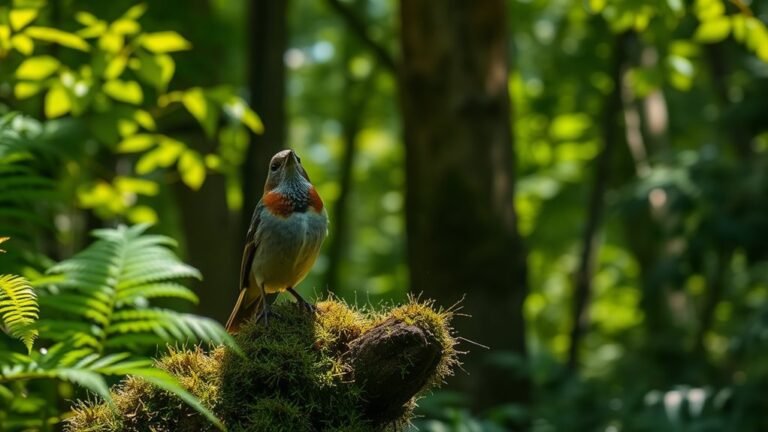
Feather patterns also differ. The Song Sparrow has streaky brown and gray feathers, which help it blend into its surroundings. The American Tree Sparrow features a bright rust-colored crown that stands out.
These traits help the birds survive in their environments and play specific roles in their ecosystems. Each species contributes to the avian community in its own way.
Habitat Diversity and Adaptation
Sparrow-like birds have adapted to live in several different habitats. Each species has specific preferences that suit their needs. Here are four examples:
- House Sparrow – This bird prefers urban areas and often nests in human buildings.
- Song Sparrow – This species thrives in wetlands and dense shrublands, where it uses thick plants for nesting.
- White-crowned Sparrow – It likes open fields and brushy places, where it finds seeds to eat.
- Juniper Titmouse – This bird lives in evergreen woodlands, relying on trees for shelter and food.
These adaptations show how sparrow-like birds can survive and succeed in different environments.
Their ability to adjust to various habitats illustrates their connection to many ecosystems.
Behavior and Social Interactions

Sparrow-like birds show interesting behaviors and social interactions that help them communicate and live together. During breeding season, these birds form groups. For example, house sparrows create close communities.
Males call from perches to mark their territory and attract mates. These birds nest nearby each other. This nesting habit makes them feel secure and strengthens their social bonds.
Their interactions involve both cooperation and competition, which are important for their survival. Observing these behaviors can help you appreciate their social systems.
Their reliance on one another for nesting and communal living highlights their rich lives.
Vocalizations and Communication
Vocalizations are important for house sparrows and grass sparrows. These birds use different sounds to communicate. They chirp, tweet, and trill to establish territory, attract mates, and connect with each other. They can also mimic environmental sounds, which helps them communicate in various settings.
Here are key aspects of their vocalizations:
- Territorial Calls: Males use these calls to show dominance and defend their territory.
- Mating Songs: Birds sing intricate patterns to attract mates.
- Alarm Calls: They produce short sounds to alert others of danger.
- Social Interactions: Soft chatter helps them bond during group activities.
Understanding these sounds helps us appreciate their social lives.
Ecological Importance and Conservation Strategies

As cities grow, sparrow-like birds, like house sparrows and grass sparrows, show their ecological importance.
These birds help maintain balance in ecosystems by spreading seeds and assisting in pollination. They feed on insects and seeds, helping to control pests and increase plant diversity.
However, habitat loss threatens their survival.
You can help these birds by joining habitat restoration projects. Create beneficial environments with native plant gardens and suitable nesting areas.
Raising community awareness about their ecological roles can also boost conservation efforts. By protecting sparrow-like birds, you support the interconnected life that surrounds us.
Frequently Asked Questions
What Specific Diets Do Sparrow-Like Birds Typically Have?
Sparrow-like birds have varied diets based on their species and environment. Most of them primarily eat seeds, but some also consume insects and other food sources. Their preferences often include small seeds, like those from grasses or weeds. Some species may forage for additional protein by catching insects. Overall, their foraging habits help them meet their nutritional needs effectively.
How Long Do Sparrow-Like Birds Usually Live in the Wild?
In the wild, sparrow-like birds usually live for 2 to 5 years. Their lifespan can vary due to factors like predation, competition, and the environment. Each species faces different challenges that affect how long they survive in their habitats.
What Are Common Predators of Sparrow-Like Birds?
Common predators of sparrow-like birds include hawks. These birds of prey use aggressive hunting methods to catch sparrows in flight. Additionally, snakes and rodents pose threats to sparrow nests. They can harm eggs and young birds, affecting the sparrow population and their ability to reproduce successfully. Understanding these threats helps us appreciate the challenges sparrow-like birds face in their environments.
Can Sparrow-Like Birds Migrate Long Distances?
Yes, sparrow-like birds can migrate long distances. These birds have special flight abilities that help them travel efficiently. For example, the White-throated Sparrow shows great stamina and teamwork during these seasonal trips. Their journeys are impressive, demonstrating how well they adapt to changing environments.
How Do Sparrow-Like Birds Find Their Mates?
Sparrow-like birds use courtship behaviors to find mates. They perform displays and make specific mating calls to attract partners. These methods vary by species and help them connect with potential mates in their habitats. Courtship is an important part of their reproductive process and plays a key role in ensuring successful pair bonding.

Ava is a bird enthusiast and nature lover who has spent countless hours observing and learning about the fascinating world of birds. With a passion for sharing her knowledge and inspiring others to appreciate the beauty of birds, Ava writes about her experiences and insights on avianadmirer.com.