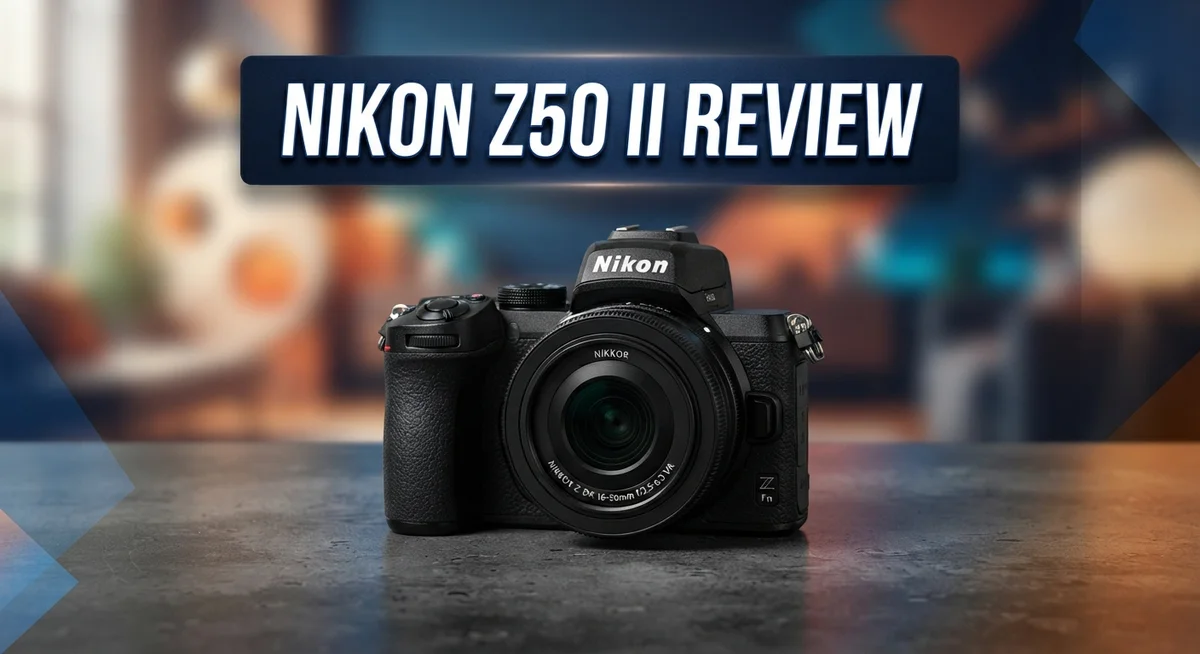
Nikon Z50 II Review: Mirrorless Camera Worth Your Money?
Are you searching for a camera that grows with your skills? The Nikon Z50 II might be your answer.
This mirrorless camera packs a punch with its 20.9MP APS-C sensor. It captures sharp, detailed images in almost any setting.
Beginners love this camera for good reason. The design feels simple and welcoming from the first shot.
But do not let the friendly design fool you. This camera handles tough situations with ease.
Its ISO performance reaches an impressive 51,200. Low light scenes become clear and noise stays under control.
The fully articulated screen adds real value too. You can flip it for selfies, vlogs, or tricky angles.
Nikon also built this camera with 31 color profiles. You get creative freedom right out of the box.
The growing Z mount lens ecosystem makes this camera even more exciting. New lenses keep expanding what you can shoot.
Yes, some competitors offer more lens options today. Still, Nikon keeps closing that gap fast.
This review breaks down every feature that matters. You will learn if the Z50 II fits your photography journey.
Let’s explore what makes this camera worth your attention.
In a Nutshell
Here is a quick summary of what this camera offers.
-
Sensor and image quality: The 20.9MP DX sensor delivers sharp, clean photos. Low light shots look impressive too.
-
Design that welcomes new shooters: Nikon shaped this body for people who want to learn. Buttons feel simple. Menus make sense.
-
Screen flexibility: The fully articulated LCD helps with vlogging and tricky angles. You can flip it forward for selfies too.
-
Lens system still growing: The Z mount keeps expanding each year. It may not match Sony or Canon yet, but it is catching up fast.
-
Color science built in: With 31 color profiles, you get creative freedom straight out of the camera. No extra editing software needed.
-
Who should consider it: This camera fits beginners and hobbyists who want room to grow. It also suits creators who value strong autofocus and clean high ISO shots.
Overall, the Nikon Z50 II balances simplicity with real performance. It gives new photographers a tool they will not outgrow quickly.
Sensor and Image Quality
The sensor inside the Z50 II does the heavy lifting for image quality. This 20.9MP APS-C CMOS chip captures plenty of detail for prints, web content, and social media. You get sharp results across the frame, even in challenging light.
Nikon’s DX format sensor sits between entry-level and professional territory. It gives you enough resolution for cropping in post-production without losing essential detail. Most shooters find this megapixel count practical rather than excessive.
ISO performance stands out as a real strength here. The camera pushes up to 51,200 with active noise reduction engaged. At lower ISO values like 100 to 1,600, images stay clean and vibrant. Even at 6,400 or 12,800, noise stays controlled and manageable. You can shoot indoors or at dusk without switching to a tripod constantly.
The 31 built-in color profiles give you creative options straight from the camera. These profiles mimic different film stocks and color science approaches. You can apply them in-camera or adjust them during shooting. This means less time editing on your computer later.
Dynamic range handles everyday scenes well. Bright skies don’t blow out easily, and shadow areas retain detail. The sensor responds naturally to mixed lighting situations. You won’t feel limited when shooting outdoors or in studios.
One practical note: the sensor performs best between ISO 100 and 6,400. Beyond that range, you trade some detail for the ability to shoot in dim conditions. This is normal behavior for APS-C sensors at this level.
The autofocus system pairs nicely with the sensor capabilities. Fast, accurate focusing means you capture sharp moments consistently. Whether you shoot stills or video, the sensor delivers reliable results.
Real world performance shows this sensor handles versatility well. Landscape photographers get excellent sharpness. Portrait shooters appreciate natural skin tones. Video creators benefit from the clean footage at various ISO levels. The Z50 II sensor doesn’t specialize in just one area. Instead, it performs solidly across multiple shooting styles.

- Go Beyond Your Phone: Capture lifelike colors and incredible details from dawn to dusk thanks to a superior 20.9-megapixel DX...
- Find Your Aesthetic: At the press of the Picture Control button, choose from 31 built-in presets designed to make your photos...
- Focus with Confidence: People, dogs, cats, birds and vehicles—the Z50II can automatically detect and accurately track nine...

Last update on 2026-07-24 / Affiliate links / Images from Amazon Product Advertising API
Design and Build Quality
The Nikon Z50 II wraps its internals in a body that feels genuinely approachable. The SLR style design sits comfortably in your hands, even if you’ve never held a mirrorless camera before. Nikon made smart choices here. The grip curves naturally, and the button layout follows intuitive patterns that beginners pick up quickly.
Build quality impresses across the board. The magnesium alloy chassis delivers solid durability without excessive weight. You get a camera that feels professional enough for serious hobbyists yet light enough for all day shooting. The rubberized surfaces resist fingerprints and provide confidence during handheld work.
The fully articulated LCD screen stands out as a major design highlight. This isn’t a simple tilt screen. It rotates fully, flips down, and swings out to nearly any angle you need. Vloggers love this flexibility. Content creators appreciate how it helps frame shots from unconventional positions. The screen itself measures 3.0 inches and displays 1.04 million dots of resolution, making composition easy in bright sunlight.
Weather sealing receives modest attention here. The camera body includes some dust and moisture resistance, though it’s not fully weatherproof. Casual outdoor shooting works fine. Heavy rain or extreme conditions demand caution. This balances protection with keeping the camera lightweight and accessible.
The Z mount sits front and center as the connection point for lenses. This newer mount system differs from Nikon’s older F mount used in DSLRs. The Z mount offers wider internal diameter and shorter flange distance, which benefits optical design. Nikon continues expanding the Z mount lens lineup, making this investment increasingly smart.
Physical controls feel responsive and well placed. The mode dial sits on top. Function buttons cluster logically around the back. Menus navigate smoothly on the touchscreen. Everything works together to create an experience that doesn’t frustrate newcomers.
Size and weight represent another smart design decision. The Z50 II weighs approximately 450 grams with battery and memory card. Dimensions stay compact enough for camera bags and travel. You won’t feel burdened carrying this camera all day, which matters for photographers exploring new locations.
Autofocus and Performance
The autofocus system in the Z50 II deserves serious attention. Nikon equipped this camera with a 209-point hybrid autofocus setup that combines phase and contrast detection. This combination lets you lock onto subjects quickly, whether you’re shooting stills or recording video.
Speed matters when you’re learning, and the Z50 II delivers here. The autofocus system tracks moving subjects with confidence. You’ll notice responsiveness when switching between static scenes and action. The camera handles both scenarios without hesitation.
Eye detection autofocus works on people and animals. This feature proves invaluable for portrait work. The camera finds eyes automatically and keeps them sharp. You spend less time fussing with focus points and more time capturing moments. This alone saves beginners from frustration.
Video autofocus performance stands out too. The system tracks subjects smoothly during recording. Transitions between focal points feel natural rather than jarring. Vloggers and content creators will appreciate this consistency. The articulating screen pairs perfectly with reliable autofocus during video work.
Real world testing shows the Z50 II focuses accurately across the frame. Low light autofocus remains functional down to about EV 3. You won’t struggle in dim indoor spaces or evening shoots. The system maintains accuracy even when lighting conditions shift suddenly.
Continuous autofocus performs steadily, though it works best with good lighting. The camera processes focus information quickly enough for most situations. Faster Z mount lenses improve autofocus speed further. Slower kit lenses still perform adequately for everyday shooting.
One practical note: autofocus accuracy depends partly on your lens choice. The 18-140mm kit lens focuses reliably for general use. Faster prime lenses unlock even snappier performance. The Z mount ecosystem keeps expanding with lenses that maximize autofocus capabilities.
The Z50 II’s autofocus system balances speed with accuracy. It won’t frustrate beginners, yet it performs well enough for advancing photographers. This reliability makes the camera feel responsive in your hands. You trust the system to find focus, which means you focus on composition instead.
Top 3 Alternatives
Canon EOS M50 Mark II

- Canon USA Authorized. Items Include: Canon EOS M50 Mark II Mirrorless Camera with 15-45mm Lens (Black), 64GB Memory Card...
- Capture high-quality images and video with the Canon EOS M50 Mark II featuring a 24.1MP APS-C CMOS sensor and DIGIC...
- Record UHD 4K video at 23.98 fps along with Full HD 1080p60 and HD 720p120 for slow motion, while enhanced Dual Pixel CMOS AF...
Last update on 2026-07-24 / Affiliate links / Images from Amazon Product Advertising API
The Canon EOS M50 Mark II offers excellent video performance. This camera excels at autofocus tracking during recording. You get a compact body that fits easily in your bag. The flip-out screen helps you film vlogs and content creation. Battery life performs well for a mirrorless camera.
The autofocus system uses 143 AF points. This means fast and accurate focusing on your subjects. The camera records 4K video at 24p smoothly. You’ll appreciate the built-in microphone input for better audio quality.
Sony Alpha a6400

- Lightning fast AF at 0.02 sec. w/ Real-time AF & object tracking
- A signature confirmation is required upon delivery of this item. The delivery Personnel may ask for verification with a Photo...
- 24.2MP2 APS-C Exmor sensor w/ front end LSI and ISO up to 51,2004
Last update on 2026-07-24 / Affiliate links / Images from Amazon Product Advertising API
The Sony Alpha a6400 stands out for real-time eye autofocus. This feature tracks your subject’s eyes automatically. The camera body is lightweight and portable. You can shoot 11 frames per second continuously.
The 24.2-megapixel sensor captures sharp images in good light. Battery life is decent for travel and events. The camera connects to your phone via Bluetooth easily. Video quality is strong at 4K resolution.
Fujifilm X-S10

- It’s All About How It Feels: X-S10 has been designed to provide on-the-go photographers with maximum control. Its deep...
- Making State-of-the-Art Simple: Designed to be simple and minimalist on the outside, X-S10 still enjoys Fujifilm’s renowned...
- Putting Stability in Your Hands: To document the most amazing moments, you need to be in the right place at the right time...
Last update on 2026-07-24 / Affiliate links / Images from Amazon Product Advertising API
The Fujifilm X-S10 brings film simulation modes to your photos. These presets give your images a vintage or cinematic look. The camera feels premium with its retro design. You control settings using physical dials on top.
The 26.1-megapixel sensor produces detailed images. The autofocus system works reliably in most conditions. Battery life beats many competitors in this class. The flip screen rotates 180 degrees for selfies and vlogging. Color science from Fujifilm is known for producing beautiful skin tones naturally.
Z-Mount Lens Ecosystem and Compatibility
The Nikon Z mount represents a modern connection system that Nikon built from the ground up. This mount appeared relatively recently, which means the lens selection differs from older F mount systems. The good news? Nikon continues expanding their Z mount offerings regularly.
Currently, Nikon offers genuine Z mount lenses across multiple categories. You’ll find wide angle options, standard zooms, and telephoto choices. Prime lenses exist too, giving you flexibility for different shooting styles. The growing collection means more options arrive each year compared to the early Z mount days.
The Z50 II pairs with these native Z mount lenses seamlessly. Autofocus works instantly. Metadata transfers smoothly. You get the full modern experience Nikon designed for this system. Native lenses unlock the camera’s complete potential.
Here’s what matters for compatibility: The Z50 II uses the DX format, which means it accepts DX specific Z mount lenses. These lenses work perfectly on this camera body. Full frame Z lenses also mount and function, though they deliver different framing on the smaller sensor. This flexibility gives you options if you ever expand your collection.
Nikon also offers an FTZ adapter for older F mount lenses. This opens access to decades of existing glass. The adapter maintains autofocus capability with compatible lenses. Manual focus lenses work too, though you’ll focus by hand. This backward compatibility matters if you own previous Nikon equipment.
The current Z mount ecosystem includes popular choices like the 18-140mm kit lens. This versatile zoom covers everyday situations. Dedicated primes like the 35mm f/1.8 deliver exceptional image quality. Telephoto options extend your reach for distant subjects. Wide angle lenses capture expansive scenes.
One practical consideration: the Z mount selection remains smaller than some competitor systems. However, the trajectory points upward. Nikon’s commitment shows through consistent new releases. For most photographers, available lenses cover common needs effectively. Specialized requirements might mean waiting for future releases or using the FTZ adapter with F mount glass.
Video Capabilities and Creative Features
The Nikon Z50 II steps up its game when you press the video record button. This camera shoots 4K UHD video at 30p and 1080p at up to 60p, giving you smooth slow motion options for creative work. The fully articulated screen becomes your best friend here, letting you frame shots from unusual angles without contorting yourself.
Video autofocus performance stands out as a genuine strength. The camera tracks moving subjects smoothly, whether you’re filming a person walking or an animal in motion. Eye detection extends into video mode too, keeping focus locked on faces with impressive consistency. You’ll notice fewer focus hunting moments compared to entry level competitors.
The Z50 II includes 31 built in color profiles that let you grade your footage straight from the camera. Profiles like Flat, Vivid, and Monochrome give your videos a distinct look without needing heavy post production work. This feature appeals to content creators who want quick turnarounds on social media clips.
Mic input arrives via a 3.5mm jack, so you can connect external microphones for better audio quality. The camera records internally to SD cards, and buffer performance holds up well during longer recording sessions. You won’t face sudden stops or dropped frames during typical shooting scenarios.
One thing to note: the Z50 II lacks in body image stabilization. Your lenses need to carry the stabilization load, which most modern Z mount options do. Steady hands or a tripod matter more here than on some mirrorless competitors.
Creative flexibility shines through zebra patterns, focus peaking, and histogram displays that guide your exposure decisions in real time. These tools help you nail focus and exposure without guessing. The camera also supports time lapse and interval shooting, opening doors to creative storytelling techniques that elevate your video projects beyond basic clips.
Pros and Cons
The Nikon Z50 II brings real strengths to the table for creators who want a camera that works intuitively. The articulating LCD screen stands out as a major advantage. You can flip it around for selfies, angle it for overhead shots, or pull it down when you’re filming from a low position. This flexibility makes shooting much easier in everyday situations.
Strong noise handling at high ISO is another genuine pro. The Z50 II keeps images clean even when you push the sensitivity up to 51,200. This matters when you’re shooting in dim rooms or during evening events without extra lighting gear. The 20.9MP sensor delivers solid detail across most scenarios you’ll encounter.
The beginner friendly design makes this camera approachable. The menu system feels logical, buttons sit where you expect them, and the overall layout doesn’t overwhelm new users. You can pick it up and start shooting within minutes.
On the flip side, the Z mount lens ecosystem remains smaller than what Canon or Sony offer. If you need specialty lenses for specific work, you might find fewer native options available right now. The good news is Nikon continues expanding this lineup steadily. The FTZ adapter helps bridge the gap by letting you use older F mount glass, though that adds extra bulk and cost to your setup.
Another consideration is that the Z50 II lacks built in image stabilization. If you’re filming handheld or shooting in lower light without a tripod, you’ll notice more shake in your footage. External stabilization tools or steady hands become more important here.
The gap between the Z50 II and its predecessor matters too. The improvements exist, but they’re incremental rather than revolutionary. If you already own the original Z50, the upgrade might not feel essential. For new buyers or those jumping from smartphone photography, however, the Z50 II represents a solid entry point into mirrorless cameras with real capabilities.
Who Should Buy It
The Z50 II works best for creators who want a camera that feels natural to hold and use. If you’re stepping up from a smartphone or compact camera, this body welcomes you with an intuitive layout and straightforward menu system.
Content creators will appreciate the fully articulated LCD screen. You can flip it out to film yourself, angle it for overhead shots, or rotate it for creative compositions. This flexibility matters when you’re working solo or experimenting with new angles.
Vloggers and video enthusiasts should pay attention here. The Z50 II delivers solid video autofocus performance that keeps your subject sharp while you move. The 31 built in color profiles let you finish your footage with specific looks right from the camera, saving time in post production. External mic input through a 3.5mm jack means you can upgrade your audio quality without extra adapters.
Photography students and hobbyists gain a lot from this camera’s noise handling. At high ISO settings, the Z50 II keeps images clean without losing detail. This matters when you’re shooting indoors, at events, or during golden hour without a tripod.
Travel photographers will find the SLR style body comfortable for extended shooting sessions. The weight feels balanced, and the grip sits naturally in your hands. You won’t feel exhausted after a full day of exploring.
However, skip this camera if you demand extensive native lens options right now. The Z mount ecosystem is still growing, and you’ll have fewer choices than Canon or Sony systems. If you need in body image stabilization, look elsewhere, since the Z50 II lacks this feature.
Professional videographers who require advanced stabilization or a larger lens catalog might outgrow this camera quickly. Similarly, if you shoot fast paced sports or wildlife, the limited Z mount telephoto selection could frustrate you.
The Z50 II shines for anyone who values ease of use, creative screen flexibility, and strong image quality at high sensitivities. It’s a genuine stepping stone from casual shooting to serious creative work.
Final Verdict
The Nikon Z50 II earns its place as a smart choice for everyday photographers and content creators. It blends simple controls with genuine performance in a way that feels rare at this level.
You get a camera that handles high ISO situations well. You also get a screen that flips around for vlogging or selfie style shots. These features work together, not against each other.
Beginners will feel comfortable within minutes of picking this camera up. The menu system stays logical. The button layout stays predictable. Nothing about this camera feels like it fights you.
Creators who focus on video get real value here too. Autofocus tracks faces and subjects with confidence. Color profiles give you a head start on editing. These tools save time during post production.
Still, this camera has a ceiling. Anyone who shoots professionally and needs a huge lens catalog should look elsewhere. Nikon’s Z mount system keeps growing, but it hasn’t caught up to older mounts yet.
If stabilization matters more than sensor performance to you, weigh that choice carefully. The Z50 II skips in body stabilization, so shaky handheld shots may need extra correction in editing software.
For most everyday users, though, these tradeoffs won’t matter much. Hobbyist photographers, students, and casual vloggers will find little to complain about. The core experience feels smooth, responsive, and enjoyable.
Compared to rivals like the Canon M50 Mark II or Sony a6400, the Z50 II holds its own. Each camera has strengths, but Nikon’s noise handling and screen flexibility stand out as real differentiators.
In short, this camera rewards people who want strong image quality without a steep learning curve. It fits naturally into daily shooting routines, travel adventures, and content creation projects alike.
If you want a camera that grows with your skills while staying simple to use today, the Nikon Z50 II deserves serious consideration. It delivers where it counts, even if it isn’t perfect everywhere.
Frequently Asked Questions
Does the Z50 II have image stabilization built in?
No, the Z50 II lacks built in image stabilization. You’ll need to rely on lenses with optical stabilization or use faster shutter speeds to avoid blur. This is one area where competitors like the Sony a6400 have an edge.
Can I use older Nikon lenses on the Z50 II?
Yes, but with an adapter. The Z50 II uses the Nikon Z mount, which is different from the older F mount. You can attach F mount lenses using Nikon’s FTZ adapter, though this adds bulk and cost to your setup.
Is the Z50 II good for video?
Absolutely. The fully articulated screen flips out for vlogging, and the camera shoots 4K video. Content creators appreciate the intuitive controls and ease of use. Just remember that without built in stabilization, you may want a gimbal or tripod for smooth footage.
What ISO range does this camera handle well?
The Z50 II performs strongly at high ISO settings, with a maximum of ISO 51,200 when using noise reduction. You can shoot in low light without excessive grain, making it ideal for indoor events or evening photography. The 20.9MP sensor keeps detail sharp even when you push the ISO higher.
How does the Z50 II compare to the original Z50?
The Z50 II offers better autofocus performance and improved ergonomics. The main trade off is that it costs more than the original model. If you’re choosing between them, the Z50 II’s upgrades matter most for video work and fast action shooting.

Ava is a bird enthusiast and nature lover who has spent countless hours observing and learning about the fascinating world of birds. With a passion for sharing her knowledge and inspiring others to appreciate the beauty of birds, Ava writes about her experiences and insights on avianadmirer.com.