Florida Birds: Complete Species Guide
Florida has over 500 bird species. These birds live in different habitats, such as coastal areas, wetlands, and cities. Each habitat has unique bird populations. To help protect rare species, it is important to learn about their nesting and feeding habits. As you observe these birds, think about how your findings can enhance your appreciation for them and their environments. What will you discover about their lives?
Key Takeaways
Florida is home to over 500 bird species. This diversity attracts birdwatchers to various habitats like wetlands, forests, and coastal areas.
On the coast, you can find birds such as the Black Skimmer and Royal Tern. These birds have unique nesting habits that help them thrive on sandy beaches.
The Everglades hosts species like the Great Egret and Roseate Spoonbill. These birds show how vital wetland habitats are for wildlife.
In urban areas, birds like pigeons and sparrows adapt well to city life. They search for food in streets and parks.
Local birdwatching groups offer resources, including apps and workshops. These tools make birdwatching more enjoyable for Florida enthusiasts.
Overview of Florida's Bird Diversity

Florida has over 500 bird species, making it a top location for birdwatching. The state's diverse habitats include wetlands, forests, and coastal areas. Each habitat supports different bird communities. This variety allows for unique nesting, feeding, and migration patterns.
The subtropical climate in Florida attracts both resident birds and migratory species. For example, you can see the colorful Roseate Spoonbill in marshes and the rare Florida Scrub-Jay in sand pine scrub.
Exploring Florida's habitats reveals a wide range of bird life. Understanding the connections between birds and their environments enhances your appreciation for Florida's ecosystems.
This knowledge fosters a greater connection to the wildlife in this beautiful state. Whether you're an experienced birdwatcher or a casual observer, Florida's avian diversity offers something for everyone.
Coastal Birds of Florida
While walking along Florida's sandy shores and tidal flats, you'll see many coastal birds that live in its marine ecosystems. Common birds include the Black Skimmer and Royal Tern, which often hunt for fish and crustaceans near the water.
These birds have unique nesting behaviors. They prefer sandy beaches and shell islands, where they make shallow nests.
The Least Tern nests in groups and uses camouflage and vocal sounds to protect its chicks. Observing these coastal areas helps you understand how these birds interact with their environment.
It highlights the importance of conserving coastal habitats for these amazing species.
Wetland Birds of the Everglades
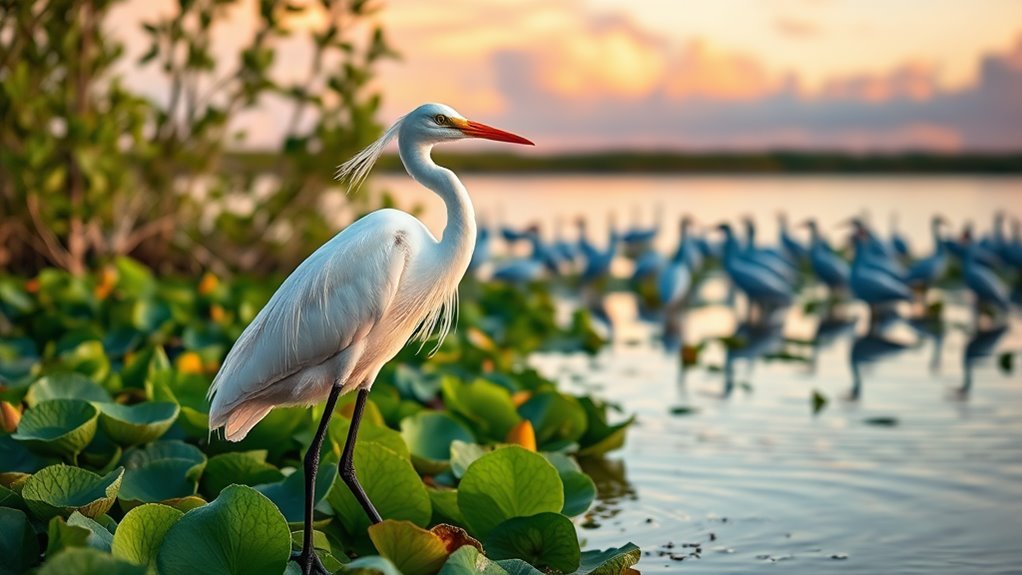
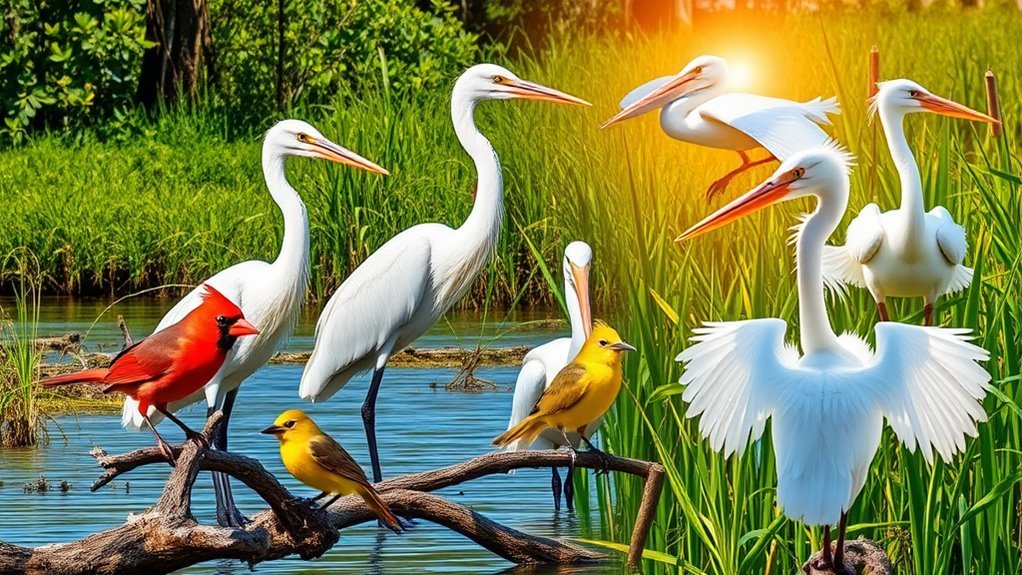
The Everglades wetlands host many bird species that are vital to this ecosystem. You can see well-known birds like the Great Egret and the Roseate Spoonbill. These birds rely on wetland habitats for food and nesting.
These habitats provide essential resources, including fish, amphibians, and insects, which support both resident and migratory birds.
During migration seasons, birds like the Black-crowned Night-Heron and various ducks arrive in these rich areas. This highlights the importance of the Everglades as a key stop for migrating birds.
Understanding the relationships between species and their environment deepens your appreciation for the balance that defines this sanctuary.
Enjoy observing the diverse birdlife and the beauty of the Everglades.
Forest Birds of Florida
As you explore Florida's forests, you'll see many bird species that thrive in these wooded areas.
These birds adapt their nesting habits to the forest environment, finding shelter and food among the trees.
Some notable species include:
- The colorful Rose-breasted Grosbeak, admired for its bright plumage.
- The Red-shouldered Hawk, known for flying gracefully through the trees.
- The melodious Painted Bunting, a joy for birdwatchers.
- The Pileated Woodpecker, famous for its loud call.
Learning about these birds and their nesting behaviors helps you appreciate Florida's forests and connect with nature.
Enjoy your birdwatching adventure!
Urban Birds: Adapting to City Life

Many birds have adapted well to city life. Pigeons, sparrows, and crows find homes in urban areas where natural habitats are scarce. They use buildings for nesting and look for food in parks and on streets. They eat a variety of food, including discarded snacks and plants from gardens. These options help them survive in cities filled with concrete and metal.
Urban birds also change their behavior to fit their environment. They can modify their calls to be heard over city noise.
Understanding how these birds adapt shows how resilient wildlife can be. It also encourages us to take care of their urban habitats.
Birds of Prey Found in Florida
Florida has about 20 species of birds of prey. These raptors are adapted to the state's diverse environments. They play an important role in maintaining balance in these ecosystems.
As you explore Florida, look for these notable raptors:
- Bald Eagles: These birds symbolize strength and freedom.
- Red-shouldered Hawks: They're known for their unique calls.
- Barred Owls: Their distinct hoots set them apart.
- Peregrine Falcons: These birds are famous for their speed in hunting.
Recognizing these birds can enhance your understanding of Florida's wildlife.
Whether you see them in wetlands or forests, each encounter connects you to the natural beauty of the state.
Enjoy your birdwatching adventure!
Migratory Birds: Seasonal Visitors
In Florida, you can see many migratory birds during specific seasons. These birds travel to find food and suitable places to breed.
For example, in spring and fall, birds like the Painted Bunting and Black-throated Blue Warbler travel south or return north. Florida serves as an important stop for these birds on their journeys.
Knowing when these birds arrive and leave can enhance your experience and appreciation of nature. Florida's varied environments provide essential habitats that support the needs of these birds.
This creates a welcoming space for both the birds and birdwatchers. Enjoy observing these seasonal visitors in their natural settings.
Rare and Endangered Species
Florida is home to many bird species, but some are rare or endangered. Protecting their habitats is crucial for their survival.
Here are some important examples:
- Florida Manatee: While not a bird, it plays a key role in the ecosystem.
- Everglade Snail Kite: This bird needs aquatic habitats to live.
- Audubon's Shearwater: Its nesting sites are limited to specific locations.
- Least Tern: This species faces threats from habitat loss and human activities.
Conservation efforts are essential to help these species thrive.
Best Locations for Birdwatching
To find the best birdwatching spots in Florida, explore various habitats that attract many bird species.
Everglades National Park is excellent for seeing birds like the Roseate Spoonbill and Great Egret.
If you prefer coastal areas, visit Fort De Soto Park to watch migratory shorebirds.
Using birding apps can help you identify species and keep track of your observations.
Joining birdwatching festivals, such as the Space Coast Birding and Wildlife Festival, connects you with other bird enthusiasts.
These activities immerse you in Florida's rich birdlife and enhance your birdwatching experience.
Birdwatching Tips and Techniques
Birdwatching can be an enjoyable and rewarding activity. To make the most of your experience, follow these clear tips:
- Plan your timing: Early mornings and late afternoons are the best times to see birds.
- Be quiet and still: Avoid sudden movements and loud noises to prevent scaring birds away.
- Use binoculars: A good pair of binoculars helps you see birds that are far away.
- Keep a notebook: Write down the birds you see. This helps you remember what you learned and connects you with other birdwatchers.
By following these tips, you can improve your birdwatching skills and have a more fulfilling adventure.
Enjoy your time in nature!
Bird Identification Basics
Bird identification is an important skill for birdwatchers in Florida. It helps you connect with the many bird species in the area. To identify birds, focus on simple features like plumage color, size, and markings. Pay attention to their behavior and the types of habitats they prefer, as these details can offer helpful hints.
To improve your identification skills, use birdwatching apps. These apps often include audio calls and clear images, making it easier to identify birds you see. By practicing observation and using technology, you can gain a better understanding of Florida's birds.
Joining local birdwatching groups can also make your experience more enjoyable. These communities provide support and share knowledge, enriching your birdwatching journey.
Resources for Bird Enthusiasts
Many resources can improve your birdwatching experience in Florida.
These tools will help you understand and enjoy local birds:
- Birding apps: Use apps like Merlin Bird ID and eBird for quick identification and sharing sightings.
- Field guides: Refer to books or online databases to identify bird species and learn their behaviors.
- Educational workshops: Attend local workshops for hands-on experiences and expert guidance.
- Birding clubs: Join clubs to connect with other bird lovers, share observations, and organize field trips.
These resources will enhance your knowledge and connect you with a community of bird enthusiasts.
Enjoy your birdwatching journey!
Connecting With Florida's Birding Community
How can you improve your birdwatching experience? Connect with Florida's birding community.
Joining local birding clubs gives you access to shared knowledge and friendships with other bird lovers. These clubs host events for group birding trips and workshops. Learning from experienced birdwatchers helps you understand bird behavior, migration, and species identification better.
You can also join citizen science projects, where you collect data and support important research. Sharing tips and enjoying guided tours with others makes birdwatching more fun and fulfilling.
Connecting with fellow birders enhances your skills and supports conservation efforts in your community. Enjoy the shared passion for birdwatching!
Frequently Asked Questions
What Equipment Is Essential for Birdwatching in Florida?
For birdwatching in Florida, you need good binoculars for clear viewing and field guides for identifying birds. Quality binoculars help you see details, while field guides assist in recognizing different species. This equipment will enhance your birdwatching experience and allow you to appreciate the variety of birds in the state.
How Can I Attract Birds to My Backyard in Florida?
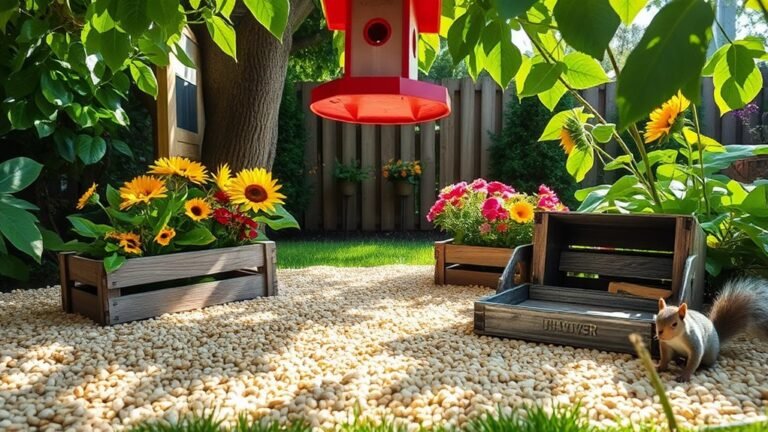
To attract birds to your backyard in Florida, place bird feeders filled with seeds. Use native plants to provide food and shelter. These steps will create a friendly environment for various bird species to visit often. Enjoy watching the birds as they come to your yard!
What Are the Best Times for Birdwatching in Florida?
The best times for birdwatching in Florida are in the morning and late afternoon. Many birds are active during these times as they feed, court, or nest. Pay attention to migration patterns and seasonal behaviors to enhance your birdwatching experience. Enjoy the sights and sounds of Florida's diverse bird life during these prime hours.
Are There Any Birdwatching Clubs in Florida?
Yes, Florida has many birdwatching clubs. Joining these clubs allows you to meet other birdwatching fans. You can share tips, enjoy discussions, and participate in field trips. These activities will improve your birdwatching skills and experiences.
How Do Climate Changes Affect Bird Populations in Florida?
Climate change affects bird populations in Florida by disrupting migratory patterns and causing habitat loss. As birds struggle to adapt, you may see changes in the types of species present. This can impact local ecosystems and the wildlife connections you enjoy while birdwatching. Understanding these shifts can enhance your birdwatching experience, as you learn about the changing dynamics of bird populations in your area.

Ava is a bird enthusiast and nature lover who has spent countless hours observing and learning about the fascinating world of birds. With a passion for sharing her knowledge and inspiring others to appreciate the beauty of birds, Ava writes about her experiences and insights on avianadmirer.com.