Birds That Look Like Chickens: Ground-Dwelling Avians
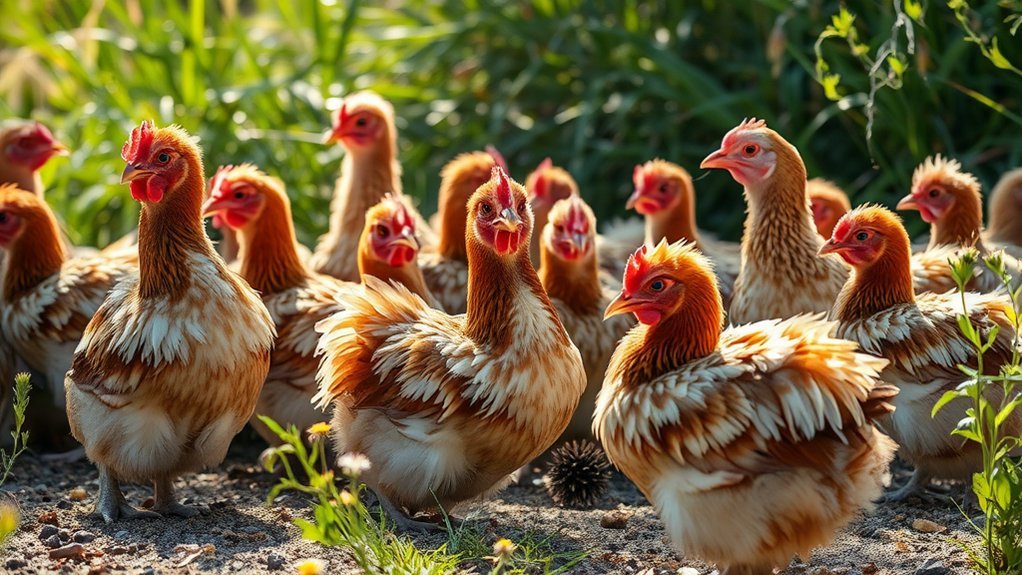
When you think of birds that resemble chickens, you may envision domestic birds. However, several ground-dwelling species share similar looks and behaviors. These avians thrive in many environments. They showcase vibrant colors and interesting social behaviors. As you learn about this diverse group, you will discover their unique traits and how they fit into their ecosystems. This exploration may lead you to wonder why they appear so much like chickens.
Key Takeaways
- Guinea fowl are relatives of chickens known for their social habits and loud calls.
- Jungle fowl are the wild ancestors of domestic chickens. They live in dense forests and are important for chicken evolution.
- California quail are ground-dwelling birds that socialize in groups. They are known for their "bobwhit" calls and their ability to find seeds and insects.
- Francolins are small, colorful birds found in scrublands. They are known for their melodious calls and prefer to run instead of fly.
- Pheasants look like chickens due to their colorful feathers and nest on the ground. They often forage in groups.
Guinea Fowl: The Chicken's Distant Cousin
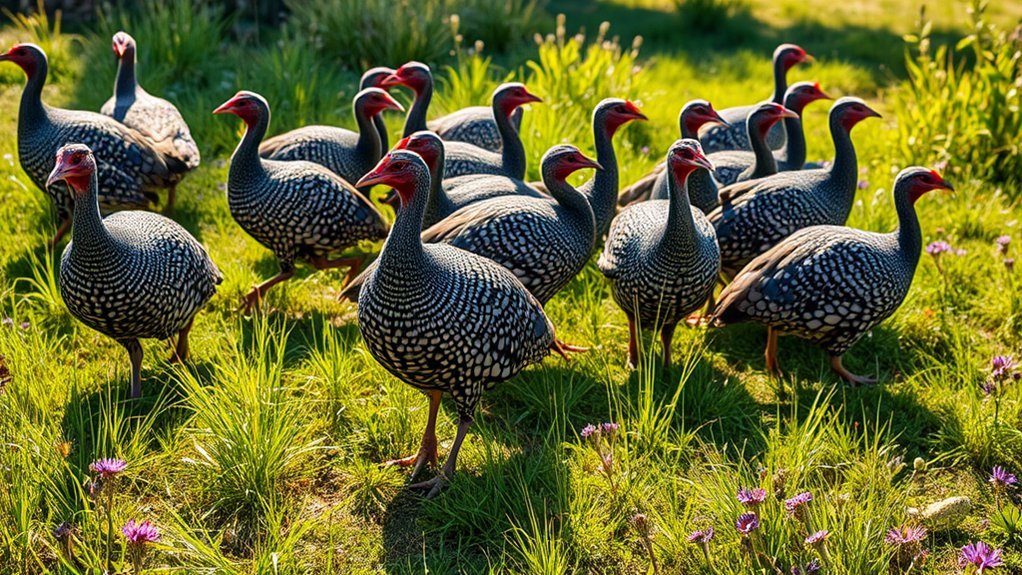
The guinea fowl is an interesting relative of the chicken. It shares many traits with chickens but also has its own unique features.
In both domestic and wild settings, guinea fowls usually forage for insects in groups. This behavior strengthens their social bonds. They live in various habitats, such as savannas and woodlands, and flourish in warm climates.
Their loud calls help them communicate and alert each other to potential threats. Unlike chickens, guinea fowl have an unpredictable flight pattern, which allows them to escape danger quickly.
Recognizing these behaviors and habitats helps us appreciate both these birds and their important role in their ecosystems.
Jungle Fowl: The Wild Ancestor of Domestic Chickens
Jungle fowl are the wild ancestors of domestic chickens. They live in the dense forests of Southeast Asia. In these habitats, they thrive among lush undergrowth and tall trees.
These birds have colorful feathers and a distinct call suited for their environment. By observing their behavior and ecology, we gain insight into how domestic chickens developed.
Selective breeding changed these wild birds into the hens and roosters we know today. In their natural settings, jungle fowl search for seeds, insects, and fruits.
They play an important role in their ecosystem, highlighting the connection between humans and these intriguing birds.
California Quail: The Ground-Dwelling Game Bird
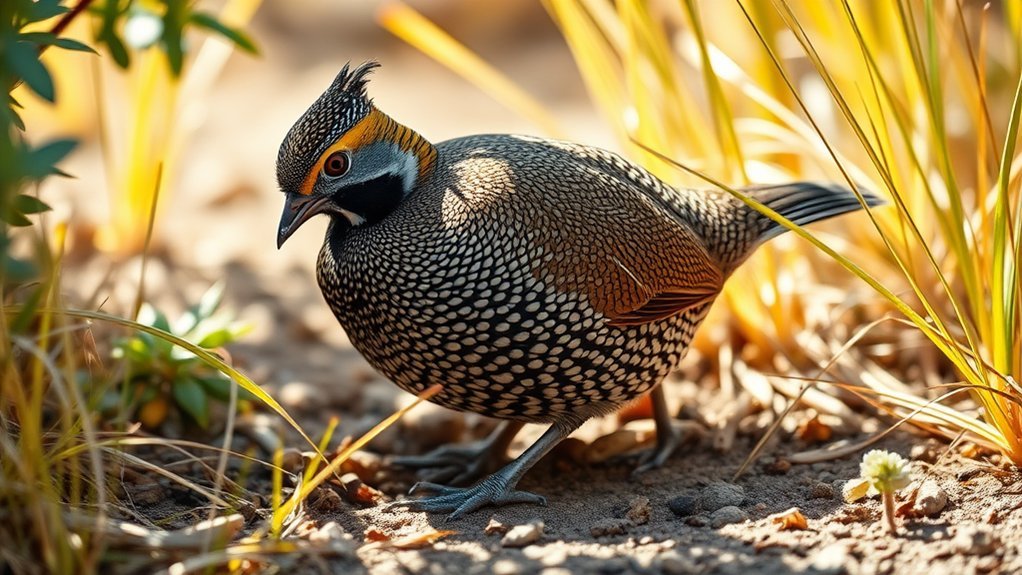
California quail are ground-dwelling birds known for their distinct looks and social habits. They often live in brushy areas, including coastal sage scrub and open woodlands.
These birds thrive in family groups and are recognized by their "bobwhit" call, which they use to communicate and bond with each other.
California quail forage in small flocks, searching for seeds, insects, and fruits, showcasing their ability to adapt to their surroundings.
Their social nature helps them survive and fosters a sense of community. Observing these birds in their natural habitat reveals their important role in the ecosystem, deepening your appreciation for wildlife.
Francolin: The Small but Colorful Ground Bird
Francolins are small, colorful birds that live on the ground. They attract birdwatchers with their bright feathers and interesting behaviors. You can usually find them in scrublands and open fields, where they blend in with their surroundings and show off their colors.
When you observe francolins, you'll notice their social interactions. They make melodious calls and perform lively courtship displays.
These birds prefer to run instead of fly, which helps them move quickly through thick plants. You'll see them foraging for seeds and insects, playing important roles in their ecosystem as both prey and predator. Engaging with francolins helps you feel more connected to nature, allowing you to enjoy the lively world around these charming birds.
Horned Lark: A Chicken-Like Appearance in a Songbird

The Horned Lark has a rounded body and subtle feather patterns that can remind you of chickens. These songbirds live in various habitats, including open fields and sandy beaches.
They adapt well to different environments and thrive in these areas. Watching Horned Larks can be interesting; they perform courtship displays and fly gracefully, much like chickens showing off their feathers.
These birds search for seeds and insects on the ground, which adds to their chicken-like appearance. Their soft calls and sweet songs make them enjoyable to watch and listen to, appealing to nature lovers.
The Horned Lark blends familiarity with nature, making it a captivating part of wildlife.
Pheasants: Vibrant Ground Birds With Chicken-Like Features
Pheasants are colorful ground birds that resemble chickens in both look and behavior. They live in grasslands and near forest edges.
Here are some key features of pheasants:
- Males have bright, ornate feathers.
- They forage for seeds and insects by pecking at the ground, similar to chickens.
- Pheasants nest on the ground, often in thick brush, to stay safe from predators.
- They're social birds and usually gather in small groups.
- Their sounds include clucks and calls that remind us of chickens.
Learning about pheasants helps us appreciate these vibrant birds that share similarities with our domestic chickens.
Domestic Ducks: The Aquatic Relatives of Chickens
Ducks are domestic birds that share some similarities with chickens. They've webbed feet and waddle when they walk. Unlike chickens, ducks thrive in wet environments.
They're generally calmer and more social, preferring to be in groups. Ducks lay rich, flavorful eggs, which make them a great alternative to chickens for your backyard or homestead.
Their diet mainly consists of insects and aquatic plants, adding to the unique taste of their eggs while offering health benefits.
Learning about these traits can help you appreciate ducks more and may encourage you to consider raising them yourself.
Blue-Footed Booby: an Uncommon Avian With Similarities
The Blue-Footed Booby stands out due to its vibrant blue feet and unique behaviors. This bird lives mainly in coastal areas of the Pacific Ocean. Males use their bright feet in courtship to attract females.
They nest on rocky cliffs and sandy beaches, which are important for raising their young and finding food.
Key features of the Blue-Footed Booby include:
- Bright blue feet
- Eye-catching courtship displays
- Coastal nesting habits
- A diet focused on fish
- Special adaptations for diving
Understanding these traits helps us appreciate the Blue-Footed Booby's place in its ecosystem. Each feature connects to its environment, making this bird both remarkable and relatable.
Red Junglefowl: The Wild Forebearer of the Chicken
The Red Junglefowl (Gallus gallus) is the wild ancestor of the domestic chicken. These birds live in tropical forests. They adapt well to different habitats.
Red Junglefowl form flocks with clear social structures and hierarchies. They show interesting social behaviors.
These birds primarily stay on the ground. They search for seeds, insects, and fruits. This foraging behavior helps with seed distribution and pest control.
Their colorful feathers and calls make them attractive to watch. Studying these birds can deepen your appreciation of nature.
Secretive Rails: The Lesser-Known Chicken Lookalikes
Secretive rails belong to the Rallidae family and resemble chickens. These birds live on the ground and tend to hide. Their behavior makes them hard to see in nature. Knowing where they like to live helps with conservation efforts. They often choose wetlands, marshes, and thick vegetation as their homes.
Here are some interesting facts about secretive rails:
- Variety of species: There are over 150 species around the globe. Each species has unique adaptations.
- Camouflage: Their feathers blend into their surroundings, making them hard to spot.
- Vocal sounds: They make a variety of unique calls to communicate.
- Diet: Secretive rails eat seeds, insects, and small animals. They're mainly omnivorous.
- Nesting habits: They build nests in dense plants, which keeps them safe from predators.
Bird watchers find their secretive lives fascinating and rewarding to observe.
Frequently Asked Questions
Are These Birds Able to Interbreed With Domestic Chickens?
Hybrid viability depends on the genetic compatibility between species. Some birds may look like chickens, but their ability to interbreed with domestic chickens often leads to infertile or non-viable offspring. This limits the chances of successful hybridization.
Understanding how different species interact can be fascinating. It's interesting to see how genetics influence the ability to produce viable offspring, even among birds that share similar appearances. The science behind these relationships sheds light on the broader picture of wildlife and domestication.
What Habitats Do These Chicken-Like Birds Prefer?
Chicken-like birds thrive in diverse habitats. They adapt well to grasslands, forests, and wetlands. These birds help control insect populations and aid in seed dispersal. Their presence supports ecosystem health and balance, making them important for the environment.
How Can I Identify a Juvenile From an Adult?
To identify a juvenile from an adult, look for specific traits. Juveniles often have softer plumage and less vibrant colors than adults. They may also have shorter tails and less distinct markings compared to mature birds. Observing these features will help you differentiate between the two.
Do Ground-Dwelling Birds Exhibit Social Behaviors Like Chickens?
Ground-dwelling birds exhibit clear social behaviors similar to chickens. They move in coordination, use calls to communicate, and establish hierarchies. These actions create a sense of community within their flocks. This social structure helps them interact with each other and respond to their environment effectively.
Are Any of These Birds Kept as Pets?
Some ground-dwelling birds can make interesting pets. Taking care of a pet bird requires commitment. You need to think about their habitat, diet, and social needs. This will help you build a strong and happy relationship with your new bird friend.

Ava is a bird enthusiast and nature lover who has spent countless hours observing and learning about the fascinating world of birds. With a passion for sharing her knowledge and inspiring others to appreciate the beauty of birds, Ava writes about her experiences and insights on avianadmirer.com.