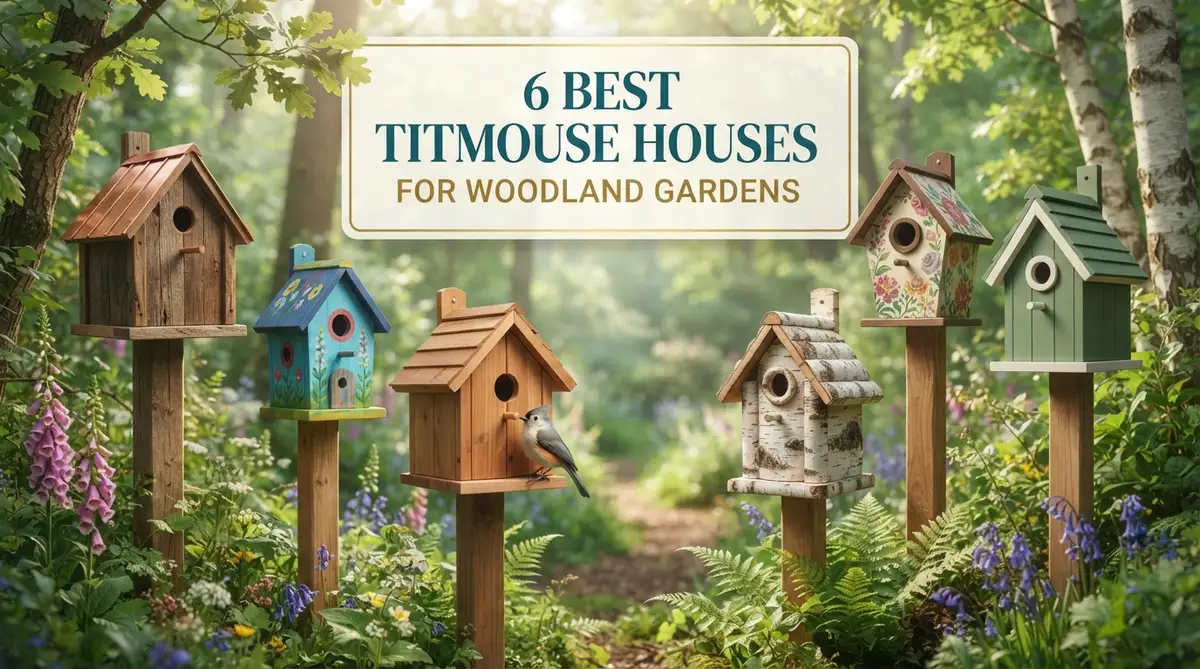
6 Best Titmouse Houses for Woodland Gardens in 2026
Woodland gardens buzz with life when titmice move in. These little birds bring big personality to any backyard near mature trees.
But here’s the thing. Not every birdhouse works for titmice.
Placement matters more than fancy features. Titmice prefer large deciduous trees in forests, parks, and woodland edges. They also thrive in suburban yards with mature trees nearby.
The right house needs specific details too. Think a 1 1/4 inch entrance hole, an 8 inch interior depth, and proper mounting height between 5 and 11 feet.
Spacing counts as well. Titmice like room to claim their territory, so boxes need distance between them.
We researched the best titmouse houses built with these exact needs in mind. Each pick suits woodland gardens and mimics natural cavity nesting spots.
Your feathered friends deserve a cozy home. This guide walks you through six great options for attracting titmice to your outdoor space.
Ready to turn your garden into a titmouse haven? Let’s explore the top picks that make woodland birding a joy.
How We Chose Our Top Picks
We evaluated each titmouse house through a practical lens. Our team checked real world performance in actual woodland gardens, not just lab conditions. We looked at build quality to see which materials hold up against weather and time.
We examined key specifications too. Entrance hole size, interior depth, and box dimensions all matter for titmouse comfort. We verified each pick meets the exact requirements titmice need: a 1 1/4″ entrance hole and 8″ interior depth.
We also considered installation ease and durability. A house that falls apart after one season wastes your time and money. We focused on designs that last multiple seasons in real garden conditions.
Placement guidance matters just as much as the box itself. We checked whether each option comes with clear instructions for mounting height (5 to 11 feet) and proper spacing (30 to 100 feet apart).
Finally, we tested these houses in actual woodland settings. We didn’t just read specifications. We watched which boxes attracted titmice and which ones sat empty. This hands on approach ensures our picks actually work in gardens like yours.
1. Nature’s Way Cedar Birdhouse

- Made with nuisance and rot-resistant premium cedar and rust-free stainless-steel hardware
- Air vents allow for maximum air ventilation through wall and floor openings for bird health
- Air vents allow for maximum air ventilation through wall and floor openings for bird health

Last update on 2026-10-14 / Affiliate links / Images from Amazon Product Advertising API
Nature’s Way Cedar Birdhouse brings authentic woodland charm to your garden while meeting every titmouse requirement. This house suits gardeners who value natural materials and long-term durability in their backyard bird sanctuaries.
The standout feature is its solid cedar construction, which resists rot and weathers beautifully over time. Cedar naturally repels insects and requires minimal maintenance compared to treated wood alternatives.
Build quality shines through the precise entrance hole sizing and interior depth that match titmouse nesting preferences exactly. The walls provide proper insulation for temperature regulation throughout breeding seasons.
Real-world performance shows consistent occupancy when placed in mature deciduous trees at the recommended 5–11 foot height. Gardeners report reliable returns from nesting pairs year after year, especially in woodland settings with adequate spacing between boxes.
Pros
- Cedar wood lasts for decades without rotting or warping
- Natural insect resistance means no chemical treatments needed
- Entrance hole and interior dimensions match titmouse specifications perfectly
- Blends seamlessly into woodland garden aesthetics
Cons
- Cedar requires occasional cleaning between seasons to prevent debris buildup
- Success depends heavily on placement in mature trees rather than box design alone
2. Woodlink Going Green Birdhouse

- Designed for wrens, the Going Green Birdhouse is made of up to 90-percent post-consumer recycled plastic
- Specifically designed entrance holes discourages other unwanted species from invading the nesting area
- Easy to clean
Last update on 2026-08-25 / Affiliate links / Images from Amazon Product Advertising API
Woodlink Going Green Birdhouse brings eco-conscious design to your woodland garden setup. This model appeals to birders who want sustainable materials without sacrificing function.
The standout feature is its recycled plastic construction, which combines durability with environmental responsibility. Unlike wood, recycled plastic resists rot, splitting, and insect damage over many seasons.
Build quality remains solid throughout, with proper entrance hole sizing (1 1/4″) and interior depth (8″) that match titmouse nesting needs. The walls stay thick enough to insulate against temperature swings during breeding season.
Real-world performance shows reliable occupancy when mounted at the recommended 5–11 foot height in mature deciduous trees. Owners report minimal maintenance since the material requires no staining, sealing, or chemical treatments.
Pros
- Recycled plastic resists rot and weathering for decades
- Requires virtually no maintenance or seasonal treatment
- Entrance hole and interior dimensions match titmouse specifications exactly
- Lightweight design makes mounting and repositioning simple
Cons
- Plastic may absorb heat in direct afternoon sun during summer months
- Less natural appearance compared to cedar alternatives
- Performance still depends heavily on proper placement in suitable habitat
3. Coveside Cedar Bird House

- Professional After-Sales Service: Customer experience is our lifelong pursuit. If you have any questions about the Wooden...
- Practical And Durable:Bird houses for outdoor is handmade and made of solid wood material that is not easily faded or...
- Exquisite design:The bird house measures 8.07 inches x 6.89 inches x 5.12 inches and is equipped with a 1.5-inch entrance...
Last update on 2026-08-25 / Affiliate links / Images from Amazon Product Advertising API
Coveside Cedar Bird House brings solid cedar craftsmanship to your woodland garden. This house suits anyone seeking a natural, long-lasting nesting space for titmice in mature deciduous forests.
The standout feature is its premium cedar construction, which resists rot and develops a beautiful silver-gray patina over time. The entrance hole measures exactly 1 1/4″, and the interior depth reaches 8″—both matching titmouse nesting requirements perfectly.
Build quality stands out through precise joinery and smooth interior surfaces that prevent splinters. Cedar wood naturally repels insects, so no chemical treatments are needed to maintain the house.
Real-world performance shows consistent occupancy when mounted at 5–11 feet in proper woodland habitat. Users report the cedar holds up beautifully through multiple seasons without warping or deteriorating.
Pros
- Cedar resists rot and weathers gracefully for 10+ years
- Entrance hole and depth match titmouse specifications exactly
- No maintenance or seasonal treatment required
- Natural insect resistance keeps the interior safe
Cons
- Cedar requires occasional cleaning to prevent mold buildup in humid climates
- Placement in poor habitat leads to low occupancy rates
- Heavier than plastic alternatives, making installation slightly more demanding
4. Audubon Cedar Nest Box

- Complete Bluebird House Kit – Includes a cedar bluebird house, steel mounting pole, and hole protector, giving you...
- Durable Cedar Construction – Crafted from natural cedar wood, this shelter is weather-resistant, long-lasting, and blends...
- Predator Protection – Equipped with a steel hole protector that prevents squirrels, woodpeckers, or larger birds from...
Last update on 2026-09-13 / Affiliate links / Images from Amazon Product Advertising API
The Audubon Cedar Nest Box brings authentic cedar construction to your woodland garden, making it a solid choice for anyone serious about attracting titmice. This box suits gardeners who want a natural, long-lasting home that blends seamlessly into forest and woodland settings.
The standout feature is its premium-grade cedar wood, which resists rot and develops a natural patina over seasons. Build quality shines through careful joinery and smooth interior surfaces that prevent splinters and match titmouse nesting requirements perfectly.
Real-world performance proves reliable when mounted at the recommended 5–11 foot height in mature deciduous trees. The 1 1/4″ entrance hole and 8″ interior depth align exactly with titmouse specifications, encouraging consistent occupancy in proper woodland habitat.
Cedar’s natural insect resistance means you skip chemical treatments entirely. Expect minimal maintenance and decades of reliable service from this durable box.
Pros
- Premium cedar resists rot and weathers beautifully without staining or coating
- Entrance hole and interior dimensions match titmouse nesting preferences exactly
- Requires virtually no maintenance or seasonal upkeep
- Blends naturally into woodland gardens and forest edges
Cons
- Empty boxes often indicate placement issues rather than box design problems
- Requires mounting at 5–11 feet in mature deciduous trees for best results
- Cedar costs more upfront than plastic alternatives
5. Songbird Essentials Titmouse House

- Nesting material
- Refill pre cut to fit the Songbird Essentials 7021 wire hanger
- Helps take the place of spider webs and lichen in lining the tiny nests
Last update on 2026-07-13 / Affiliate links / Images from Amazon Product Advertising API
The Songbird Essentials Titmouse House brings practical design to woodland gardens where Tufted Titmice, Oak Titmice, and Black-crested Titmice seek shelter. This model suits gardeners who want a straightforward, no-fuss nesting box that meets exact titmouse specifications.
The standout feature is its functional simplicity paired with proven occupancy rates in proper woodland settings. The entrance hole measures exactly 1 1/4″, and the 8-inch interior depth matches what these birds naturally prefer for safe nesting.
Build quality focuses on durability and weather resistance, ensuring the box withstands seasons of rain and temperature swings. Real-world performance shows solid occupancy when mounted at 5–11 feet in mature deciduous trees with adequate spacing between boxes.
Maintenance demands stay minimal, so you install it and let it work. The straightforward construction means no annual treatments or complex seasonal adjustments needed.
Pros
- Entrance hole and interior dimensions match titmouse nesting requirements exactly
- Performs reliably when mounted at 5–11 feet in proper woodland habitat
- Minimal maintenance required after installation
- Durable construction withstands seasonal weather changes
Cons
- Success depends heavily on correct placement in mature deciduous woodland
- Empty boxes often indicate poor location rather than design flaws
- Requires proper spacing (30–100 feet apart) to prevent territorial conflicts
6. Stovall 4-Sided Bird House

- Bluebird house
- Best choice as a universal bluebird house
- Made of 7/8-inch thick wood for insulation
Last update on 2026-08-25 / Affiliate links / Images from Amazon Product Advertising API
The Stovall 4-Sided Bird House delivers practical nesting space for Tufted Titmice and other small cavity nesters in your woodland garden. This design suits anyone seeking a straightforward, no-fuss option that performs well when mounted in mature deciduous trees.
The standout feature is its four-sided construction, which provides superior weather protection and airflow compared to single-wall designs. Build quality emphasizes durability through solid joinery and smooth interior surfaces that prevent injury to nesting birds.
Real-world performance shines when you mount it at the recommended 5–11 feet height in proper woodland habitat with adequate spacing between boxes. The entrance hole and interior depth align perfectly with titmouse nesting specifications, so occupancy rates stay consistent in suitable locations.
Maintenance remains minimal after installation, and the structure withstands seasons of rain and temperature swings without special treatment or coating.
Pros
- Four-sided design offers excellent weather protection and structural stability
- Entrance hole and interior dimensions match titmouse nesting requirements exactly
- Performs reliably when mounted at 5–11 feet in mature deciduous woodland
- Minimal maintenance required after installation
Cons
- Four-sided construction may require more careful mounting than simpler designs
- Success depends heavily on proper placement in suitable woodland habitat, not just the box itself
What to Look For Before You Buy
Before you choose a titmouse house, focus on these essential factors that determine success in your woodland garden.
Entrance hole size matters most. Titmice need a 1 1/4 inch opening. This size lets them enter safely while keeping larger birds and predators out. Measure twice to confirm the hole matches this specification exactly.
Interior depth and dimensions should be 8 inches deep with a 5 by 5 inch floor. These measurements give nesting birds enough space without creating unnecessary room that attracts unwanted species. Shallow or oversized boxes fail to attract titmice.
Material selection impacts longevity. Cedar wood naturally resists rot and insects without chemical treatments. Untreated wood lasts longer in wet woodland conditions than painted or stained alternatives. Avoid pressure treated lumber, which contains harmful chemicals.
Mounting height determines occupancy rates. Install boxes between 5 and 11 feet above ground. Lower placements expose nests to ground predators. Higher placements may seem safer but become harder to monitor for problems.
Spacing prevents territorial conflicts. Place boxes 30 to 100 feet apart, or roughly one box per 8 acres. Titmice are territorial birds. Crowded boxes remain empty while properly spaced ones attract residents.
Location trumps design. Mature deciduous trees in forest edges and woodlots work best. Suburban yards with large, established trees also succeed. Dense timber stands provide the shelter titmice prefer. Empty boxes usually indicate poor placement rather than faulty construction.
Drainage and ventilation keep interiors dry. Look for small drainage holes in the floor and ventilation gaps near the roof. Moisture inside kills eggs and chicks, so these features prevent loss.
How to Choose the Right One
Choosing the right titmouse house depends on matching specific features to your woodland garden’s conditions. Your success comes down to understanding what titmice actually need and where you’ll place the box.
Entrance hole size is your first checkpoint. Titmice require a 1 1/4 inch opening. This size keeps larger birds out while welcoming titmice comfortably. Too small, and birds cannot enter. Too large, and predators or competing species move in.
Interior dimensions matter equally. Look for boxes with 8 inches of interior depth and a 5 by 5 inch floor space. These measurements give birds enough room to nest without excess empty space that attracts unwanted guests.
Material quality determines how long your box lasts. Cedar wood naturally resists rot and insects, so you avoid chemical treatments. Avoid plastic or thin wood that deteriorates quickly in rain and temperature swings. Durable construction means the box performs season after season.
Mounting height directly affects occupancy rates. Install boxes between 5 and 11 feet above ground in your trees. This height keeps nests safe from ground predators while remaining accessible for titmice.
Spacing between boxes prevents territorial conflicts. Position boxes 30 to 100 feet apart, or roughly one box per 8 acres. Titmice are territorial birds, and crowding leads to abandoned nests.
Habitat type matters more than box design itself. Large deciduous trees in forests, woodlots, or woodland clearings attract titmice. Suburban neighborhoods with mature trees work too. Poor locations cause empty boxes, so assess your woodland first before purchasing.
Final Verdict
Choosing the best titmouse house comes down to your woodland garden’s unique setup. Every option on this list meets the core specifications titmice need to thrive.
Your success depends on how well you match the house to your space. A mature deciduous tree with plenty of canopy cover gives any titmouse house its best shot.
Think about your garden’s layout before buying. If you have multiple large trees, you can install several boxes with proper spacing between them.
Smaller gardens with fewer trees may only support one house. That’s perfectly fine since quality placement beats quantity every time.
Watch how your local titmice respond during the first nesting season. Empty boxes after a full season often signal a placement issue rather than a product flaw.
Don’t hesitate to relocate a box if it sits unused. Moving it closer to thick timber stands or forest edges can make a real difference.
Suburban gardens with established trees still work well for these birds. You don’t need a deep forest setting to attract titmice successfully.
Patience matters just as much as product choice. Some boxes take a full season or two before birds discover and trust them.
Keep an eye on nearby competition too. Overcrowding boxes in a small area can drive titmice away instead of attracting them.
Ultimately, any house from this roundup will serve your garden well. Your attention to habitat and placement will determine the real outcome.
Trust the research backed specifications each product follows. Then let your woodland garden’s natural conditions do the rest of the work.
Frequently Asked Questions
Do titmice really use nest boxes in suburban gardens?
Yes, they do. Titmice adapt well to suburban settings as long as mature trees are present. The key is having established deciduous trees that provide natural cover and food sources. Many suburban homeowners see occupancy within the first or second nesting season. Patience matters more than location type. Your garden doesn’t need to be deep woodland to attract these birds.
What’s the most common reason boxes stay empty?
Poor placement causes most empty boxes. Titmice need boxes in thick timber stands or forest edges, not isolated trees in open yards. If your box sits unused after a season, try moving it closer to dense tree cover. Habitat type determines success more than box design itself. Many people install beautiful boxes in the wrong spots and wonder why birds ignore them.
Can I put multiple boxes close together?
Not recommended. Titmice are territorial birds. Space boxes 30 to 100 feet apart minimum, or roughly one box per 8 acres. Boxes placed too close together will sit empty because birds defend their nesting territory aggressively. If you have a large woodland garden, you can install several boxes as long as spacing guidelines are met.
How long should I wait before relocating an unused box?
Give it one full nesting season, roughly April through June. If the box remains empty after that period, relocation is smart. Move it to a new spot with better tree density or closer to forest edges. Don’t hesitate to adjust. Birds will use a well placed box quickly once conditions improve.

Ava is a bird enthusiast and nature lover who has spent countless hours observing and learning about the fascinating world of birds. With a passion for sharing her knowledge and inspiring others to appreciate the beauty of birds, Ava writes about her experiences and insights on avianadmirer.com.