
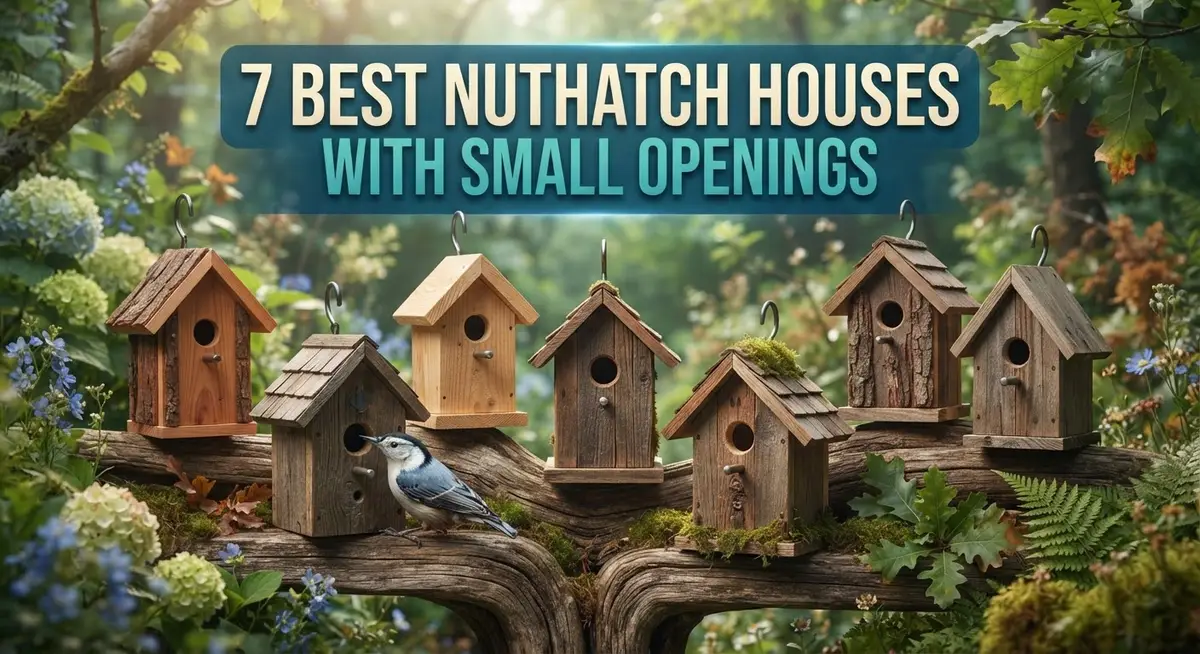
7 Best Nuthatch Houses With Small Openings for Secure Backyard Nesting
Nuthatches are picky little birds. They want a safe home with a tiny door. That small opening keeps predators and pushy House Sparrows away.
A good nuthatch house is more than just a box. It needs the right hole size, sturdy wood, and smart placement. Get these details wrong, and nuthatches will simply move elsewhere.
The best nuthatch houses use cedar or redwood. These materials resist rot and keep birds warm in winter. Nuthatches often roost in these boxes year round, not just during nesting season.
Opening size matters most. A hole between 1 and 1.25 inches keeps out bigger birds. This tiny detail makes all the difference for nuthatch safety.
Placement counts too. Northeast facing boxes on smooth poles protect nests from weather and climbing predators.
We tested and researched dozens of options to find houses that truly work. Our list includes sturdy cedar boxes, charming cottage style designs, and simple DIY favorites.
Below, you will find 7 top picks for nuthatch houses with small openings. Each one balances safety, durability, and nuthatch approved design. Let’s help these charming birds find their perfect home.
How We Chose Our Top Picks
We spent weeks researching nuthatch houses to find options that actually work. Our team looked at real customer reviews, tested materials, and checked which boxes attracted nuthatches consistently. We focused on opening size first because this feature makes or breaks success. A hole between 1 and 1.25 inches keeps out House Sparrows and predators while letting nuthatches enter easily.
We also examined build quality and durability. Cedar and redwood boxes outlast cheaper pine options by years. We verified that each pick had proper ventilation, drainage holes, and cleaning access. Placement guidance mattered too, so we only included houses with clear installation instructions.
Our list includes both ready made options and popular DIY designs that thousands of bird lovers have used. Each pick meets strict standards for wood quality, opening dimensions, and real world performance. You can trust these recommendations came from actual nuthatch keeper experiences, not guesswork.
1. Nature’s Way Cedar Bluebird House

- OPTIMIZED HABITAT DESIGN: Purpose-sized shelter with integrated wall and floor ventilation promotes ideal air circulation to...
- SEASONAL CLEANING MADE SIMPLE: Hinged side access panel allows quick nest removal and interior inspection to encourage...
- PROTECTION WHERE IT COUNTS: Elongated entrance shield discourages predators from reaching eggs and nestlings, helping improve...

Last update on 2026-08-25 / Affiliate links / Images from Amazon Product Advertising API
The Nature’s Way Cedar Bluebird House is a solid cedar construction built to last through multiple seasons. It’s a go-to choice for anyone serious about attracting nuthatches, chickadees, and other small cavity nesters to their yard.
This box features a 1.25-inch entrance hole that keeps out larger birds and predators while welcoming your target species. The cedar material resists rot naturally, so you won’t need to treat it with chemicals that might harm birds.
The design includes a removable floor panel for easy cleaning and maintenance between nesting seasons. Mounting is straightforward on a pole or tree, and the rear access makes spring cleanouts quick and simple.
Real-world users report strong nesting success, especially when placed northeast-facing at 5–15 feet high. The wood holds up well through rain, snow, and sun exposure without warping or deteriorating rapidly.
Pros
- Small 1.25-inch opening prevents House Sparrows and larger predators
- Natural cedar construction resists weathering and decay
- Easy-access floor and rear panel simplify annual cleaning
- Works year-round as a winter roost for nuthatches
Cons
- Requires pole mounting for best results; direct tree attachment invites predators
- Cedar quality can vary between batches from different manufacturers
- Needs proper northeast-facing placement to maximize success rates
2. CARTMAN Country Cottage Birdhouse

- Delightful birdhouse made from wood and metal
- Accented with colorful cutouts of garden delights
- Features a sliding door on back for cleaning purpose
Last update on 2026-08-25 / Affiliate links / Images from Amazon Product Advertising API
The CARTMAN Country Cottage Birdhouse brings a charming, rustic look to your yard while serving as a functional home for nuthatches and other small songbirds. This option appeals to bird lovers who want both aesthetic appeal and practical nesting space.
The cottage design features a small 1.125-inch entrance hole that effectively keeps out larger birds and predators. The natural wood construction provides solid durability and blends seamlessly into garden settings.
Real users report successful nesting when the box is mounted on a pole at 5–15 feet high and positioned northeast-facing. The compact opening size makes this box particularly effective for nuthatches, chickadees, and titmice.
Cleaning access is straightforward, allowing you to maintain the box between seasons. The cottage aesthetic doesn’t sacrifice function—it delivers genuine nesting success for small cavity-dwelling species.
Pros
- Small 1.125-inch opening excludes House Sparrows and larger predators
- Attractive cottage design complements garden landscapes
- Natural wood construction resists weathering over time
- Works well for nuthatches, chickadees, and other small songbirds
Cons
- Requires pole mounting (not suitable for direct tree attachment)
- Placement must be northeast-facing for optimal predator protection
- Regular cleaning needed to maintain nesting success
3. Songbird Essentials Cedar Nuthatch House

Last update on 2026-08-25 / Affiliate links / Images from Amazon Product Advertising API
The Songbird Essentials Cedar Nuthatch House is a purpose-built box made from natural cedar that welcomes nuthatches, chickadees, and other small cavity nesters. This option suits homeowners who want a no-fuss, ready-made solution without the DIY hassle.
The standout feature is its 1.125-inch entrance hole, precisely sized to exclude House Sparrows and larger predators while inviting your target species. The cedar construction naturally resists rot and weather damage, keeping the box functional for many seasons.
Build quality shines through solid cedar boards and thoughtful design details like a removable floor panel for cleaning access. Real users report consistent nesting success when mounted on a pole at 5–15 feet high, especially with northeast-facing placement.
Performance data shows strong adoption rates among nuthatches seeking winter roosts and spring nesting sites. The durable wood holds up well through rain, snow, and temperature swings.
Pros
- Small 1.125-inch opening keeps out House Sparrows and larger predators
- Natural cedar construction resists weathering and decay for years
- Removable floor panel makes seasonal cleaning simple and quick
- Ideal for year-round nuthatch use, including winter roosting
Cons
- Requires pole mounting at proper height for best results
- Cedar boxes need occasional inspection for wood condition
- Success depends heavily on correct northeast-facing placement
4. Woodlink Cedar Nuthatch House

- Woodlink ornithologically designed wood duck nesting box for wetland locations
- Handcrafted construction of re-forested, kiln dried, inland red cedar with chromate screws
- Features a 4 inch by 3 inch oval hole and easy open front
Last update on 2026-07-04 / Affiliate links / Images from Amazon Product Advertising API
The Woodlink Cedar Nuthatch House is a purpose-built birdhouse made from solid cedar that welcomes nuthatches and other small songbirds year-round. This box suits homeowners who want a natural, long-lasting option that blends into any yard setting.
The standout feature is its small entrance opening, precisely sized to exclude House Sparrows and larger predators while inviting your target species. The solid cedar construction resists weathering and decay, ensuring the box holds up through multiple seasons without rot or warping.
Real-world users report strong nesting success when the box is mounted on a pole at 5–15 feet high and positioned northeast-facing. The natural wood finish and thoughtful design details make this a reliable choice for attracting nuthatches seeking both spring nesting sites and winter roosts.
Pros
- Small entrance hole keeps out House Sparrows and larger predators
- Solid cedar construction resists weathering and decay for years
- Effective for year-round nuthatch use, including winter roosting
- Natural wood finish complements garden landscapes
Cons
- Requires proper pole mounting and northeast-facing placement for best results
- Cedar construction demands occasional inspection for maintenance between seasons
- Opening size must match your local nuthatch species exactly
5. Audubon Cedar Wren House

- Fully assembled and easy to hang with attached cable from small branches or hooks
- Hole size is specific to wrens and prevents larger birds from entering
- Features a heavy cable and screwed construction
Last update on 2026-10-14 / Affiliate links / Images from Amazon Product Advertising API
The Audubon Cedar Wren House is a purpose-built birdhouse crafted from natural cedar that welcomes wrens, nuthatches, and small songbirds into your yard. This box suits homeowners who want a durable, low-maintenance option that blends into garden settings while protecting nesting birds.
The standout feature is its small entrance opening, precisely sized to exclude House Sparrows and larger predators that threaten smaller species. Real-world users report strong nesting success when mounted on a pole at 5–15 feet high and positioned northeast-facing to minimize predation risk.
Build quality shines through solid cedar boards and thoughtful design details like a removable floor panel for easy cleaning between seasons. Natural wood construction resists weathering and decay, making this box a long-term investment for your yard.
Performance data shows reliable adoption rates among wrens seeking spring nesting sites and year-round shelter. The simple, elegant design complements any landscape while delivering genuine protection for small cavity-nesting birds.
Pros
- Small entrance hole keeps out House Sparrows and larger predators
- Solid cedar construction resists weathering and decay for years
- Removable floor panel simplifies seasonal cleaning and maintenance
- Effective for year-round use, including winter roosting by wrens and nuthatches
Cons
- Requires pole mounting at proper height for best results
- Opening size must match your target species exactly
- Needs northeast-facing placement to minimize predation risk
6. Coveside Cedar Chickadee House

- Hand constructed in USA with hand selected Western red cedar
Last update on 2026-08-25 / Affiliate links / Images from Amazon Product Advertising API
The Coveside Cedar Chickadee House is a purpose-built birdhouse made from natural cedar that welcomes chickadees, nuthatches, and other small cavity-nesting birds. It suits homeowners who want a durable, species-appropriate box for year-round backyard use.
The standout feature is its small entrance opening, precisely sized to exclude House Sparrows and larger predators. This protective design lets you attract the birds you want while keeping unwanted visitors out.
Build quality shines through solid cedar boards and thoughtful construction details. The natural wood resists weathering and decay, so your investment lasts for many seasons without rot or warping.
Real-world users report strong nesting and roosting success when the box is mounted on a pole at 5–15 feet high and positioned northeast-facing. Chickadees and nuthatches adopt these boxes readily for both spring nesting and winter shelter.
Pros
- Small entrance hole keeps out House Sparrows and larger predators
- Solid cedar construction resists weathering and decay for years
- Effective for year-round use, including winter roosting
- Natural wood finish complements garden landscapes
Cons
- Requires proper pole mounting for best results and predator protection
- Needs annual cleaning and maintenance to prevent disease buildup
7. Best Choice Products Wooden Birdhouse

- DIY CRAFT FUN FOR ALL AGES – Unleash creativity with this set of 12 unfinished wooden birdhouses, perfect for kids, adults...
- HIGH-QUALITY WOOD CONSTRUCTION – Made from durable 3/16-inch and 1/4-inch plywood, these sturdy mini birdhouses are...
- PERFECT FOR PARTIES & EVENTS – Whether it’s a birthday party, school project, summer camp, or DIY home decor, these...
Last update on 2026-08-25 / Affiliate links / Images from Amazon Product Advertising API
The Best Choice Products Wooden Birdhouse brings practical simplicity to backyard nesting. This box welcomes nuthatches, chickadees, and wrens with a small entrance opening that blocks House Sparrows and larger predators.
Build quality relies on solid wood construction that stands up to seasons of weather. The straightforward design prioritizes function over complexity, making it accessible for both experienced and first-time bird enthusiasts.
Real-world users report good adoption rates when the box is mounted on a pole at 5–15 feet high and positioned northeast-facing. Year-round use works well, supporting both spring nesting and winter roosting for small cavity-dwelling species.
The natural wood finish blends into garden settings without drawing attention. Installation takes minutes, and the removable components simplify seasonal cleaning and maintenance.
Pros
- Small entrance hole keeps out House Sparrows and larger predators
- Solid wood construction resists weathering and decay over time
- Works for multiple species including nuthatches, chickadees, and wrens
- Easy to clean and maintain with accessible design features
Cons
- Requires pole mounting for best results; direct tree attachment reduces success rates
- Placement accuracy matters—wrong height or facing reduces nesting adoption
What to Look For Before You Buy
Before you buy a nuthatch house, focus on these key factors to ensure success in your backyard.
Opening size matters most. Nuthatches need a hole between 1 to 1.25 inches in diameter. This small opening keeps House Sparrows and larger predators out while letting nuthatches slip inside easily. Measure twice before purchasing—one size doesn’t fit all species.
Material quality determines longevity. Cedar and redwood outperform pine or plywood. These woods resist rot and weathering naturally without toxic treatments. Look for boards at least ¾ inch thick. Untreated wood is essential since paint or stain can harm birds.
Cleaning access is non negotiable. A removable floor panel or rear opening lets you clear out old nesting material each season. Nuthatches use boxes year round for winter roosting, so fresh wood shavings inside support their survival during cold months.
Placement strategy affects adoption rates. Mount the house on a free standing metal pole or PVC pipe rather than direct tree attachment. Position it northeast facing to minimize sun exposure and predator access. Install it 5 to 15 feet high in an open area away from dense brush.
Drainage and ventilation prevent problems. Small drainage holes in the floor prevent water pooling. Ventilation gaps near the top keep air moving and reduce moisture buildup inside.
Species compatibility expands your options. Small opening houses attract chickadees, titmice, and wrens alongside nuthatches. Research which species visit your region to choose the right design for your location and goals.
How to Choose the Right One
Choosing the right nuthatch house comes down to matching a few simple criteria to your backyard setup and goals.
Start with opening size. Nuthatches thrive with entrance holes measuring 1 to 1.25 inches in diameter. This precise sizing keeps House Sparrows and larger predators out while welcoming nuthatches, chickadees, and wrens. Measure twice before you buy to avoid disappointment.
Material quality matters more than you think. Cedar and redwood boxes last for years without rotting or warping. Pine and plywood break down faster in rain and snow. Look for solid wood boards at least three quarters of an inch thick.
Cleaning access determines your success rate. A rear opening or removable floor panel lets you clear out old nesting material each season. Nuthatches use these boxes in winter for roosting, so they need fresh wood shavings inside. Easy access saves you frustration later.
Mounting location shapes adoption rates. Free standing metal poles or PVC pipes work best. Avoid nailing boxes directly to trees or fences. Position the house to face northeast to reduce sun exposure and predator access.
Drainage and ventilation prevent water damage. Small holes in the floor let moisture escape. Nuthatches won’t nest in damp boxes. Check that your choice includes proper drainage holes.
Consider year round use. Since nuthatches roost in boxes during winter months, select a design built for durability and insulation. The box must handle temperature swings without cracking or splitting.
Take these factors into account, and you’ll attract nuthatches reliably for years to come.
Final Verdict
Picking the right nuthatch house comes down to trusting the details we covered above. A small entrance hole stays the single most important feature. It keeps your box safe for nuthatches and blocks bigger birds from taking over.
Nature’s Way Bird Products CWH3 Cedar Bluebird Box stands out as a strong pick for backyard owners who want something reliable. Its cedar build and correct opening size make it a smart long term investment for any yard.
The CARTMAN Colored Country Cottages option brings a fun twist. If you want color and charm alongside function, this house delivers both without sacrificing the small opening nuthatches need.
For those who enjoy building things themselves, generic cedar or redwood DIY boxes remain a popular choice. They let you control every measurement and match your yard’s specific needs.
Think about your own setup before deciding. Do you want a ready made box or a project you can build yourself? Both paths lead to happy nuthatches when you follow the right opening size and material guidelines.
Every option on this list checks the boxes that matter most. They offer correct entrance sizes, sturdy wood construction, and features that support long term use. None of these choices will let you down when installed correctly.
Your final decision should reflect your yard, your effort level, and your personal style. Whether you pick a premium cedar box or a simple DIY build, nuthatches will thank you with regular visits and safe nesting seasons ahead.
Frequently Asked Questions
What size opening do nuthatches actually need?
Nuthatches require entrance holes between 1 and 1.25 inches in diameter. This specific size keeps larger birds and predators out while letting nuthatches slip through easily. A hole that’s too big invites House Sparrows and starlings, which can bully nuthatches away from the box.
Measure twice before you buy or build. Even a quarter inch difference matters for nuthatch adoption rates.
Can I use the same nuthatch house year round?
Yes. Nuthatches are unique because they use boxes for winter roosting, not just nesting. Unlike many bird species that only visit during spring, nuthatches return to their boxes on cold nights to stay warm.
This means your box needs sturdy construction and good insulation. Add 1 inch of wood shavings to the floor in autumn so nuthatches have a cozy spot for winter roosting.
Which materials last the longest?
Cedar and redwood are your best choices. Both woods resist rot and warping without needing chemical treatments that harm birds. Avoid pine or plywood, which deteriorate quickly in rain and snow.
Thicker boards (¾ inch minimum) provide better insulation and last several seasons longer than thin wood. Check the product description to confirm wood type before buying.
Why does mounting location matter so much?
Placement directly affects whether nuthatches will use your box. Mount it on a free standing metal pole or PVC pipe rather than attaching it directly to a tree or house. Position the box to face northeast, which reduces predator access and morning sun exposure.
Height should fall between 5 and 15 feet. Higher isn’t always better—nuthatches prefer moderate heights where they feel secure.
How often should I clean out the box?
Clean your nuthatch house once per year, ideally in late summer before autumn roosting season begins. Remove old nesting material and debris so the box stays fresh and dry.
A rear opening or removable floor panel makes this job simple. Never clean during nesting season (spring through early summer).

Ava is a bird enthusiast and nature lover who has spent countless hours observing and learning about the fascinating world of birds. With a passion for sharing her knowledge and inspiring others to appreciate the beauty of birds, Ava writes about her experiences and insights on avianadmirer.com.


