A Bird That Sounds Like a Car Alarm: Urban Avian Alarms
You might be surprised to hear a car alarm sound from a tree. The mockingbird makes this unexpected noise part of its song. These birds mimic sounds from their environment, mixing human noises with their natural calls. Watching this behavior raises questions about how animals adapt to city life. As you think about this mimicry, consider what other interesting sounds fill urban areas.
Key Takeaways
Mockingbirds can mimic many sounds, including car alarms. This skill adds variety to their calls in urban areas. Vocal mimicry helps them mark their territory and confuse threats, such as predators and humans.
In cities, noise pollution complicates bird communication. To adapt, mockingbirds change their calls to stand out against background sounds like traffic and alarms. Hearing a mockingbird mimic a car alarm can enhance our appreciation for urban wildlife and their ability to adjust to city life.
Watching and recording mockingbird behaviors can reveal how they survive in noisy environments. This understanding fosters a connection to nature even in urban settings.
The Mockingbird: Nature's Master Mimic
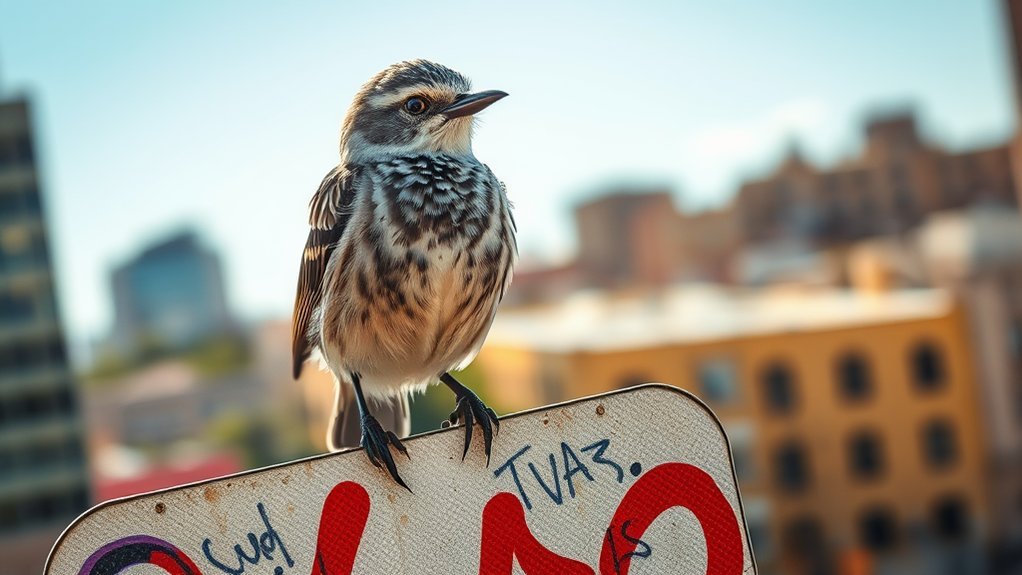
You often hear the sweet songs of the mockingbird in cities. But their vocal skills go beyond just creating melodies. Mockingbirds can recognize and imitate many sounds from their surroundings. This includes calls from other birds and even mechanical noises like car alarms.
Their ability to mimic sounds can confuse both predators and people, making them stand out. By copying various sounds, mockingbirds mark their territory and establish their identity in lively ecosystems.
If you listen closely, you'll see that they aren't just making random notes. They communicate clearly, creating a rich soundscape that links them to other birds and the bustling urban life around them.
Urban Environments and Wildlife Adaptation
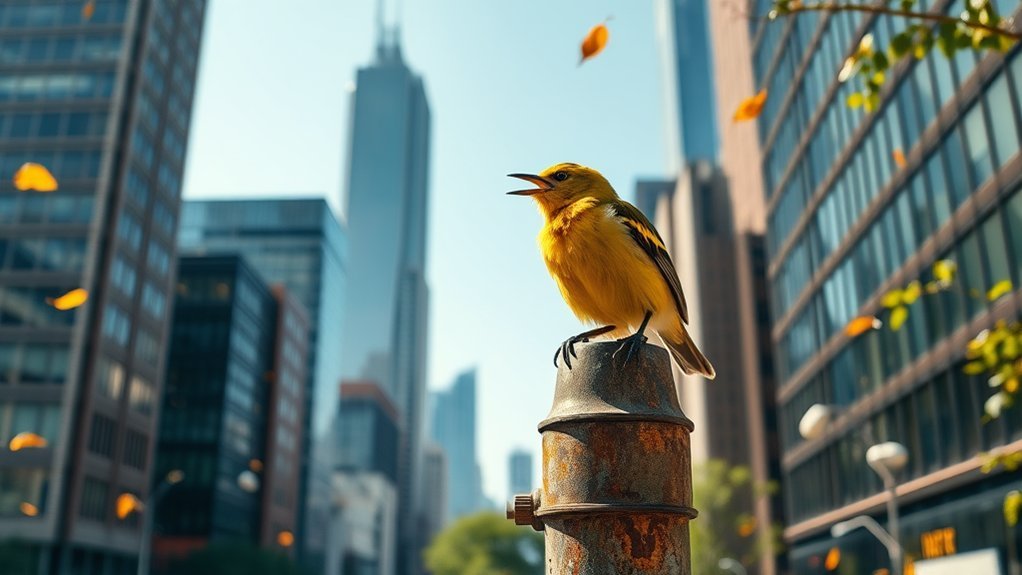
Urban environments push wildlife to adapt in impressive ways. Many animals thrive amid concrete and noise. Adaptation is vital for their survival. They find new food sources like litter and gardens. They also learn to cross busy streets.
Birds, for example, change their nesting habits. They build nests in building eaves and gather in parks. With fewer natural predators, these birds feel safe in neighborhoods. You may even hear them mimic car alarms, blending into the sounds around them.
Watching these changes helps us feel connected to nature, even in busy cities. The resilience of urban wildlife inspires amazement and a sense of community.
The Science of Birdsong and Mimicry
Birds in cities use songs and calls to communicate in their busy environments. Their sounds help them mark territory, attract mates, and warn of danger.
Each bird species has its own unique songs that adapt to the urban noise around them. This adjustment is crucial for their survival and demonstrates their intelligence.
For example, songbirds often change their pitch or loudness to ensure their calls are heard over traffic. This ability to mimic sounds and adjust their songs shows how adaptable urban birds are.
They build strong connections within their groups and habitats, enhancing our experiences in lively city spaces.
How Mockingbirds Mimic Human-made Sounds
Mockingbirds have a unique skill: they mimic human-made sounds in cities. Their ability to imitate is impressive, allowing them to blend their songs with the noise of urban life.
You may hear them copy car alarms, sirens, or even electronic chirps. This mimicry helps them attract mates and shows their ability to adapt to changing environments.
By using these sounds in their calls, mockingbirds create a special listening experience that connects human lives to nature. They remind us that even in busy cities, we can still hear the beautiful songs of birds.
Enjoy listening, as the mockingbird brings a touch of nature into our daily routines.
The Role of Sound in Bird Communication
Birds use sound to communicate in many ways. They defend their territory and attract mates through various calls. Each call has a different frequency and tone, conveying specific messages. For example, a high-frequency call often signals danger, while a lower-pitched sound can attract a partner.
Different species produce unique vocal patterns related to their environments, creating a diverse range of sounds. These sounds help birds establish their identity and maintain social connections within flocks.
In cities, birds adjust their calls to stand out from background noise. This adaptation helps ensure their messages are understood despite competing sounds. Each vocalization reveals a little story about the bird and its world.
The Effects of Urban Noise Pollution on Birds
Urban areas pose challenges for birds, especially due to noise pollution. Everyday sounds like traffic and construction disturb birds. This chaos makes it hard for them to communicate, mate, and find food.
Birds often change their calls or sing at higher pitches to be heard above the noise. These changes can harm their ability to reproduce and affect their health.
Constant loud sounds raise stress levels in birds, which can lead to health problems and shorter lifespans. Noticing these impacts in your neighborhood can help you appreciate how resilient birds are.
Understanding the need for quieter spaces allows you to play a part in making our urban environments better for birds. Small efforts can create a more peaceful space for our avian neighbors.
Why Mockingbirds Choose Car Alarms to Imitate
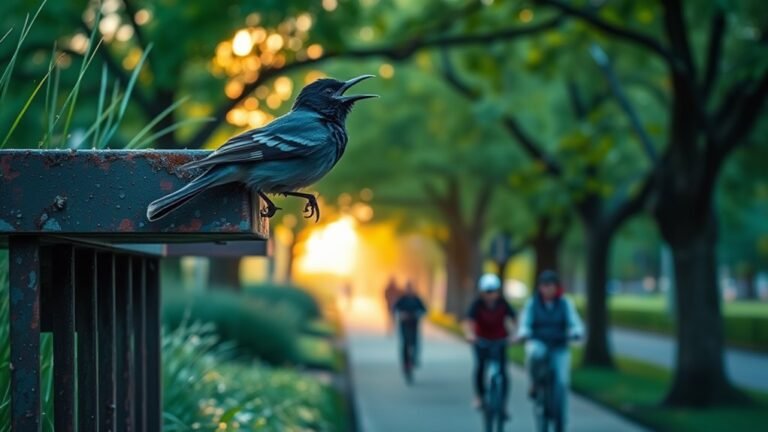
As you walk the streets, you may hear mockingbirds imitating car alarms. This behavior shows their adaptability to urban life.
Here are three reasons why they mimic these sounds:
- Familiar Sounds: Car alarms occur often. Mockingbirds use these sounds to get attention.
- Claiming Territory: By copying loud noises like car alarms, mockingbirds mark their area in the city.
- Attracting Mates: Unique sounds can impress potential mates, displaying the birds' skills.
Through this mimicry, mockingbirds demonstrate their ability to thrive in human environments.
The Impact of Mockingbird Mimicry on City Dwellers
Mockingbirds in city areas mimic sounds, offering a unique look at their ability to adapt. Instead of just repeating noises, they imitate the sounds around them to fit into urban life.
This creates a distinct soundscape that includes calls from city wildlife. Their mimicry shapes your urban experience, making nature more present in your daily life. You may start to recognize different bird calls, which helps you feel more connected to the wildlife nearby.
These birds show how nature can thrive in an urban setting, adding depth to your environment and encouraging you to appreciate the resilience of wildlife amidst city living.
Understanding the Territorial Behavior of Mockingbirds
Understanding mockingbird territorial behavior shows how these birds establish dominance in cities. They use specific methods to assert their presence:
- Territorial Calls: Mockingbirds create loud and varied sounds to signal their location and warn other birds away.
- Display Behavior: They perform flying displays and physical postures to demonstrate strength and dominance.
- Nest Protection: During breeding season, they guard their nests aggressively, keeping their territory safe from intruders.
Mockingbirds also imitate sounds from other species. This ability enhances their vocal performances and helps them adapt to urban living.
Mockingbirds and Their Ecosystem Contributions
Mockingbirds play a vital role in urban ecosystems. They help maintain biodiversity and balance in their environments. As omnivores, they consume insects and spread seeds, aiding in plant growth. This behavior enhances urban biodiversity and creates lively habitats for other species. Supporting mockingbird populations through conservation efforts helps ensure the health of urban ecosystems.
These birds adapt well to human environments, fostering a unique bond with communities.
The Cultural Significance of Mockingbirds in Urban Folklore
In urban folklore, mockingbirds hold a special place. They symbolize adaptability and resilience. Their ability to mimic various sounds resonates with the diverse communities around us.
Here are three key ways mockingbirds embody this significance:
- Adaptation: Mockingbirds have varied calls that show how they survive in changing environments.
- Community: They mirror the sounds of urban life, creating a sense of belonging among people.
- Identity: Mockingbirds represent the blend of cultures and experiences in urban settings.
The symbolism of mockingbirds strengthens connections. Each note encourages reflection on your surroundings and the stories they tell.
When you hear their calls, you engage with urban heritage and community.
How to Appreciate Urban Birds Beyond Their Sounds
While the sounds of urban birds can be lovely, appreciating them goes beyond their songs. Use birdwatching techniques to observe their behaviors, feeding, and nesting.
Watch how sparrows gather in flocks or how pigeons find food; these activities show their adaptability in city life. Notice their physical traits, like colors and sizes, to enhance your connection.
Keep a journal to track local species and their habits and habitats. By engaging with them, you'll feel more connected to your urban surroundings.
Your appreciation for urban birds will grow as you learn about their lives.
Frequently Asked Questions
What Other Urban Sounds Do Mockingbirds Imitate Besides Car Alarms?
Mockingbirds imitate many urban sounds. They copy car horns, sirens, dog barks, and other bird calls. Their ability to mimic these familiar noises adds energy to city life. You can hear their unique sound mixes in various environments, making it easy to appreciate their talent.
How Can I Attract More Mockingbirds to My Backyard?
To attract more mockingbirds to your backyard, install bird feeders filled with seeds and fruits. Add native plants to create a welcoming habitat. This lush environment provides food, shelter, and places for breeding. You will enjoy watching these birds thrive in your yard.
Do Mockingbirds Ever Mimic Other Bird Species?
Yes, mockingbirds can mimic other bird species. They imitate various birds to make their songs more interesting. This behavior helps them attract mates and claim territory. It can add charm to your backyard and create a lively atmosphere.
What Is the Lifespan of a Mockingbird in Urban Settings?
In urban areas, mockingbirds usually live about three to five years. Their lifespan depends on factors like food, predators, and environmental challenges. Observing how they adapt in cities helps us understand their survival and longevity better. Mockingbirds can thrive in different settings, and their songs and behaviors add charm to city life.
Can Mockingbirds Learn New Sounds as They Age?
Mockingbirds can learn new sounds as they grow older. This ability helps them change their singing patterns and adds variety to their songs. As they age, they improve their vocal skills, which helps them connect with other birds. This makes them more interesting to watch and listen to in their natural settings.

Ava is a bird enthusiast and nature lover who has spent countless hours observing and learning about the fascinating world of birds. With a passion for sharing her knowledge and inspiring others to appreciate the beauty of birds, Ava writes about her experiences and insights on avianadmirer.com.