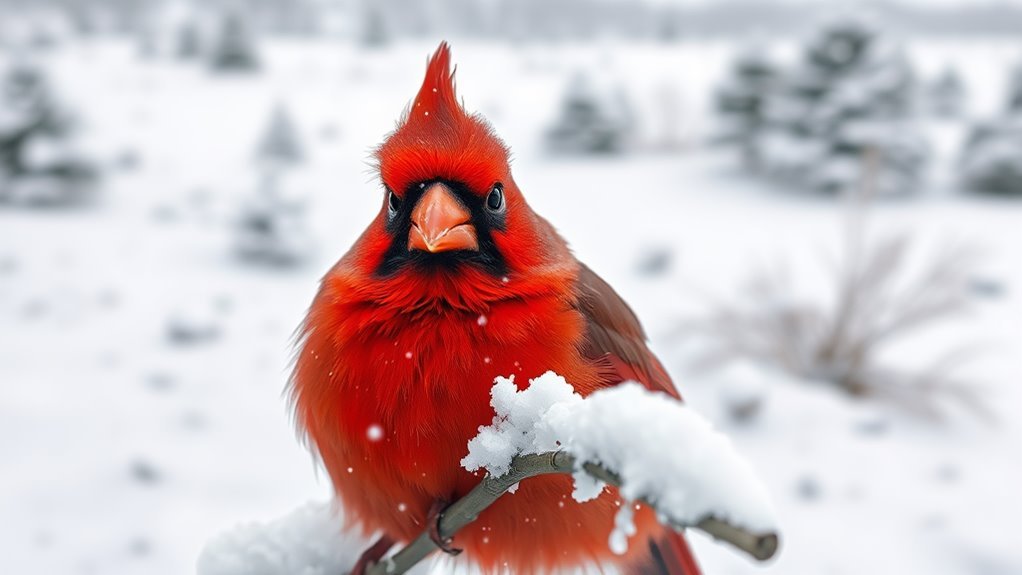
How Cardinals Survive Winter: Complete Survival Guide
When winter arrives, cardinals encounter many challenges that test their survival skills. They adapt by changing their diet and social behavior, looking for energy-rich foods and foraging in groups. You can often spot them in dense shrubs and evergreen trees, using these areas for shelter and nesting. Their survival strategies go beyond just finding food. Learning how they manage the cold and avoid predators gives us valuable insights into their resilience. What will they do next to survive?
Key Takeaways
Cardinals change their eating habits in winter. They mostly eat sunflower and safflower seeds to gain energy.
For nesting and shelter, they look for thick shrubs and evergreen trees. These provide protection from cold weather.
To keep warm, cardinals fluff their feathers and use the insulation from their feathers to trap body heat.
They often gather in groups to find food, avoid predators, and maintain social bonds.
Cardinals have sharp eyesight, which helps them spot predators while they search for food. They also hide well to stay safe.
Feeding Strategies: A Cardinal's Winter Diet

As winter arrives, cardinals change their feeding habits to cope with the cold. These colorful birds eat a variety of foods. They use their strong beaks to open different seeds. Their favorites are sunflower and safflower seeds, which provide important energy.
When you watch cardinals, you can see how they search for food. They look for seeds on the ground and often move from tree branches to bushes. This helps them find food while staying safe from predators.
Learning about how cardinals find food in winter helps you appreciate these strong birds as they thrive in tough conditions.
Finding Shelter: Nesting and Roosting Habits
Finding shelter is important for cardinals in winter. These birds look for dense shrubs and trees to nest and roost. These locations protect them from cold weather.
Cardinals use various materials like twigs, leaves, and grass to build their nests. They create cozy spaces to stay warm. You may see them in evergreen trees, which provide good cover.
On very cold nights, cardinals huddle together in thick vegetation. This keeps them warm and safe.
Understanding these habits shows how cardinals adapt to winter. Their need for shelter reminds us of the importance of finding safe spaces in our lives.
Social Behavior: The Importance of Flocking

While cardinals seek shelter in dense foliage during winter, their social behavior is crucial for survival. Flocking together helps cardinals find food and avoid predators.
The group dynamic creates a lively atmosphere for communication and sharing information about food sources. Within these flocks, a social hierarchy forms, with dominant birds often getting the best feeding spots. This structure fosters belonging, as each cardinal knows its role in the group.
Coping With Cold: Physiological Adaptations
Cardinals are known for their bright red feathers, but their ability to handle cold weather is impressive. They've several ways to stay warm:
- Thermoregulation: Cardinals can adjust their body temperature.
- Feather insulation: Their feathers trap warm air close to their bodies.
- Countercurrent heat exchange: This process helps them keep heat in their feet and legs.
When cardinals fluff up their feathers, they create a warm layer of air that helps them stay cozy. This insulation reduces heat loss, allowing them to survive in winter's cold.
Observing these adaptations helps us appreciate how these birds thrive in harsh conditions. Their resilience is a reminder of survival and community during tough times.
Staying Safe: Predation and Threat Management

Cardinals face many dangers in their environment. To survive, they use effective strategies to avoid predators. They've sharp eyesight and stay alert to spot threats like hawks or cats.
Often, they hide in dense bushes or trees for safety. You may notice cardinals staying still and quiet, which helps them recognize danger.
Cardinals communicate with each other to share warnings. This teamwork increases their safety.
They also pick feeding locations that keep them hidden, choosing shrubs or branches that provide cover. By watching cardinals closely, you can learn from their behaviors. This deepens your appreciation for these resourceful birds and their skills in the wild.
Attracting Cardinals: Tips for Birdwatchers in Winter
To attract cardinals during the winter months, follow these simple tips:
- Bird feeders: Use platform feeders. Cardinals like space to feed comfortably.
- Food choices: Provide sunflower seeds, safflower seeds, and peanuts. These foods are very appealing to cardinals.
- Safe locations: Position feeders near dense shrubs or trees. This gives cardinals a safe place to eat away from predators.
Frequently Asked Questions
How Do Cardinals Communicate During Winter?
During winter, cardinals use specific bird calls to communicate. These calls help them find each other while searching for food and shelter. This social behavior builds bonds among cardinals and fosters a sense of community in cold environments. Observing cardinals can be a joyful experience as you listen to their lively exchanges amidst the snowy landscape.
What Predators Are Most Common for Cardinals in Winter?
In winter, cardinals face several common predators. Great horned owls, domestic cats, red-tailed hawks, and raccoons pose threats to these birds. Understanding these dangers highlights the challenges cardinals face while trying to stay safe in their habitats. Observing cardinals can be a rewarding experience, as you witness their resilience in the face of these predators.
Can Cardinals Migrate or Do They Stay Year-Round?
Cardinals do not migrate like many other birds. Instead, they stay in one place throughout the year. They adapt to winter conditions by finding dense foliage for shelter and using available food sources. This allows them to bond with their local environment and thrive regardless of the season. Cardinals are well-equipped to handle the challenges of winter, making them a familiar sight in many areas all year round.
How Do Cardinals Find Food When It's Buried Under Snow?
Cardinals find food buried under snow using their sharp eyesight. They remember where they stored food. To uncover hidden seeds, they scratch the surface of the snow. This method helps them locate food even in tough winter conditions.
Do Cardinals Engage in Mating Behaviors During Winter?
Yes, cardinals show courtship behaviors in winter. They often begin nesting early. During this time, they display their bright colors and sing lovely songs to attract mates. This behavior helps strengthen their bonds and prepares them for successful reproduction in spring.

Ava is a bird enthusiast and nature lover who has spent countless hours observing and learning about the fascinating world of birds. With a passion for sharing her knowledge and inspiring others to appreciate the beauty of birds, Ava writes about her experiences and insights on avianadmirer.com.