
World’s Tallest Flying Bird: Meet the Majestic Sarus Crane
The Sarus Crane is the tallest flying bird, standing almost 1.8 meters tall. It has gray feathers and a bright red crown, making it easy to spot in wetlands. This bird is found in the Indian subcontinent and Southeast Asia. Understanding its habitat helps us see how it fits into the ecosystem. The Sarus Crane also has interesting social behaviors. However, it faces threats that endanger its survival. Protecting this majestic species is important for maintaining biodiversity.
Key Takeaways
The Sarus Crane is the tallest flying bird, standing up to 1.8 meters tall. It has a graceful body, long legs, a long neck, and a striking red crown. Sarus Cranes live in wetlands like marshes and rice fields, which help keep ecosystems healthy. They bond for life, create beautiful calls, and perform synchronized dances during courtship. However, habitat destruction, climate change, and pollution threaten their survival. Protecting these majestic birds is important for the environment.
Characteristics of the Sarus Crane
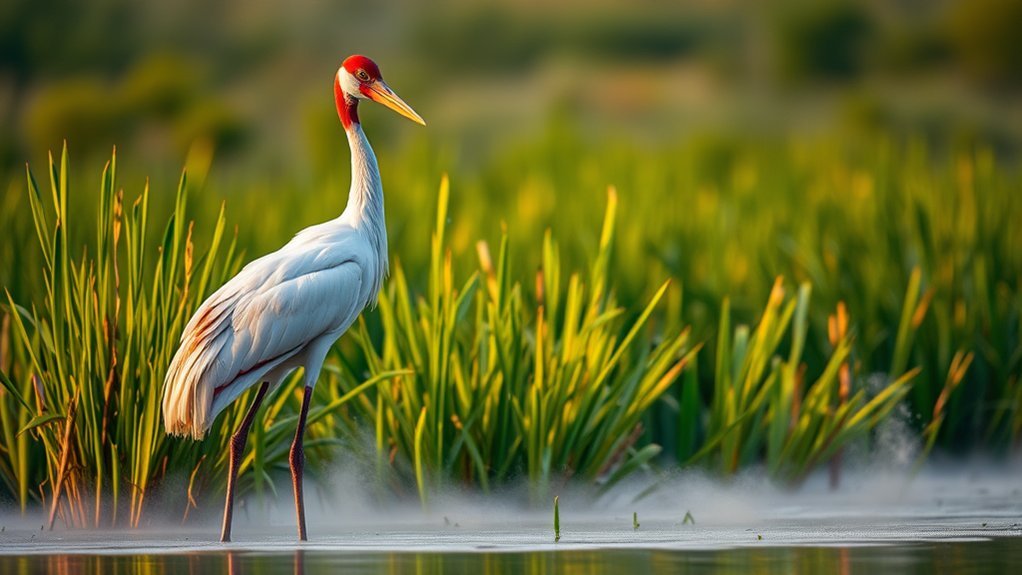
The Sarus Crane is the tallest flying bird, reaching heights of up to 1.8 meters. It has long legs and a long neck, creating an elegant shape.
The crane has gray feathers with bright red and white accents. Its most notable feature is the red crown on its head, which adds to its beauty.
The Sarus Crane communicates with low, resonant calls that can travel long distances. These calls help the crane connect with its mate and other cranes.
The crane's physical features and vocalizations show its adaptability and social nature. Many bird enthusiasts find these traits appealing.
Habitat and Distribution
Sarus Cranes live in wetlands like marshes, rice fields, and shallow lakes. These habitats are mainly in the Indian subcontinent and Southeast Asia.
Sarus Cranes help keep wetland ecosystems healthy by controlling insect populations through their foraging. Their preferred breeding areas are rich in nutrients and support many aquatic plants. These plants provide food for the cranes and their young.
During breeding season, Sarus Cranes show strong loyalty to their sites, returning to the same places year after year. This behavior highlights their connection to these habitats.
Therefore, protecting these ecosystems is essential for the future of Sarus Cranes and the wildlife around them.
Social Behavior and Mating Rituals

Sarus cranes exhibit interesting social behaviors that are important for their survival and reproduction. These elegant birds form monogamous pairs and perform impressive courtship displays. These displays help to strengthen their pair bonds and build social connections within their groups.
Here are some key behaviors to notice:
- Vocalizations – Sarus cranes use melodious calls to communicate and coordinate with their partners and groups.
- Dance Rituals – They perform synchronized movements, showcasing agility and unity to attract mates.
- Territorial Displays – Cranes defend their nesting areas by exhibiting postures that signal strength and commitment.
These behaviors highlight how sarus cranes interact within their communities and contribute to their success. Watching them can provide insight into their social structures and relationships, making it a rewarding experience.
Diet and Feeding Habits
An adult sarus crane eats a varied diet that includes plants, insects, and small animals.
They adapt well to different environments, which helps them find food. You can see them using simple foraging techniques, such as searching in mud for tubers or looking through grass for insects. This behavior helps them access food, which is essential for their survival.
In the wet season, they prefer aquatic plants.
In drier months, they eat more grains and seeds. These feeding habits show their role in the ecosystem, as they use resources effectively in their environment.
Observing sarus cranes reveals how their foraging contributes to their health and helps maintain their population.
Importance in Ecosystems
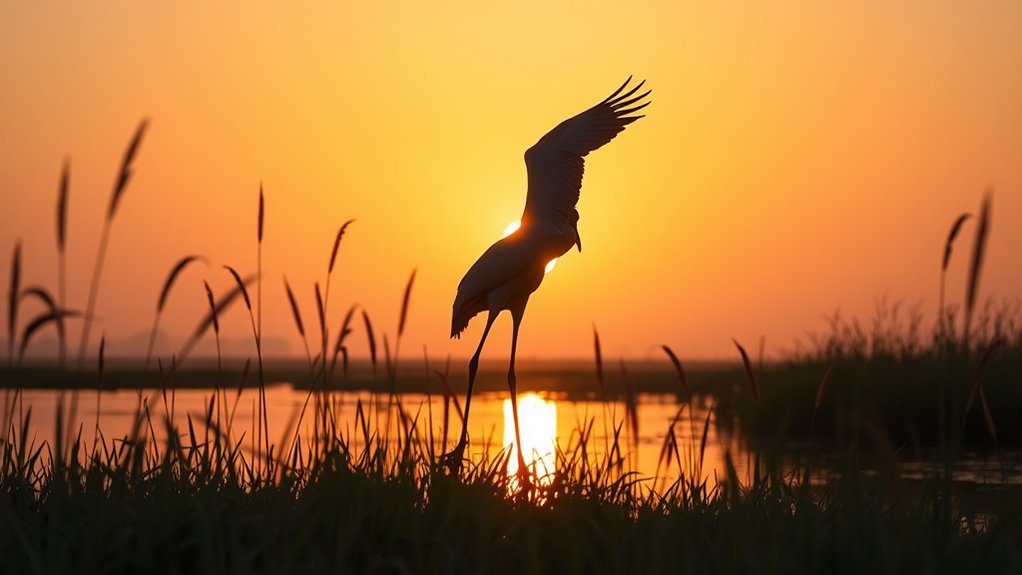
Cranes play an important role in their ecosystems. Sarus cranes are valuable for several reasons:
- Creating Habitats: Their nesting and feeding create environments that support various wildlife.
- Dispersing Seeds: As they forage, they spread plant seeds, which aids in vegetation growth.
- Cycling Nutrients: Their diet affects nutrient flow in both water and land ecosystems, benefiting plants and animals.
These behaviors show that Sarus cranes are more than just beautiful birds; they're vital to their ecosystems. Their presence supports ecosystem stability and fosters a healthier landscape for all species, including humans.
This connection to nature enriches our environment.
Cultural Significance
The Sarus crane is important in the cultures of South Asia. This bird symbolizes love and loyalty in many stories and traditions. People often connect the Sarus crane to fertility and prosperity, giving it deep spiritual meaning.
In some communities, the crane's mating dance is part of local festivals, celebrating unity and shared values. The Sarus crane also appears in art and literature, showing how it shapes cultural identities.
Recognizing the significance of the Sarus crane helps you understand how nature and human life connect, enriching your appreciation of cultural heritage.
Threats to Survival
The Sarus crane is an important cultural symbol, but it faces serious threats to its survival. Habitat destruction and agricultural expansion reduce their living spaces. Climate change worsens water shortages and changes their migration patterns.
Consider these three main threats:
- Hunting: Illegal hunting remains a problem, fueled by local demand and conflicts with humans.
- Pollution: Pesticides and industrial waste pollute vital wetlands, harming their food sources.
- Invasive Species: Non-native plants and animals invade, damaging habitats and decreasing breeding chances for these beautiful cranes.
To protect the Sarus crane, we must address these challenges. By conserving their habitats and reducing hunting, pollution, and invasive species, we can help ensure they continue to thrive in our ecosystems.
Conservation Efforts
Conservation efforts for the Sarus crane are gaining speed. Different programs aim to address the main threats these birds face.
The focus is on restoring their habitats, ensuring they've enough wetlands to survive. Projects include reforesting important areas and promoting farming methods that protect the land.
Working together with local communities is important. This encourages shared responsibility for safeguarding biodiversity. Educational programs help raise awareness about why the Sarus crane matters, motivating community participation in conservation activities.
Researchers monitor crane populations to gather data that informs decision-making. By participating in these efforts, you help protect the Sarus crane and support the protection of our delicate ecosystems for generations to come.
How You Can Help
Engaging in conservation efforts can help protect Sarus cranes and their habitats. Here are some simple ways you can contribute:
- Join local conservation groups: Work with people who care about protecting wildlife. You can organize clean-up drives or projects to restore habitats together.
- Participate in awareness campaigns: Use social media to share information about the threats to Sarus cranes and promote their protection.
- Support sustainable agriculture: Encourage farming practices that reduce habitat damage and conserve water sources needed for crane survival.
Your involvement not only supports Sarus cranes but also builds community connections as people come together for this important cause.
Frequently Asked Questions
How Fast Can a Sarus Crane Fly?
A Sarus crane can fly at speeds of 15 to 25 miles per hour. They can soar to heights of 5,000 feet. These birds show great ability and beauty in the air.
What Is the Lifespan of a Sarus Crane?
The Sarus crane lives an average of 20 to 40 years in the wild. Their lifespan varies based on habitat quality and protection from dangers. Conservation efforts are crucial for the survival of these incredible birds. Protecting their habitats enhances their chances of living longer and thriving.
Do Sarus Cranes Migrate?
Sarus cranes do not migrate. They prefer stable habitats for breeding and feeding. They have established territories that provide access to suitable wetlands. These wetlands support their lifecycle and help maintain their population effectively. Sarus cranes thrive in environments where they can find food and raise their young without the need to move to different locations.
What Sounds Do Sarus Cranes Make?
Sarus cranes communicate mainly through their vocal sounds during courtship. Their calls consist of deep croaks and trumpets. These sounds help strengthen the bonds between pairs and establish their territory. Listening to these calls provides insight into their social interactions during the breeding season. Enjoy observing their unique vocalizations as they play an important role in their relationships and habitat.
How Do Sarus Cranes Care for Their Young?
Sarus cranes are dedicated parents. They protect their nests and care for their hatchlings. Both parents help their young learn to find food and communicate through vocal sounds. This close attention ensures the chicks have the support they need to grow strong and healthy.

Ava is a bird enthusiast and nature lover who has spent countless hours observing and learning about the fascinating world of birds. With a passion for sharing her knowledge and inspiring others to appreciate the beauty of birds, Ava writes about her experiences and insights on avianadmirer.com.