What Is the Bird That Can Fly Backwards? Hummingbirds’ Unique Talent
Hummingbirds are special because they can fly backward. This ability is rare among birds. Their unique wing structure allows them to perform a figure-eight motion with their wings. This motion helps them create lift during both wing strokes, making them very agile.
These adaptations are important for their role as pollinators. Hummingbirds transfer pollen while feeding on nectar, benefiting many plants. Their flying skills not only impress us but also play a vital role in their ecosystem.
Key Takeaways
Hummingbirds are the only birds that can fly backward. They achieve this due to their special wing movement. Hummingbirds move their wings in a figure-eight pattern, which helps them lift during both the up and down strokes. Their small size and fast metabolism allow them to move efficiently while flying. Their flexible shoulders give them precise control over their wings, which enhances their agility. This ability to fly backward helps them pollinate flowers, as they can quickly hover near blooms to gather nectar.
The Mechanics of Hummingbird Flight
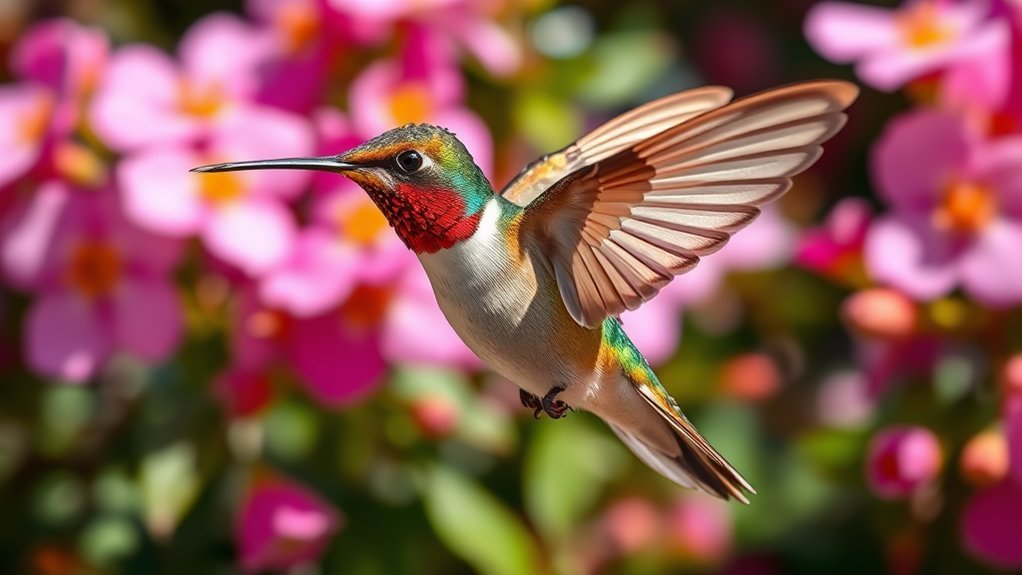
Hummingbirds have a unique flight mechanism. They can rotate their wings in a full circle. This ability gives them great maneuverability.
Their wing structure, muscle coordination, and skeletal design work together to allow them to hover and change direction quickly. You can see a hummingbird dart between flowers, feeding on nectar while hovering in place.
They can beat their wings up to 80 times per second. This rapid wing movement generates both lift and thrust. Hummingbird flight is efficient and supports their survival.
Watching them fly is a remarkable experience, showcasing their agility and beauty.
Adaptations for Backward Flight
Hummingbirds have special traits that allow them to fly backward, which is rare among birds.
Their wings move in a figure-eight pattern, giving them great agility and helping them maneuver in small areas. This wing motion generates lift both when the wings go up and when they go down.
Their light bodies and fast metabolism help them save energy during these challenging flights. Additionally, their shoulders are very flexible, allowing them to move their wings in various directions for precise flight control.
These features help hummingbirds not only fly backward but also hover in place, enabling them to feed on flower nectar while avoiding predators.
Hummingbirds in Their Ecosystem
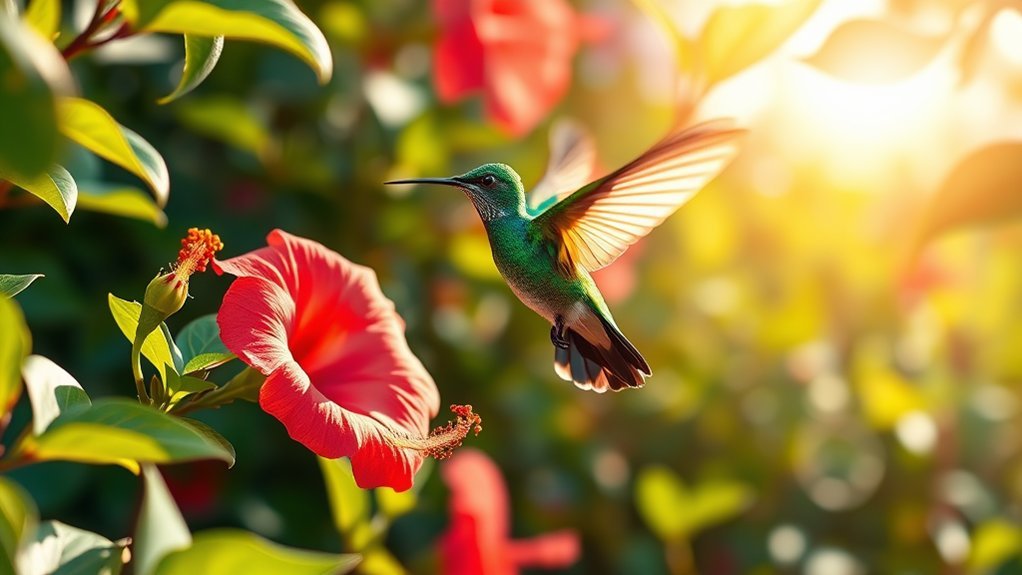
Hummingbirds are important pollinators in their ecosystems. They're found in various habitats, including tropical rainforests and deserts, where they interact with many flowering plants.
As hummingbirds feed on nectar, they move pollen from one flower to another. This helps plants reproduce and promotes genetic diversity.
The relationship between hummingbirds and plants benefits both. Hummingbirds get food, while many other species depend on the plants for survival.
Understanding this connection highlights the balance of nature. You can help by supporting habitats that are friendly to birds, contributing to the preservation of this important ecological network.
The Role of Hummingbirds in Pollination
Hummingbirds play an important role in pollination. These small birds are attracted to flowers that have a lot of nectar. As they move from flower to flower, they help plants reproduce by transferring pollen. This action increases genetic diversity among plants.
Healthy plant reproduction supports a stable food supply for wildlife.
Hummingbirds prefer flowers with specific colors and shapes. This helps them find food more easily. By observing hummingbirds, we can see how they contribute to healthy ecosystems.
Their actions support the plants and other wildlife in their environment. Appreciating this relationship highlights the value of hummingbirds in nature.
Fascinating Facts About Hummingbirds
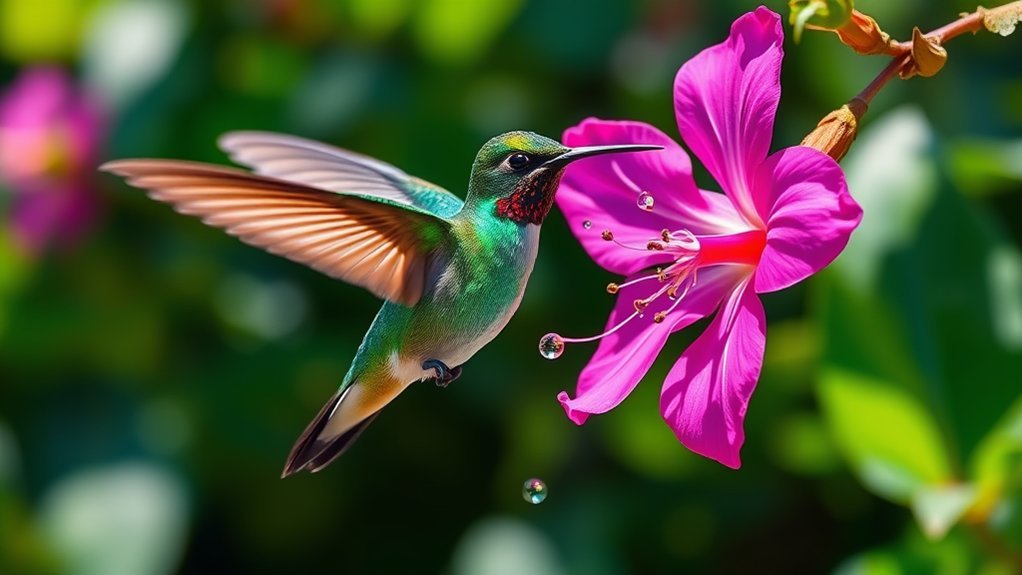
Hummingbirds are fascinating creatures known for their impressive pollination skills and unique features. They can hover in place and fly backward, which is remarkable.
These birds have a high metabolic rate that demands a special diet. They primarily eat nectar, which provides them with essential sugars. Additionally, they consume insects and spiders for necessary proteins and nutrients.
Hummingbirds also have vibrant feathers. These bright colors attract mates and can scare away potential predators.
With over 300 different species, hummingbirds showcase a stunning variety of colors. They play a crucial role in ecosystems and bring joy to those who appreciate nature's beauty.
Frequently Asked Questions
How Fast Can Hummingbirds Fly Backward?
Hummingbirds can fly backward at speeds of up to 30 miles per hour. Their wing structure allows them to move with great agility. This ability amazes both scientists and nature lovers. Hummingbirds are truly fascinating creatures. Their unique flight mechanics make them stand out in the bird world.
Do All Hummingbirds Fly Backward?
Not all hummingbirds can fly backward, but many species can. This ability comes from their special flight mechanics. During migration, you can see that different species show various adaptations. These adaptations help them move efficiently in their environment.
What Species of Hummingbirds Are Best Known for Flying Backward?
The Ruby-throated and Anna's hummingbirds are known for their ability to fly backward. Their wing structure enables them to perform impressive aerial maneuvers. These hummingbirds exhibit excellent agility and control, allowing them to adapt well to different environments.
Many people find it fascinating to watch these birds as they dart around, showcasing their remarkable flying skills. Seeing a hummingbird fly backward can be a delightful surprise, making them a popular subject for birdwatching and photography.
How Does Backward Flight Affect Hummingbird Predators?
Backward flight provides hummingbirds with key benefits for avoiding predators. This flight style increases their agility and helps them dodge quickly. As a result, they can evade threats more effectively and increase their chances of survival. Observers often enjoy watching these birds showcase their stunning aerial skills while navigating around dangers.
Can Hummingbirds Hover While Flying Backward?
Yes, hummingbirds can hover while flying backward. Their unique body structure and strong flying skills let them change direction easily. This ability highlights the amazing features of nature.

Ava is a bird enthusiast and nature lover who has spent countless hours observing and learning about the fascinating world of birds. With a passion for sharing her knowledge and inspiring others to appreciate the beauty of birds, Ava writes about her experiences and insights on avianadmirer.com.