
South Carolina State Bird: The Melodious Carolina Wren
The Carolina Wren is the state bird of South Carolina. It has a small, brown body and makes distinctive calls. You can hear its sounds in forests and suburban gardens. This bird is very adaptable in how it finds food and builds nests. Learning about the Carolina Wren helps us understand its role in the ecosystem, including the challenges it faces. How does this bird symbolize resilience in its environment?
Key Takeaways
- The Carolina Wren is the state bird of South Carolina. It is known for its lively and pleasant song.
- These birds are small, measuring about 4.5 to 5.5 inches. They have warm brown feathers and a curved tail.
- Carolina Wrens live in different places, including wooded areas, gardens, and urban areas in the Southeastern U.S.
- They mainly eat insects and look for food in leaf litter, showing flexibility in their feeding habits.
- Culturally, the wren represents biodiversity. It often appears in local art and stories, highlighting South Carolina's appreciation for nature.
Overview of the Carolina Wren

The Carolina Wren is a small bird known for its lively nature and unique call. This bird is bold and often interacts socially, creating an energetic environment in its surroundings.
Carolina Wrens establish territories by singing loudly to attract mates and assert dominance. You may often see them foraging in pairs, which helps them find food more effectively.
They thrive in various environments, including urban and rural areas, strengthening their community bonds. The presence of the Carolina Wren adds vibrant energy to the birdlife in South Carolina.
Physical Characteristics
The Carolina Wren is a small bird, measuring about 4.5 to 5.5 inches long. Its features make it easy to recognize.
The bird has a stout body covered in warm brown feathers with interesting patterns that give it texture. Its tail is prominently curved, and it has large, expressive eyes that add to its charm. A bright white eyebrow stripe stands out against its darker feathers, making it a pleasing sight.
Its small size allows it to move quickly and easily through dense bushes and plants. Observing these traits highlights the wren's ability to thrive in different environments and fosters a deeper appreciation for this lively bird in its ecosystem.
Habitat and Range
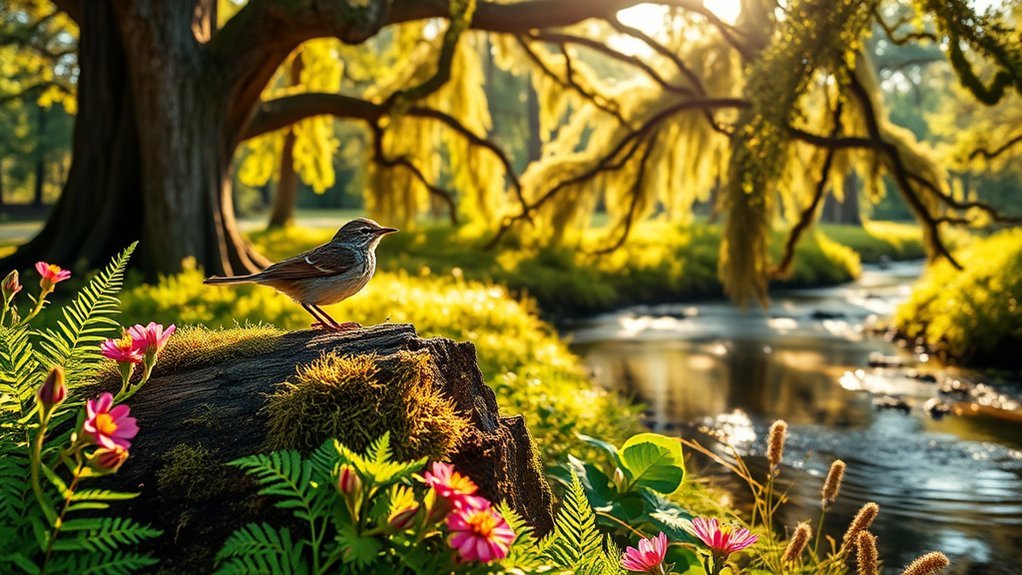
The Carolina Wren is a small bird that thrives in various environments. It prefers wooded areas, gardens, and brushy fields.
This bird lives in many locations across the Southeastern United States, making it a common sight in backyards. Carolina Wrens often nest in shrubs, tree cavities, or in man-made structures.
Their ability to adapt helps them survive in both urban and rural areas. By learning about their habitat preferences, you can appreciate their role in the local ecosystem and find ways to attract them to your garden or outdoor space.
Enjoy the presence of these lively birds and the joy they bring to your surroundings.
Diet and Feeding Behavior
The Carolina Wren lives in many types of environments. This small bird has flexible feeding habits. It mainly eats insects, using different methods to find food.
You can see them:
- Searching through leaf litter to find hidden insects.
- Moving along tree branches to catch small bugs.
- Looking in ground crevices for tasty snacks.
These actions show how resourceful they are. Carolina Wrens mostly eat insects like beetles, caterpillars, and spiders.
In winter, they also eat seeds and berries. Their ability to adapt helps them thrive in various habitats. This makes them important members of their ecosystems.
Learning about their diet and feeding habits connects you with these charming birds.
Breeding and Nesting Habits
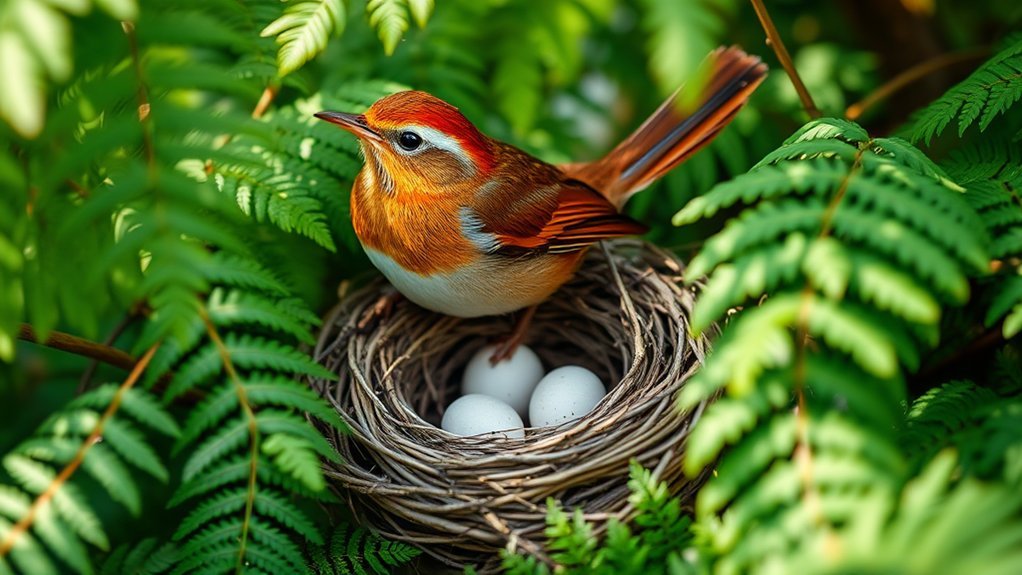
Carolina Wrens have unique and adaptable breeding and nesting habits that help their species thrive.
They typically breed between March and August. During this time, they're resourceful in choosing nesting sites. They gather materials like twigs, leaves, and even human-made items such as paper or string. Their nests are often hidden in dense shrubs or tree cavities, providing protection from predators.
Carolina Wrens can raise multiple broods in one season. This ability shows their adaptability to various environments.
Their nesting habits not only ensure the survival of their young but also strengthen their role in local ecosystems.
Vocalizations and Songs
The Carolina Wren's vocalizations are unique. Their songs stand out and demonstrate impressive mimicry skills. You'll often hear:
- Territorial calls: A clear and bold "teakettle" sound that marks their territory.
- Soft phrases: These soothing sounds create a warm and inviting atmosphere.
- Playful trills: These lively notes reflect their energetic personality in wooded areas.
These sounds help wrens establish their territory and build social bonds.
As you listen to their songs, you connect with nature, feeling a sense of harmony in the vibrant world around you. The Carolina Wren's music weaves together a lively scene filled with sound and life.
Role in the Ecosystem
The Carolina Wren communicates through its songs and calls, which also show its importance in nature. This active bird finds insects and larvae to eat, acting as a natural pest controller. By doing this, the wren helps keep the environment balanced.
It searches through leaf litter and dense plants, reducing pest numbers that could harm vegetation. As the wren moves around flowers, it assists in pollination, helping native plants reproduce.
This pollination supports a rich ecosystem and provides habitat for other wildlife. Appreciating the Carolina Wren goes beyond enjoying its songs; it plays a vital role in the ecological community.
Conservation Status
The Carolina Wren has a population in the millions and enjoys a stable conservation status. This stability stems from its ability to thrive in different environments.
Here are key factors that support its survival:
- Varied habitats – Carolina Wrens live in gardens, woodlands, and wetlands, demonstrating their adaptability.
- Habitat conservation – Efforts to protect critical habitats help ensure that these birds have the resources they need to thrive.
- Stable population – Monitoring shows that the population remains steady, indicating successful breeding and foraging.
These elements highlight the importance of healthy ecosystems and habitat protection for the Carolina Wren.
Being aware of and participating in conservation efforts can help maintain the presence of these birds in our communities.
Cultural Significance in South Carolina
Carolina Wrens hold an important place in South Carolina's culture. They symbolize the state's biodiversity and connection to nature. These small birds often appear in local stories, showing the community's bond with the environment.
Storytellers and poets find inspiration in the wren's lively song and bright presence. They use the bird's traits to represent resilience and adaptability in their writing.
Artists capture these themes by depicting the Carolina Wren in paintings and sculptures, highlighting its role in Southern identity. By honoring the wren as a symbol, you celebrate this unique species and connect to South Carolina's cultural heritage.
The Carolina Wren reflects the spirit and unity of local communities, making it a beloved part of the state's identity.
Frequently Asked Questions
What Are the Predators of the Carolina Wren?
Carolina wrens face various predators in their environment. Common threats include domestic cats, snakes, and larger birds. These predators can impact the wren's survival. As a result, wrens adjust their nesting habits and vocalizations to stay safe from danger. They choose nesting locations carefully to avoid being seen and may alter their calls to prevent attracting attention. Understanding these challenges helps us appreciate the resilience of Carolina wrens in the wild.
How Long Does the Carolina Wren Live?
A Carolina wren typically lives for five to seven years. Their lifespan can vary based on habitat quality and predation. In favorable environments, some wrens may live longer than this average.
Can Carolina Wrens Be Kept as Pets?
Carolina wrens are not suitable as pets. They need specific living conditions that replicate their natural habitat. Providing appropriate care for these birds is challenging. Keeping them in a confined space makes them unhappy and unhealthy. Therefore, Carolina wrens do not adapt well to domestication.
Are Carolina Wrens Migratory Birds?
Carolina Wrens are not migratory birds. They typically stay in their local areas throughout the year. Instead of migrating long distances, they focus on surviving colder seasons in their familiar habitats. This behavior allows them to adapt and thrive in their specific environments.
What Sounds Do Carolina Wrens Make Besides Their Songs?
Carolina wrens make various calls besides their songs. These calls serve important purposes. They help establish territory, signal distress, and connect with other wrens. By using these sounds, Carolina wrens enhance their interactions and adapt to their environment. Listening to these calls offers insight into their social life and behavior.

Ava is a bird enthusiast and nature lover who has spent countless hours observing and learning about the fascinating world of birds. With a passion for sharing her knowledge and inspiring others to appreciate the beauty of birds, Ava writes about her experiences and insights on avianadmirer.com.