Guide to Blue Birds in Washington State
In Washington State, blue birds bring color to the beautiful scenery. You can see the lively Blue Jay and the peaceful Mountain Bluebird. Each bird adds its special touch to nature's music. Knowing where to find these birds and how to identify them can make your experience even better. Let's explore where to spot these stunning blue birds and learn more about them.
Key Takeaways
- Discover bluebird species in Washington State, including the Blue Jay, Western Bluebird, and Mountain Bluebird. These birds inhabit various environments across the region.
- Visit prime birdwatching spots like the San Juan Islands and Mount Rainier National Park for the best experiences.
- The best times for birdwatching are early morning and late afternoon, especially from March to July during spring migrations.
- Identify bluebird species by observing their unique plumage, markings, and calls.
- Use a telephoto lens to take photographs during golden hours. This will showcase the beauty of bluebirds in their natural habitats.
Overview of Blue Birds in Washington State

In Washington State, blue birds add color to forests and gardens.
These birds thrive in various habitats, from dense woods to open fields.
As you explore the landscape, watch for their graceful movements and listen to their melodic songs.
Many blue birds migrate seasonally, moving to warmer areas during colder months.
This migration helps them survive and connects them to larger ecosystems.
Enjoy birdwatching and appreciate the beauty of these remarkable birds.
Blue Jay: The Bold and Boisterous
The Blue Jay is a vibrant blue bird commonly found in Washington State. Its bright plumage and lively behavior make it easy to spot in wooded areas and parks.
- Blue Jays often travel in flocks, adding vibrancy to their surroundings.
- They're curious and explore their habitats without hesitation.
- Their loud calls and striking blue color make them memorable.
With their playful actions and distinct presence, Blue Jays create a lively atmosphere.
Watching them interact and display their unique behaviors connects you to the vibrant life in nature.
Western Bluebird: A Stunning Ground Dweller

While walking in open fields and grasslands in Washington State, you might see the Western Bluebird. These colorful birds live in open areas and often sit on low branches or fences, watching their surroundings.
Their bright blue feathers and warm orange chest make them stand out against the earthy colors of their environment. You may notice how they quickly dive to catch insects, showing impressive agility.
They often nest in tree holes, creating a safe home for their young. Watching these birds can help you connect with nature and appreciate the beauty around you.
Keep an eye out; their vivid colors are unforgettable.
Mountain Bluebird: The Sky's Bright Gem
Spotting a Mountain Bluebird in Washington State feels like finding a piece of the sky. This bright blue bird captivates with its vivid color and graceful flight in the mountains.
As you hike along the trails, watch for these beautiful birds as they migrate between breeding and wintering areas.
- Mountain Bluebirds symbolize freedom and the beauty of nature.
- Their arrival signals a change in seasons, inviting you to embrace new beginnings.
- Watching them connects you to nature and reminds you to appreciate life's fleeting moments.
Take a moment to enjoy their presence; it enhances your experience in Washington's beautiful landscapes.
Indigo Bunting: A Rare and Beautiful Visitor

If you see an Indigo Bunting in Washington State, you'll understand why this bird is a rare treasure.
Its bright blue feathers and sweet song bring joy to birdwatchers. These beautiful birds like open woodlands, fields, and shrubby areas, standing out against Washington's scenery.
They travel thousands of miles, returning each spring to show us their beauty. Spotting one is a joyful moment, reminding us of nature's wonders.
As you explore, look for this special bird and enjoy the brief moments it offers, connecting you to the wild.
Lazuli Bunting: The Striking Colorizer
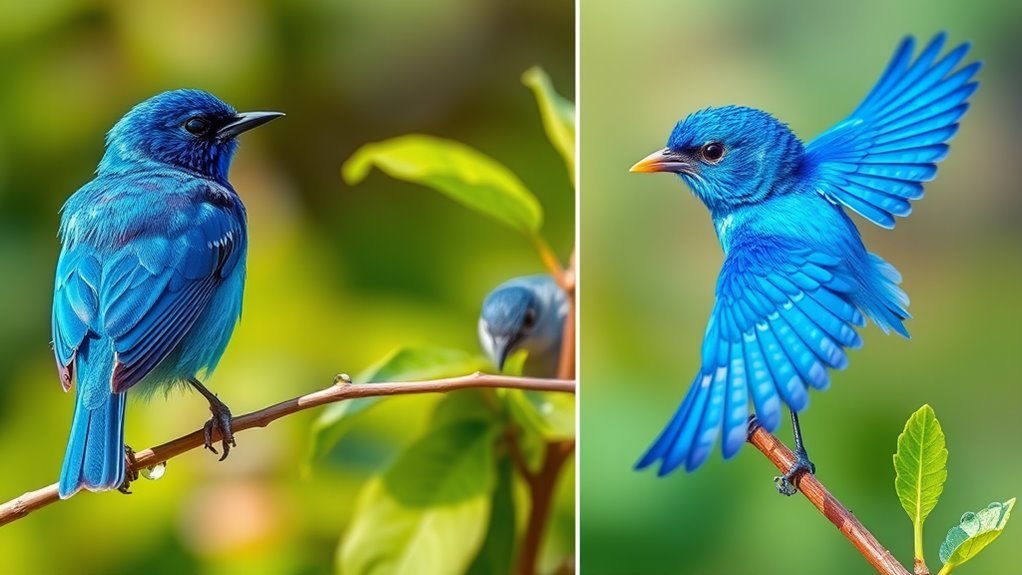
In the sunlight of Washington State, the Lazuli Bunting shows off its bright colors. With deep blue feathers and an orange belly, it catches your eye quickly.
Watching these birds build their nests in shrubs or low trees is a joy. They prefer a diet of seeds, insects, and berries.
- You'll enjoy seeing them in social groups during migration.
- Their songs are pleasant and add beauty to the area.
- Watching their interactions connects you to nature.
Every sighting of a Lazuli Bunting enhances your experience of the diverse birds in Washington.
Where to Spot Blue Birds: Top Locations
If you want to see beautiful blue birds in Washington State, start at the San Juan Islands. These islands have great habitats for spotting Tree Swallows.
Mount Rainier National Park is another excellent location. Here, you can find Lazuli Buntings, whose bright colors stand out against the greenery.
The Columbia River Gorge is also a fantastic place, especially during spring migrations.
Joining local birdwatching groups can enhance your experience. These groups often organize trips to the best birding spots.
They're dedicated to protecting bird habitats and help you feel connected to nature. So, grab your binoculars, get involved, and enjoy the thrill of spotting stunning blue birds right in your own backyard!
Best Times for Birdwatching in Washington
Birdwatching in Washington requires attention to timing. Knowing the best times to go can enhance your experience. Early morning and late afternoon are ideal for spotting bluebirds, as they're most active during these hours.
Spring and early summer are especially rewarding when migrating birds return, displaying vibrant colors and unique behaviors.
Here are key points for successful birdwatching:
- Dawn and Dusk: Bluebirds forage and sing during these times.
- Breeding Season: From March to July, nesting activities attract various bird species.
- Post-Rain: After a storm, birds come out, providing stunning views against green landscapes.
These moments help you connect with nature and create lasting memories with fellow birdwatchers. Enjoy your time observing the beauty of birds in Washington.
Tips for Identifying Blue Birds
To identify bluebirds, focus on their unique features. Observe the vibrant colors—different types, such as the Eastern and Western Bluebirds, display various shades of blue.
In spring, their colors are bright, while in winter, they may look dull and blend into their surroundings. Notice the markings: the Western Bluebird has a striking rusty orange chest.
Listen for their cheerful songs; each species has a distinct call that matches their colors. By paying attention to these details, you'll successfully identify bluebirds and appreciate their beauty in Washington's nature.
Photography Tips for Capturing Blue Birds
To capture beautiful images of bluebirds, focus on their habitats and behaviors. Watch them in meadows or on branches.
Be ready to photograph them during playful moments. Use a telephoto lens to take close-up shots while maintaining a respectful distance.
Here are some lighting tips to improve your photos:
- Shoot during golden hours for soft, warm light.
- Use natural backlighting for a soft effect.
- Experiment with shadows to create depth.
With practice and patience, you'll capture the vibrant beauty of bluebirds.
Enjoy connecting with nature and sharing these moments with others.
Frequently Asked Questions
What Are the Best Bird Feeders for Attracting Blue Birds?
To attract bluebirds, use platform feeders and mealworm feeders. Place cozy birdhouses nearby for shelter. This setup provides safety and comfort for the birds. Your backyard will become a vibrant habitat, bringing life to your garden. Enjoy watching these beautiful birds as they visit your feeders.
Do Blue Birds Migrate During Winter Months in Washington?
Yes, bluebirds migrate during winter months. They move to warmer areas to find better conditions. You can see their patterns change as they look for good spots to roost. When they gather, they create a lively atmosphere, even in cold weather.
What Types of Food Do Blue Birds Prefer?
Bluebirds enjoy a variety of foods. Their diet includes insects, berries, and seeds. When nesting, they collect soft materials for their nests and often visit their preferred food sources. Watching bluebirds can help you connect with nature and enhance your outdoor experience.
How Can I Create a Blue Bird-Friendly Garden?
To create a bluebird-friendly garden, plant native plants in your garden. Choose a variety of colors and textures to attract bluebirds. Include open spaces for perches so they can rest and watch their surroundings. With these simple steps, you can enjoy the beauty of vibrant bluebirds visiting your outdoor space.
What Precautions Should I Take When Photographing Blue Birds?
When photographing blue birds, remain quiet and observe their behavior. Do not disturb their nests. Respect their space by capturing images from a distance. This way, you can connect with the birds without causing them harm or stress. Enjoy the process of watching and photographing these beautiful creatures.

Ava is a bird enthusiast and nature lover who has spent countless hours observing and learning about the fascinating world of birds. With a passion for sharing her knowledge and inspiring others to appreciate the beauty of birds, Ava writes about her experiences and insights on avianadmirer.com.