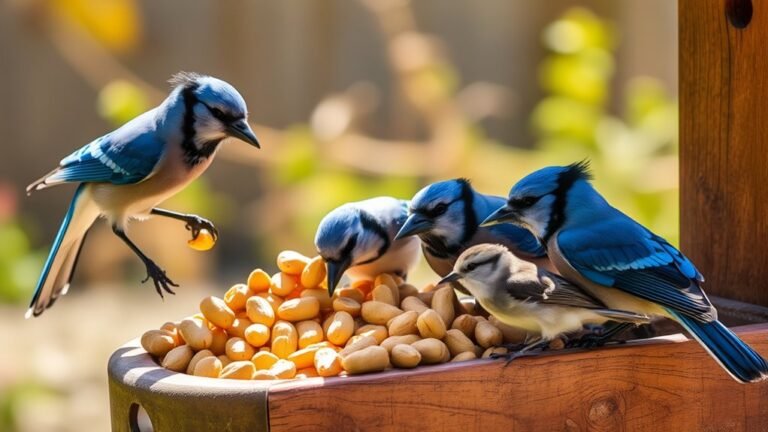

Blue Jay Nesting Guide: From Eggs to Fledglings
Blue Jays have distinct nesting behaviors that are important to understand. These birds choose specific locations for their nests, build them carefully, and share parenting responsibilities. A female Blue Jay lays blue eggs, and each stage of their development, from egg to fledgling, has its own challenges. Observing these stages reveals how Blue Jays adapt and survive in their environments. What factors affect their success in different nesting sites?
Key Takeaways
Blue jays nest from late March to early July. The timing depends on local weather and food availability. Female blue jays lay 3 to 6 pale blue eggs with darker spots. They incubate these eggs for 16 to 18 days.
Nesting sites are usually high in trees or shrubs. This height helps protect the nests from predators and provides cover.
Fledging happens 21 to 30 days after hatching. Young jays practice flapping their wings and stay near the nest for a few days.
After fledging, parents continue to care for their young. They provide food and protection as the fledglings learn to live independently.
Overview of Blue Jay Behavior
Blue jays are intelligent and social birds. They communicate using various calls and signals. Their vocalizations include whistles and screeches. These sounds help them establish territory, warn about predators, and coordinate group activities.
Social interaction is essential for their survival. Blue jays often forage together, benefiting from their collective awareness. They engage in playful behaviors that strengthen their social bonds.
Understanding blue jay socialization allows us to appreciate their adaptability and intelligence in the wild.
Nesting Season: Timing and Location
As spring arrives, blue jays start nesting between late March and early July. This timing varies based on local weather and food supply. Knowing when blue jays nest helps bird watchers plan their observations.
Blue jays adapt their nesting strategies to their environment. Warmer weather can lead to earlier nesting, while the availability of food can affect where they build their nests.
By paying attention to these factors, you can enhance your birdwatching experience and understand blue jays better.
Observing their nesting habits deepens your connection to nature. Engaging with this information also helps you feel part of the birdwatching community.
Enjoy watching blue jays as they go through their nesting season!
Choosing the Right Nesting Site

Choosing the Right Nesting Site for Blue Jays
Blue jays need the right nesting site for successful breeding. Here are three important factors to consider when finding a good location:
- Height: Choose high places for nesting. This helps keep predators away from the nest.
- Nearby Cover: Look for thick plants or trees nearby. This extra cover makes it harder for threats to see the nest.
- Nesting Materials: Ensure the area has enough twigs, leaves, and grass. These materials are essential for building strong nests.
Blue Jay Nest Construction
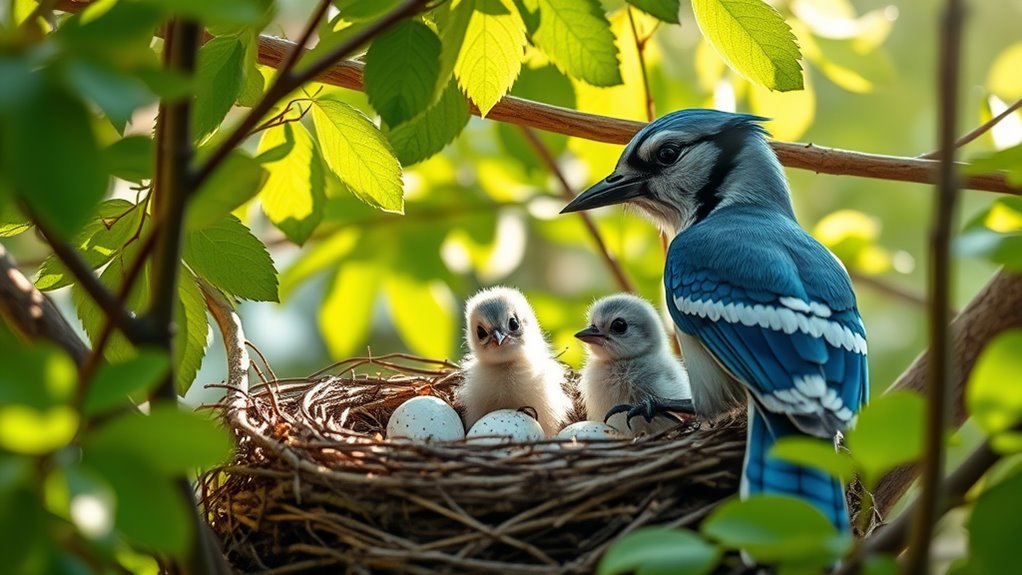
Blue jays build nests with care and skill. Their nests consist of twigs, grass, and sometimes mud.
They choose materials based on what's available around them. Larger branches form the base, while fine grasses line the inside, making a comfortable space for their young.
The nest shape is usually a deep cup that protects against the weather and predators. This careful building shows their ability and dedication to raising their young.
The Egg-Laying Process

Once the nest is ready, the female blue jay starts laying eggs. This process is vital for the future of her young. The female typically lays between 3 to 6 eggs.
Each egg has specific characteristics:
- Color: The eggs are usually pale blue with darker spots.
- Size: Each egg is about 1 inch long, making them small compared to the adult bird.
- Timing: Egg-laying happens in late spring, which coincides with good food availability for the hatchlings.
During this time, the female moves carefully. She pays attention to each egg, ensuring they're placed securely.
These actions help protect her future family. This instinctive behavior strengthens her bond with her soon-to-be chicks.
Incubation Period and Parental Roles
The incubation period for blue jay eggs lasts about 16 to 18 days. During this time, the female blue jay primarily incubates the eggs, keeping them warm to support their growth. She regularly changes her position to ensure the eggs receive adequate warmth and protection. Occasionally, she leaves the nest to find food.
The male blue jay plays a vital role by bringing food to the female. His efforts help maintain her energy levels during incubation.
Both parents work together to care for the eggs, with the female focusing on incubation and the male supporting her needs. This teamwork not only aids in the development of the eggs but also strengthens their bond as a family, creating a nurturing environment for their future chicks.
Hatching: What to Expect
As the incubation period ends, you can expect the blue jay eggs to hatch in about 16 to 18 days after they're laid.
This period brings excitement and requires certain conditions for successful hatching.
Here is what happens during this process:
- Chirping Sounds: You'll hear soft chirping as the chicks signal to their siblings that they're ready to emerge.
- Pipping: You'll notice small cracks forming in the eggshells. This shows that the chicks are starting to push their way out.
- Emergence: Once hatched, you'll see wet, fluffy chicks resting and bonding with one another.
Enjoy this incredible moment in nature!
Caring for the Chicks: Feeding and Protection
Caring for blue jay chicks is important for their growth. They need a high-protein diet that includes insects and berries.
Watch for the parents as they bring food to the nest. It's best to leave them alone during this time.
Protecting the nest is also crucial. Use natural plants to cover the area and keep predators away.
Make sure to keep a safe distance to avoid stressing the birds. By creating a safe space and understanding their feeding needs, you can help these beautiful chicks thrive as they grow.
The Development Stages of Blue Jay Nestlings
Understanding the development stages of blue jay nestlings is important for their survival.
These stages include:
- Hatching to Day 7: The nestlings are altricial. They rely on their parents for warmth and food. Their eyes are closed, and they can't move. They grow stronger quickly.
- Days 8 to 14: Nestlings start to grow feathers. They begin to regulate their body temperature and become more vocal. They signal their needs with sounds.
- Days 15 to 21: Nestlings become more active. They practice flapping their wings. This stage is crucial as it prepares them for fledging, which is when they'll leave the nest.
Monitoring these stages helps you appreciate their development journey.
Fledging: When and How They Leave the Nest
Fledging is an important stage in a blue jay's life. It happens 21 to 30 days after they hatch. During this time, you'll see behaviors that show they're becoming independent.
The young blue jays will explore the nest and start to test their wings. You might watch them flap and hop around with excitement. This practice helps them prepare for their first flight.
On the day they leave the nest, the young blue jays take a big leap. They often get encouragement from their siblings. This moment is both exciting and a little scary.
Watching them fly for the first time connects you to the cycle of life. These fledglings begin their new adventure as they take to the air.
Post-Fledging Behavior and Parental Guidance
As young blue jays leave the nest, their behavior shows their growth and need for help from their parents. This support is vital for their survival as they learn to live outside the nest.
- Exploration: Young blue jays fly to nearby trees. They practice their flying skills and learn about their surroundings.
- Foraging: Parental guidance is very important at this stage. Parents teach them how to find food, like insects and berries.
- Vocalization: Young jays improve their calls. They learn to communicate and signal to their parents when they need assistance.
These behaviors highlight how important parental care is for young blue jays. This support helps them feel connected to their community and thrive in their new environment.
Creating a Blue Jay-Friendly Backyard
To attract blue jays to your backyard, create a friendly environment that meets their needs.
Start by placing bird feeders filled with peanuts and sunflower seeds, which blue jays love. Add native plants to support their habitat and provide areas for insects and seeds to thrive.
Include water sources like bird baths or small ponds for drinking and bathing. Plant shade trees to protect them from predators, and use shrubs for nesting materials and safe spots for their young.
Observing Blue Jays: Tips for Birdwatchers
How can you improve your experience while watching blue jays? Use these simple birdwatching tips to better understand their behavior:
- Be Patient: Finding blue jays takes time. Sit quietly in one spot and wait for them to appear.
- Use Binoculars: A good pair of binoculars helps you see their bright colors and hear their unique calls from afar.
- Observe Interactions: Watch how blue jays interact with each other and other birds. Their social behavior is interesting and reveals much about their habits.
Enjoy your birdwatching!
Frequently Asked Questions
How Can I Tell if a Blue Jay Nest Is Abandoned?
To check if a blue jay nest is abandoned, look for the following signs:
- No Adult Presence: If you do not see any adult blue jays around the nest, it may be a sign of abandonment.
- Unhatched Eggs: If the eggs in the nest have not hatched after a reasonable period, this could indicate that the nest is abandoned.
- Fledgling Behavior: If fledglings are missing or appear weak and unable to fend for themselves, the nest may be abandoned.
What Predators Pose a Threat to Blue Jay Nests?
Nesting predators such as raccoons, squirrels, and hawks pose a threat to blue jay nests. Blue jays display protective behaviors to safeguard their young. For example, adult blue jays may mob predators or stay alert to keep their nests safe. Observing these actions can help you understand how blue jays protect their vulnerable chicks from danger.
How Long Do Blue Jay Eggs Take to Hatch?
Blue jay eggs hatch in about 16 to 18 days. During this time, the embryos develop. They receive warmth and nutrients that are crucial for healthy growth.
What Do Blue Jay Fledglings Eat Once They Leave the Nest?
When blue jay fledglings leave the nest, they eat mainly insects, berries, and seeds. They rely on their parents for food as they learn to find food on their own. This phase is important for their growth and development.
Can Blue Jays Reuse Their Nests in Subsequent Years?
Yes, blue jays can reuse their nests in later years. They often fix any damage and add new materials. This helps create a safe place for their future young. This behavior shows they are practical and resourceful.

Ava is a bird enthusiast and nature lover who has spent countless hours observing and learning about the fascinating world of birds. With a passion for sharing her knowledge and inspiring others to appreciate the beauty of birds, Ava writes about her experiences and insights on avianadmirer.com.