
Birds That Sound Like Cats: Unusual Vocalizations Explained
When you observe the sounds around you, you may hear birds mimicking cat cries. This curious behavior makes us wonder why birds like mockingbirds and thrushes produce these sounds. They may use cat-like vocalizations as part of their survival and communication strategies. Understanding why they mimic these sounds can help us learn more about their behaviors. What prompts these birds to include such unique calls in their song?
Key Takeaways
Some birds, such as mockingbirds and thrushes, imitate cat sounds. They do this to survive and mark their territory. Mimicking cats can help birds evade predators by causing confusion. Male birds make cat-like calls to show strength and attract mates. Young birds learn to vocalize by copying adult sounds, including those of cats. Watching these vocalizations shows how adaptable birds are to their surroundings and social needs.
The Science of Avian Vocalizations

Birds produce a variety of sounds that serve clear functions. These vocalizations help attract mates and alert others to danger. Each call and song is designed to enhance survival through effective communication.
For example, when a bird sounds an alarm, it triggers immediate responses from other birds in the area. Some birds can imitate sounds from their surroundings, which helps them fit into their social groups.
Studying these vocal patterns reveals important information about how birds interact with one another and their habitats. Understanding these aspects fosters a deeper appreciation for their role in the ecosystem and strengthens our connection to nature.
Birds That Mimic Feline Sounds
Many birds can mimic sounds from their surroundings, including cat calls. This ability, called feline mimicry, shows how birds adapt and survive.
You might see mockingbirds or some thrushes making cat-like sounds. They do this to communicate or blend into their environment.
Mimicking cat sounds helps them avoid danger or mark their territory. Next time you go for a nature walk, listen closely.
You'll notice how these birds connect the worlds of cats and birds, revealing interesting behaviors in animals.
Why Do Birds Mimic Other Animals?
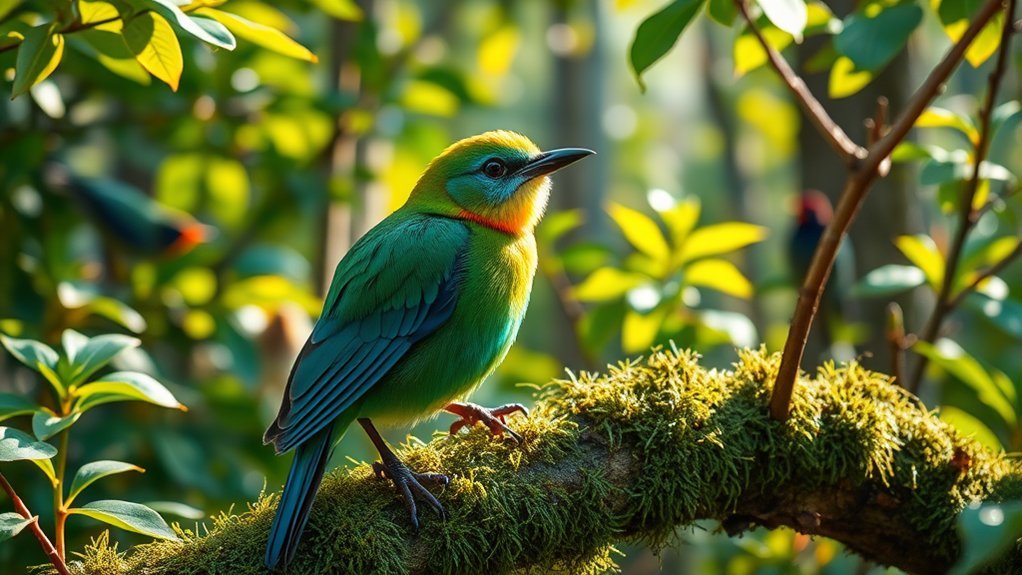
Birds mimic other animals for several important reasons. This mimicry helps them survive and reproduce.
Here are the main reasons why birds mimic:
- Deception: Imitating the sounds of predators can scare away threats.
- Attraction: Male birds imitate calls from other species to attract females, showing they're strong and healthy.
- Territorial Displays: Mimicking aggressive species can help birds defend their territory from competition.
- Social Learning: Young birds learn by copying sounds from adult birds as they grow.
These behaviors show how birds adapt to their environments.
Understanding them highlights our connection to nature and the importance of maintaining healthy ecosystems.
The Role of Habitat in Vocalizations
Habitat influences how birds communicate. Different environments create unique challenges for sound production.
In thick vegetation, birds often use softer calls to avoid being detected by predators. In open areas, they make louder calls that can be heard over longer distances.
Urban settings introduce background noise, leading birds to change their vocalizations to be noticed above the clamor.
These adjustments to vocal sounds affect bird survival and interaction within various habitats. By observing these changes, we gain insight into how birds adapt and thrive in their surroundings, which helps us appreciate their role in nature.
Species Spotlight: Birds That Sound Like Cats

Have you ever heard birds that sound like a cat's meow? Some birds mimic these sounds.
Here are four examples:
- Catbird – This bird makes sweet calls that sound like meows. It often lives in urban gardens.
- Eastern Whip-poor-will – Its calls at night can remind listeners of a cat's cry.
- Screech Owl – This bird makes haunting sounds that could be mistaken for a mewing cat, especially at night.
- Barred Owl – Its hoots can include sounds similar to a meow.
These birds showcase nature's creativity.
Listening to them can bring joy and wonder to bird watchers.
Understanding Bird Communication
Birds communicate through various sounds. Each bird species has its own vocalizations that serve different purposes. For example, some birds sing to attract mates, while others create alarm calls to warn of danger.
Additionally, some birds mimic sounds from their environment, including noises made by cats.
To understand bird communication, observe their sounds and behaviors. You can learn about their social interactions and habits from their vocal patterns. This knowledge allows you to connect more deeply with nature and appreciate the vibrant life around you.
The Impact of Environmental Changes on Bird Calls
Environmental changes affect bird calls. Birds adapt their calls to handle challenges from noise and climate change. These adaptations help them survive and communicate more effectively.
Here are some ways birds change their calls:
- They alter their pitch to be heard over traffic noise.
- They speed up their rhythms to stand out in noisy environments.
- They create new calls that imitate other species for protection.
- They adjust their timing to align with active periods of the day.
These changes show how resilient birds can be in a changing environment. Understanding these adaptations allows us to appreciate how birds communicate and thrive despite difficulties.
Fun Facts About Birds and Their Sounds
Bird calls serve important purposes in nature and show interesting aspects of how birds behave and interact. Different bird species create unique songs to communicate with each other. These songs are key in attracting mates and defining territories.
Ornithologists analyze these sounds to understand each bird's role in its environment better.
Some birds can imitate the calls of other species, demonstrating their ability to adapt and their intelligence. For example, mockingbirds have a wide range of sounds, often copying noises from their surroundings.
Listening to bird calls can enhance your appreciation for their lives and interactions within their habitats. Next time you hear an unusual sound, think about the story it tells.
How to Identify Bird Sounds in Your Area
How can you interpret the various sounds around you? Identifying bird sounds helps you connect with nature and your community. Here are some simple tips for identifying bird calls:
- Listen Closely: Take quiet moments to pay attention to the sounds you hear.
- Record Sounds: Use your smartphone to capture bird calls you find unclear. Review them later.
- Join Local Groups: Meet with other bird watchers to share what you learn and enjoy together.
- Use Apps: Download bird sound identification apps to help you match calls with different species.
Embrace the task of identifying these sounds. Each call brings you closer to your local environment and the birds that inhabit it.
Frequently Asked Questions
Do Other Animals Also Mimic Bird Sounds?
Many animals mimic bird sounds. This behavior shows their ability to adapt and communicate effectively. It also highlights their intelligence and social interactions. Animal mimicry, especially of bird calls, adds excitement to the natural world around us.
How Can I Attract Birds to My Yard?
Attract birds to your yard by setting up bird feeders with their favorite seeds. Plant native plants to offer food and shelter. This creates a friendly space for local birds and enhances your connection to nature. Enjoy watching them soar through your yard!
Are There Specific Times When Birds Vocalize More?
Birds sing more during dawn and dusk. These times are peak vocalization periods. Breeding seasons also increase their songs. This creates a lively atmosphere in your environment.
What Tools Can Help Identify Bird Calls?
To identify bird calls, smartphone apps are very useful. These apps analyze bird sounds and help users recognize different calls. Using these apps allows birdwatchers to connect with each other, creating a friendly community for sharing insights and experiences. Enjoy exploring the sounds of nature while learning more about the birds around you.
Can Birds Recognize Their Own Sounds?
Yes, birds can recognize their own sounds. They use sound recognition to tell their calls apart from others. Many bird species can mimic sounds, which helps them communicate, defend their territory, and bond with others in their flocks. This skill is important for their social interactions and survival.

Ava is a bird enthusiast and nature lover who has spent countless hours observing and learning about the fascinating world of birds. With a passion for sharing her knowledge and inspiring others to appreciate the beauty of birds, Ava writes about her experiences and insights on avianadmirer.com.