Birds of Prey in Awendaw, South Carolina: Raptors of the Lowcountry
In Awendaw, South Carolina, raptors are vital for maintaining ecological balance. These birds indicate the health of the Lowcountry's environment by controlling populations of small mammals and insects. However, raptors face serious threats such as habitat loss and pesticide exposure. Learning about their breeding habits and the dangers they face can help us understand their role in this ecosystem. The key question is: how can we protect these remarkable birds and their habitats?
Key Takeaways
Awendaw, South Carolina, is home to several raptors, including the Red-tailed Hawk and Peregrine Falcon. These birds play a critical role in keeping small animal populations in check.
Raptors have special features that help them hunt. Their excellent vision allows them to spot prey from great distances. Strong talons help them capture and hold onto their food, while their ability to blend into their surroundings aids in stealth.
However, raptors face serious threats. Habitat loss, pesticides, and toxins endanger their health and numbers in the Lowcountry.
Community involvement is crucial for raptor conservation. Hosting workshops and organizing clean-up events can help protect their habitats in Awendaw.
Seeing raptors in the area shows that the ecosystem is healthy. It also fosters a greater appreciation for Awendaw's natural beauty and wildlife among residents and visitors.
The Importance of Raptors in Ecosystems
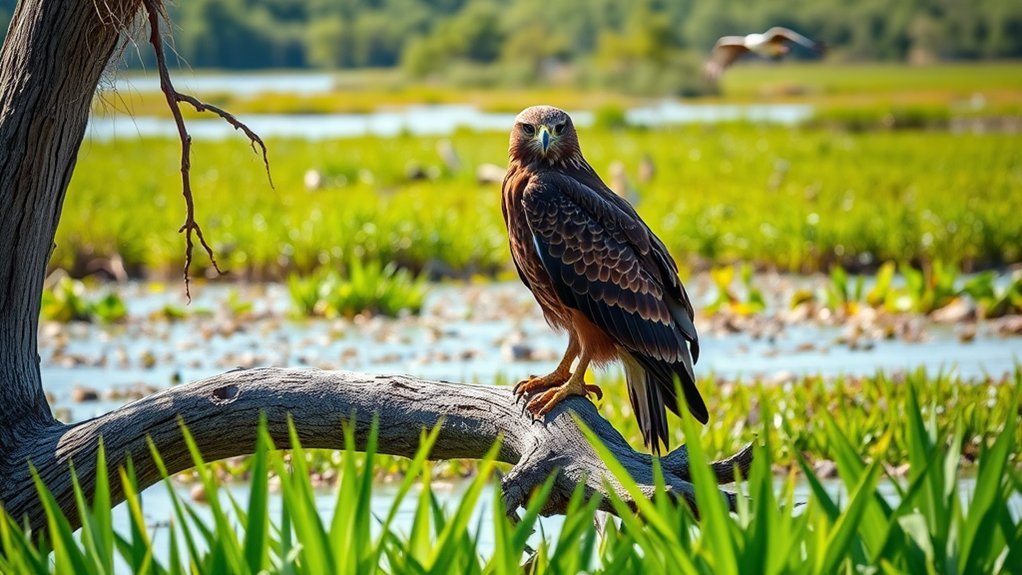
Raptors, like hawks and owls, play a crucial role in ecosystems. They help control the populations of smaller animals, such as rodents and insects. By keeping these populations balanced, raptors prevent outbreaks that could harm other species and the environment. Their hunting also reduces disease spread among prey animals, which helps maintain a healthy ecosystem.
As top predators, raptors reflect the health of their surroundings. If raptors are present, it often means the ecosystem is in good condition. Conversely, their absence can indicate problems that may need attention.
Understanding raptors helps you see the important connections that support life in nature. Recognizing their value encourages efforts to protect these birds and their habitats, ultimately benefiting the entire ecosystem.
Common Raptors Found in Awendaw
Awendaw, South Carolina, hosts several species of raptors that highlight the area's biodiversity.
You can see hawks soaring overhead as they hunt for food. Falcons dart through the air, playing a key role in the local ecosystem.
- The Red-tailed Hawk perched high above is a stunning sight.
- The Peregrine Falcon diving at fast speeds is thrilling to watch.
- The hunting behavior of these birds showcases the beauty of nature.
- Each raptor plays a vital role in maintaining ecosystem balance.
- This community values these amazing birds and their habitats.
Connecting with these raptors enhances your appreciation for Awendaw's natural environment.
The Majestic Bald Eagle
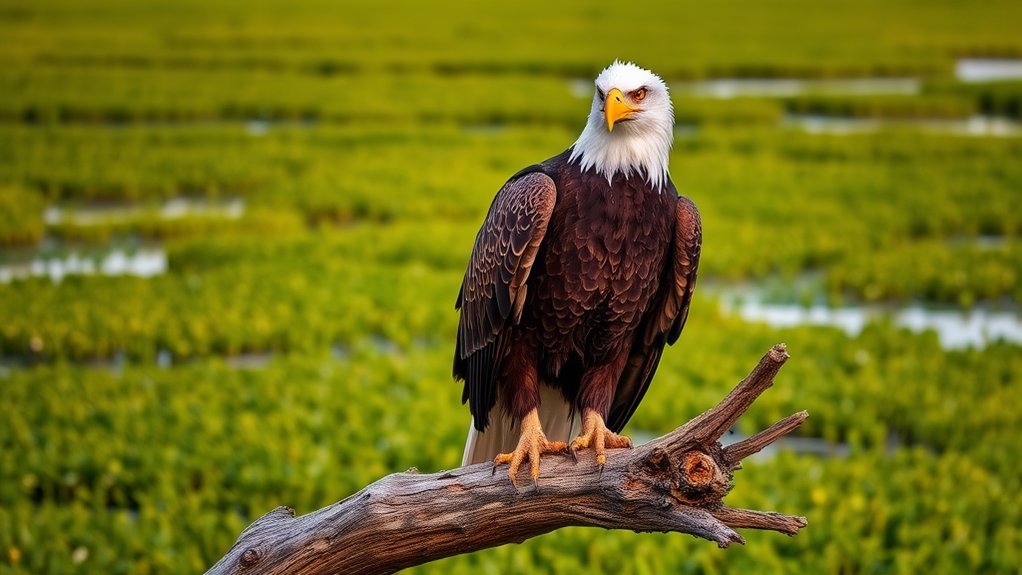
In Awendaw, you can observe the powerful Bald Eagle. This bird symbolizes strength and freedom.
It glides over marshes and waterways, its white head standing out against its dark body. The bald eagle thrives where fish are plentiful and tall trees are accessible for nesting. You often find it near rivers and lakes.
Its wingspan can reach up to seven feet, showing both grace and power. For many, the bald eagle represents resilience and independence.
Each sighting connects you with nature, highlighting the beauty and strength of wildlife.
The Stealthy Great Horned Owl
As night falls over Awendaw, the Great Horned Owl comes to life. This bird is strong and has interesting features that help it hunt at night. Its silent flight allows it to move through the shadows without making a sound, which makes it easier to find food.
- It glides through moonlit trees with great focus.
- Its hoot sends a chill through the still night.
- Spotting these owls in action is thrilling.
- Their intense stare breaks the night's silence.
- Observing them connects you with nature and elevates your spirit.
The Great Horned Owl is both a hunter and a mystery. It captures the interest of all who encounter it.
The Agile Red-shouldered Hawk
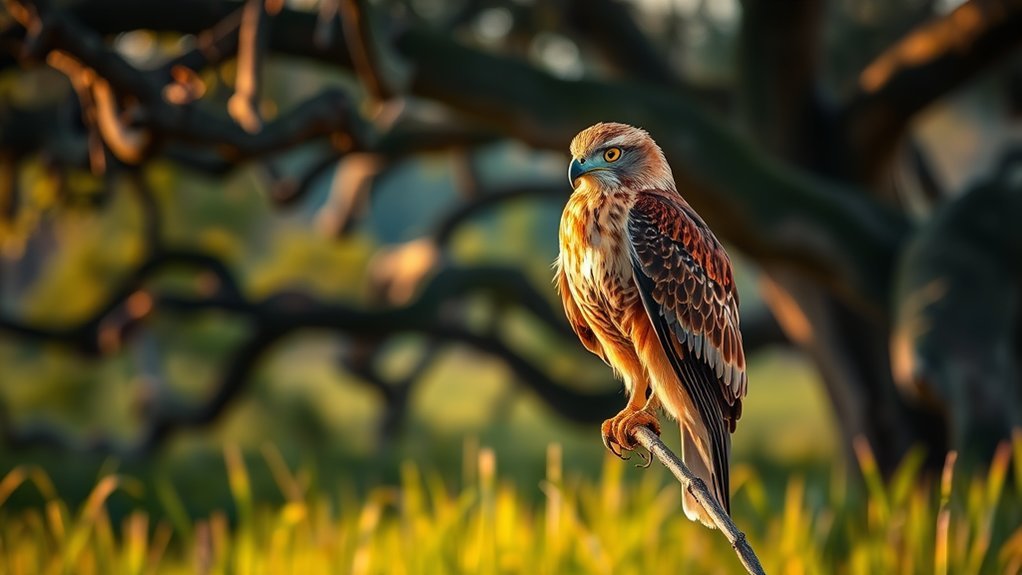
The Red-shouldered Hawk rests on branches but stays alert. It quickly dives to catch prey. This bird often calls out to communicate with its mate and scare off threats.
While hunting, it finds a low perch and watches for movement on the ground. Then it swiftly dives to catch its target.
The hawk moves easily through trees, making it a skilled predator. It can live in different habitats, which helps its hunting.
The Resourceful Osprey
The Osprey is an excellent fisherman found in Awendaw. It dives into the water with speed and skill, catching fish quickly. Ospreys return to the same nesting sites yearly, showing their strong family bonds.
- Watch as they plunge into the water to catch their food.
- Notice the strong connections during nesting.
- Enjoy the spectacular aerial displays they create.
- Feel excitement from their successful hunts.
- Spot their nests during your travels.
As you watch these birds, you connect with nature and see the persistence of life in the Lowcountry.
Unique Adaptations of Raptors
Raptors are top hunters in the bird world. They've many adaptations that help them survive and hunt effectively.
Their excellent eyesight helps them see prey from far away. Strong talons give them a quick and deadly grip.
Many raptors use camouflage, with feather patterns that blend into their environment. Different species have various hunting methods; some fly high to look for movement, while others stalk on the ground.
Their sharp, hooked beaks are perfect for tearing flesh, ensuring they make the most of every meal.
These adaptations are crucial for living in different habitats, allowing you to appreciate the amazing ability of birds of prey.
The Breeding Habits of Birds of Prey
Understanding how birds of prey breed helps us learn about their life cycle and population changes.
These impressive raptors show special nesting habits, often using the same location year after year. Their courtship includes exciting aerial displays and sounds that strengthen their bonds. This process helps ensure successful reproduction and care for their young.
- You see life beginning anew.
- You feel the ties between generations.
- You appreciate their hard work and collaboration.
- You relate to their fight for survival.
- You celebrate new beginnings with them.
Each part of their breeding, from building nests to raising chicks, is vital for keeping raptor populations healthy in the beautiful landscape of Awendaw.
Threats Facing Raptors in the Lowcountry
Raptors in the Lowcountry face significant threats that endanger their survival. Habitat loss from urban development and agriculture limits their hunting and nesting areas. As these habitats disappear, finding homes and food becomes challenging for these birds.
Pesticides pose another serious risk. Chemicals from farming and landscaping enter the food chain. These toxins accumulate in the prey that raptors eat, resulting in reproductive problems and shorter lifespans.
Understanding these issues is crucial for our community. We must work together to create a safe environment for these incredible birds, as they play an essential role in the Lowcountry ecosystem.
Conservation Efforts for Raptors in Awendaw
As community involvement in conservation programs grows, efforts to protect raptors in Awendaw are increasing.
Habitat preservation is crucial, providing safe spaces for these beautiful birds. Community participation is key; you can make a difference. Organizations offer workshops, clean-up events, and educational programs that teach about the importance of raptors.
Together, we can build a sense of community and care for these extraordinary species.
- Watching a bald eagle glide overhead
- Hearing the sharp call of a hawk
- Finding nests in your yard
- Coming together with neighbors for a shared goal
- Knowing you're helping future raptors thrive
Join us in these efforts and feel the joy of contributing to the well-being of our local raptor populations. Your involvement matters.
How to Observe and Appreciate Raptors in the Wild
To spot raptors in the wild, look in open fields or coastal areas.
These birds often sit on high branches or power lines. Early mornings and late afternoons are the best times to see them hunting. Use binoculars to get a closer view and identify different species; a field guide can assist you with this.
For photography, keep a respectful distance to avoid disturbing the raptors. A telephoto lens allows you to capture their beauty without getting too close.
Stay quiet and be patient, as loud noises can scare them away.
Joining local birdwatching groups can make your experience more enjoyable. You can share tips and connect with others who share the same interest in raptors.
Happy birdwatching!
Frequently Asked Questions
What Are the Best Times to See Raptors in Awendaw?
To see raptors, go out in the morning, especially during migration seasons. Knowing seasonal patterns increases your chances of spotting these amazing birds in their natural environments. Enjoy the thrill of watching raptors soar and hunt. Each sighting can offer a unique glimpse into their behavior and beauty.
How Can I Identify Raptor Species in the Field?
To identify raptor species in the field, use field guides to spot their markings and sizes. Listen for their distinct calls; these sounds can help you determine specific species and their behaviors. This knowledge will deepen your appreciation for these amazing birds.
Are Raptors Protected by Law in South Carolina?
Raptors are protected by law in South Carolina. This protection helps conserve species such as eagles and hawks. Understanding these laws is important for supporting raptor conservation efforts in your community. By knowing the rules, you can help these birds thrive and ensure their safety in the environment.
What Should I Do if I Find an Injured Raptor?
If you find an injured raptor, approach it slowly to avoid startling the bird. Check its condition from a safe distance. If the raptor appears injured or distressed, contact a licensed wildlife rehabilitator for assistance. They can offer guidance and help ensure the bird receives the care it needs.
Can Raptors Be Kept as Pets in South Carolina?
You cannot keep raptors as pets in South Carolina without the correct permits. Falconry laws require training and specific care for the birds. This ensures your safety and the raptors' health. To keep a raptor, you must follow these regulations carefully and responsibly.

Ava is a bird enthusiast and nature lover who has spent countless hours observing and learning about the fascinating world of birds. With a passion for sharing her knowledge and inspiring others to appreciate the beauty of birds, Ava writes about her experiences and insights on avianadmirer.com.