
Birds Native to North Carolina: Exploring Local Avian Diversity
In North Carolina, you can see many bird species. Each species has an important role in the ecosystem. For example, the bright Eastern Bluebird flies over fields, and the powerful Bald Eagle glides through the sky. The state's different habitats support a variety of birds. Observe their behaviors and listen to their calls. You might notice interactions that show details about their lives. What other species live in this area and impact the environment?
Key Takeaways
North Carolina hosts many bird species, such as the colorful Eastern Bluebird and the impressive Bald Eagle. The Carolina Wren delights with its cheerful song and lively antics in different environments. Red-tailed Hawks are common throughout the state; they are known for their patience and speed when hunting in fields and forests. Great Egrets attract attention with their striking white feathers and skilled fishing in shallow waters and wetlands. Northern Cardinals stand out due to their bright red color and beautiful songs, especially during the breeding season.
The Colorful Eastern Bluebird

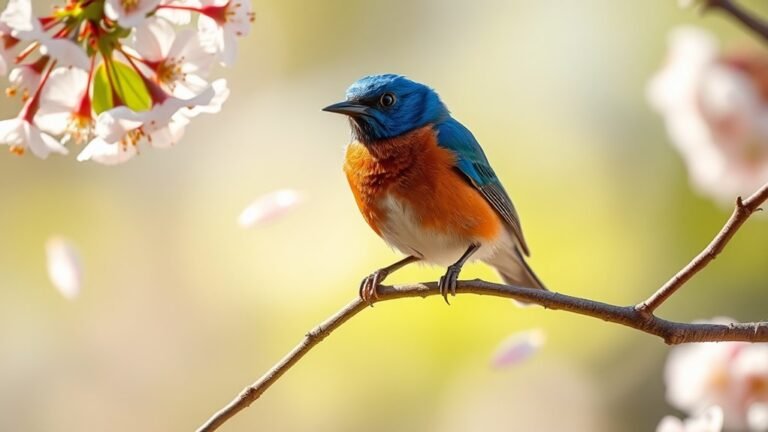
In North Carolina, the Eastern Bluebird is a standout bird due to its bright colors. These birds live in open spaces like farms, fields, and parks, where they find plenty of insects to eat.
You can often see them perched on fence posts or low branches, ready to swoop down for their meal. Eastern Bluebirds sing beautiful songs, especially during mating season, which helps them bond with each other.
They typically build their nests in tree holes or in bluebird houses that people create for them. By making your yard inviting with natural elements, you can attract these lovely birds and enjoy the rich diversity of North Carolina's wildlife.
The Majestic Bald Eagle
The Bald Eagle is a large bird that symbolizes strength and freedom. It's often found near rivers and lakes in North Carolina. This impressive bird has a wingspan that can reach up to seven feet.
During breeding season, Bald Eagles build large nests in tall trees. These nests can weigh hundreds of pounds, showing their dedication to raising their young.
Bald Eagles have excellent eyesight. They can spot prey from high in the sky. Watching a Bald Eagle soar through the air or sit on a branch is an inspiring experience.
It connects us to the beauty of nature and highlights the importance of protecting these magnificent birds.
The Charismatic Carolina Wren

Explore the woodlands and gardens of North Carolina to find the lively Carolina Wren. This small bird is known for its cheerful song. It lives in thickets, shrubs, and urban areas, building cozy nests in various cavities.
Carolina Wrens have a curious nature. They search energetically on the ground for insects and seeds. Their probing bills help them find tasty morsels hidden beneath leaves.
You can enjoy their melodic song, which adds a delightful soundtrack to your nature walks. This song connects you to the vibrant birdlife in North Carolina.
The Striking Red-tailed Hawk
When you look up at the sky, you often see the striking shape of the Red-tailed Hawk. These majestic birds thrive in diverse habitats, especially in open areas like fields and woodlands that are ideal for hunting.
You may notice one perched on a branch or soaring above, watching for movement on the ground. Red-tailed Hawks adapt well to both urban and natural environments.
When they hunt, they combine patience and speed, diving to catch small mammals, birds, and reptiles. Watching these hawks can enhance your appreciation for the rich birdlife in North Carolina and remind you of the connection we share with wildlife all around us.
The Playful Tufted Titmouse

The Tufted Titmouse is a small bird known for its playful nature and distinctive crest. This bird often flutters between trees in North Carolina, captivating observers with its lively movements.
You can find them in forests, parks, and shrubby areas. They build nests in tree cavities or old woodpecker holes.
The Tufted Titmouse enjoys exploring and can be seen hopping from branch to branch searching for insects and seeds.
These birds are known for their boldness, often visiting feeders and delighting birdwatchers with their friendly behavior. Watching them socialize in small groups adds joy to your outdoor experiences, highlighting the vibrant wildlife in North Carolina.
The Graceful Great Egret
The Great Egret stands gracefully in shallow waters, showcasing its striking white feathers and slender body.
This beautiful bird uses impressive fishing skills, carefully stalking fish and frogs. You can see it wade with ease, quickly catching prey with its sharp bill.
In North Carolina, the Great Egret builds nests in wetlands and marshes, often high in trees. These nests are made from sticks, where they raise their young.
The Melodic Northern Cardinal
The Northern Cardinal is a bright red bird found in North Carolina. Its vibrant color makes it easy to recognize.
This songbird lives in different places, like gardens, forests, and bushes. You can often see it searching for seeds and fruits on the ground.
Its beautiful songs can be heard, especially during the breeding season. Male cardinals sing loudly to mark their territory and attract mates.
Female cardinals have a softer brown color but are just as charming.
Planting native plants in your garden can help create a friendly space for them. Enjoy the joyful sounds they bring to North Carolina's bird community.
Frequently Asked Questions
What Are Common Feeding Habits of North Carolina Birds?
North Carolina birds have a variety of feeding habits. Different species prefer different seeds. They find food by searching in leaf litter, visiting feeders, or foraging in shrubs. This behavior shows their ability to adapt and find resources. Whether you watch them in your yard or a nearby park, you can enjoy observing their unique ways of feeding.
How Can I Attract Native Birds to My Backyard?
To attract native birds to your backyard, follow these simple steps. First, install bird feeders with seeds and millet. This provides food for the birds. Next, plant native plants. These plants offer natural shelter and food sources. By creating this inviting environment, you will foster a vibrant community of birds in your backyard. Enjoy watching them thrive!
What Are the Best Birdwatching Locations in North Carolina?
North Carolina offers excellent birdwatching locations. Visit the Blue Ridge Parkway to observe mountain birds in their natural habitat. Head to Cape Hatteras to explore coastal birding hotspots. In these areas, you will see a variety of bird species thriving in unique environments. Enjoy the beauty of nature and enrich your birdwatching experience in North Carolina.
Are There Any Endangered Birds in North Carolina?
Yes, North Carolina has endangered birds. The Red-Cockaded Woodpecker and the Piping Plover are among them. Conservation efforts aim to restore and protect their habitats. You can support these initiatives while enjoying birdwatching in North Carolina.
What Time of Year Is Best for Birdwatching in the State?
The best times for birdwatching in the state are spring and fall. During these seasons, many birds migrate, providing a chance to see a wide variety of species. Watching these changes brings excitement and enhances your understanding of birds.

Ava is a bird enthusiast and nature lover who has spent countless hours observing and learning about the fascinating world of birds. With a passion for sharing her knowledge and inspiring others to appreciate the beauty of birds, Ava writes about her experiences and insights on avianadmirer.com.