Bird Seed That Squirrels Don’t Like: Squirrel-Proof Feeding Tips
If you want to attract birds while keeping squirrels away, you are not alone. Many bird lovers face this situation. However, there are effective ways to keep your feeders safe for birds. Choosing the right seeds and using smart feeder designs can help. This means you can enjoy watching birds without squirrels bothering you. Let's look at the best bird seeds that squirrels dislike and how they can improve your feeding experience.
Key Takeaways
- Use safflower seeds. Squirrels usually avoid these seeds, while many birds enjoy them.
- Try spicy seed mixes. Add chili powder, which birds can handle but squirrels do not like.
- Choose sunflower hearts and nyjer thistle. Birds prefer these seeds, and they are not appealing to squirrels.
- Use squirrel-proof feeders. Select feeders with weight-activated openings or metal barriers. These keep squirrels out while letting birds in.
- Clean feeders regularly. Check their condition often to ensure they attract birds and repel squirrels.
Understanding Squirrel Preferences
To keep squirrels away from your bird feeders, understand what they like to eat. Squirrels love high-calorie snacks such as seeds, nuts, and fruits. To deter them, offer safflower seeds, which are less appealing to squirrels. This strategy can help protect your bird feeders for your feathered friends.
Additionally, place your feeders away from trees or structures that squirrels can climb. Creating an environment that's hard for squirrels to access will make it easier for the birds to enjoy their meals.
The Best Bird Seeds to Use
Choosing the right bird seeds will attract a variety of birds and help keep squirrels away. Use seeds like sunflower hearts, safflower seeds, and nyjer thistle. These seeds attract colorful birds and provide important nutrients for their energy and health.
You can also add peanut pieces or mealworms for extra protein. These foods attract more birds and usually don't appeal to squirrels.
Bird Seeds That Repel Squirrels
To keep squirrels away while attracting birds, choose seeds that squirrels dislike. Nyjer seed and safflower are good options.
These seeds help you enjoy bird watching without the hassle of squirrels. They attract birds like finches and cardinals, adding color to your yard.
Using Spicy Seeds to Deter Squirrels
Squirrels enjoy eating bird seeds, but you can deter them by using spicy seeds. These seeds contain chili powder or spices that squirrels dislike.
By offering spicy seeds, you protect your bird food and help birds eat without squirrel interference. Birds can handle the spiciness, allowing them to feed while squirrels stay away.
Spicy seed mixes are popular and easy to find, improving your feeding experience. Choose spicy seeds to create a friendly space for birds and give squirrels a reason to go elsewhere.
Incorporating Squirrel-Proof Feeders
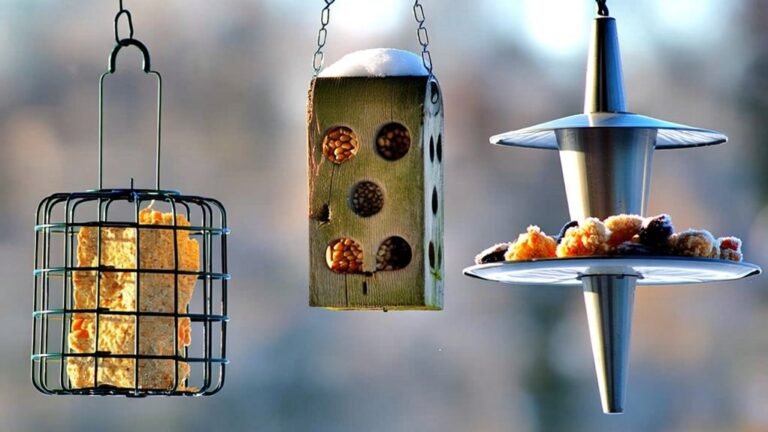
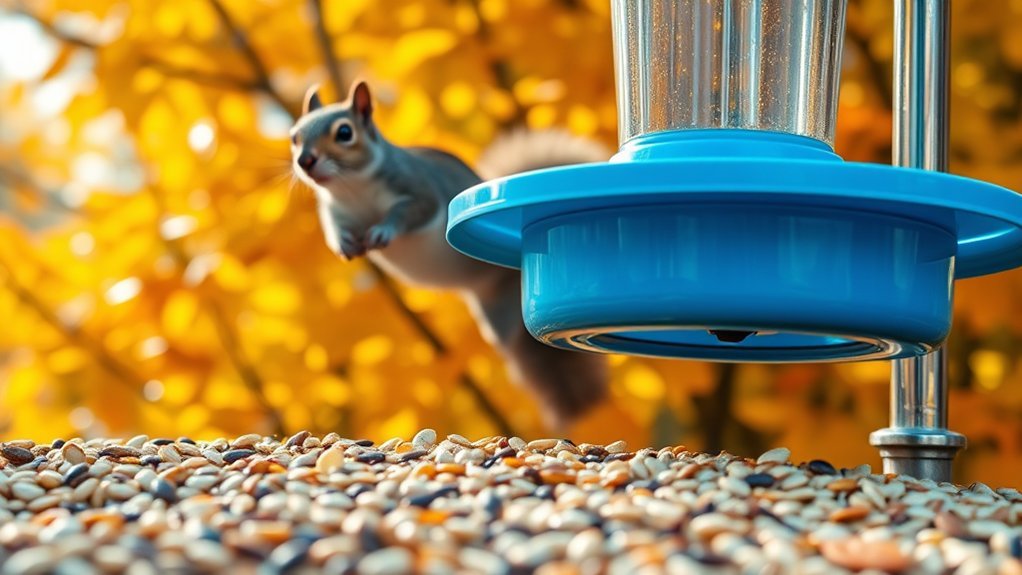
Using squirrel-proof feeders in your yard can greatly improve your birdwatching experience. These feeders block squirrels while allowing birds to feed. Look for feeders with weight-activated designs or metal mesh that prevents squirrels from accessing food.
Materials like reinforced metal or strong plastic can resist squirrels' attempts to get in.
These feeders help attract various bird species, turning your outdoor space into a lively area. Watching birds without squirrel distractions brings a sense of satisfaction to your gardening efforts.
Embrace squirrel-proof feeders to enjoy uninterrupted birdwatching moments!
Height and Placement of Feeders
To make your squirrel-proof feeders work best, focus on their height and placement. Set your feeders at least five to six feet off the ground. This height prevents squirrels from jumping up to them. It also creates a better feeding environment for the birds you want to attract.
Next, think carefully about where to place the feeders. Don't hang them near tree branches or fences, as this allows squirrels to leap easily to the feeders. Instead, position them away from these areas.
You can also use baffle devices to keep squirrels away. By choosing the right height and placement, you'll attract more birds while keeping squirrels frustrated and at a distance.
Creating a Squirrel-Resistant Feeding Area
To create a squirrel-resistant feeding area, follow these straightforward steps.
Install feeders with squirrel barriers, such as baffles or metal poles. Position your feeders at least six feet off the ground to prevent squirrels from climbing up. Surround the area with materials like gravel or wood chip mulch to limit their jumping ability.
Use weight-sensitive feeders that shut when a squirrel tries to access them. Place your feeders at least ten feet away from trees and structures to reduce their jumping range.
Alternative Food Sources for Squirrels
To keep squirrels from raiding your bird feeders, provide them with alternative food sources. You can set up squirrel feeders filled with nuts, seeds, or corn. This encourages squirrels to forage in designated spots.
Planting native trees and shrubs offers food and shelter, further drawing squirrels away from your feeders. Sunflower seeds and acorns are especially attractive to squirrels.
Seasonal Considerations for Bird Feeding
As temperatures change throughout the year, it's important to adjust your bird feeding strategy to attract different birds.
In winter, provide energy-rich seeds like sunflower and safflower. Keep your feeders full as many birds migrate south and others come for the winter.
In spring, many birds migrate back. Offer suet and mealworms to attract species like warblers and orioles.
As summer arrives, use a seed mix that includes millet and thistle, as local birds thrive in warm weather.
In fall, refill feeders with a variety of seeds to help birds get ready for migration.
Regular Maintenance and Monitoring Tips
Regular care and monitoring of your bird feeders are important for a healthy feeding environment. Check the cleanliness of your feeders at least once a week. Remove old or moldy seed to prevent disease and pests.
Inspect for damage or blockages that could block feeding. Fix any problems quickly to ensure birds can access food easily.
Try changing the locations of your feeders to find spots that are easy for birds to reach and harder for squirrels.
Keeping a close watch on your feeders encourages bird health and creates a welcoming space in your backyard. This lets you enjoy watching your favorite visitors every day.
Frequently Asked Questions
Can I Use Regular Bird Seed and Still Deter Squirrels?
You can use regular bird seed, but it will attract squirrels. To reduce squirrel visits, try using safflower seeds. Knowing how squirrels eat can help you choose the right seeds and protect your feeders.
What Are Some Natural Squirrel Repellents?
If you want to keep squirrels away naturally, plant deterrent plants like mint or garlic. These plants can help repel them. You can also use essential oils, such as peppermint or citrus, to further deter these animals. Their strong scents can make your space less appealing to squirrels.
How Do I Identify Squirrel Damage in My Garden?
To identify squirrel damage in your garden, look for clear signs. Check for chewed leaves on plants, uprooted plants, and bulbs that have been dug up. You may also see tracks or droppings left by squirrels, which indicate their activity in your garden. These signs help you determine if squirrels are causing problems in your space. Taking action early can protect your plants and keep your garden healthy.
Are There Specific Bird Species Attracted to Squirrel-Resistant Seeds?
Certain bird species, like cardinals, finches, and sparrows, are attracted to squirrel-resistant seeds. Using these seeds can help keep squirrels away while also bringing colorful birds to your yard. This creates a lively and beautiful environment for everyone to enjoy.
Do Squirrels Also Eat Bird Feeders or Just the Seeds?
Squirrels chew on bird feeders as well as the seeds inside them. They target feeders that are easy to access. To stop squirrels, use strong materials and smart designs. This will help keep birds safe and ensure they get enough food.

Ava is a bird enthusiast and nature lover who has spent countless hours observing and learning about the fascinating world of birds. With a passion for sharing her knowledge and inspiring others to appreciate the beauty of birds, Ava writes about her experiences and insights on avianadmirer.com.