Big Birds in North Carolina: Impressive Flyers
North Carolina hosts a variety of large birds that soar through its skies. These birds, including the Bald Eagle and Sandhill Crane, are impressive flyers. They exhibit strong flight abilities and play important roles in their habitats. Each species provides insights into local ecosystems. Observing their behaviors and relationships helps us understand nature better. Learning about these birds can change how you view wildlife in North Carolina.
Key Takeaways
- The American Bald Eagle is a symbol of national pride. It has a large wingspan and strong hunting skills in North Carolina's waters.
- Sandhill Cranes are migratory birds known for their elegant courtship dances and unique calls. Birdwatchers enjoy spotting them across North Carolina.
- Ospreys, also called "fish hawks," are expert fishers. They dive from great heights to catch their prey and often build nests near lakes and rivers.
- Whooping Cranes show a positive example of conservation. Habitat restoration and community efforts in North Carolina have helped their population grow.
- Turkey Vultures play an important role in the ecosystem as scavengers. They use their sharp eyesight to find dead animals, helping to keep nature in balance.
The American Bald Eagle: A National Icon

The American bald eagle symbolizes national pride and represents resilience and freedom.
However, its role extends to maintaining ecological balance. The bald eagle's decline due to habitat loss and pesticide use led to significant conservation efforts.
Communities and organizations actively protect nesting sites and support population growth. Participating in these initiatives helps strengthen connections within conservation communities.
Your involvement contributes to a healthy ecosystem, allowing future generations to enjoy the sight of this iconic bird soaring in the sky.
Sandhill Cranes: Majestic Migrants
The sandhill crane is a striking bird known for its grace and migratory habits. Every year, these birds travel thousands of miles between their breeding areas in North America and their winter homes in the southern United States. This impressive journey brings communities together as birdwatchers come out to see their breathtaking flights.
During breeding season, sandhill cranes perform elaborate courtship dances and engage in vocalizations. These actions help them choose mates and establish territories, ensuring they succeed in raising their young.
Watching sandhill cranes connects people to nature and showcases their stunning beauty, making the experience enjoyable for all.
Ospreys: Masters of the Water

Ospreys, known as "fish hawks," are fascinating birds of prey that thrive in North Carolina's waters.
They're skillful hunters, diving to catch fish with precision. Their strong, talon-adapted feet help them grip slippery fish easily. Ospreys build large nests near water, usually with sticks, and often return to the same location each year.
Their sharp eyesight and flying ability allow them to adapt to different habitats. When you visit North Carolina's waterways, be sure to look for these impressive hunters in action.
Great Blue Herons: Elegant Fishers
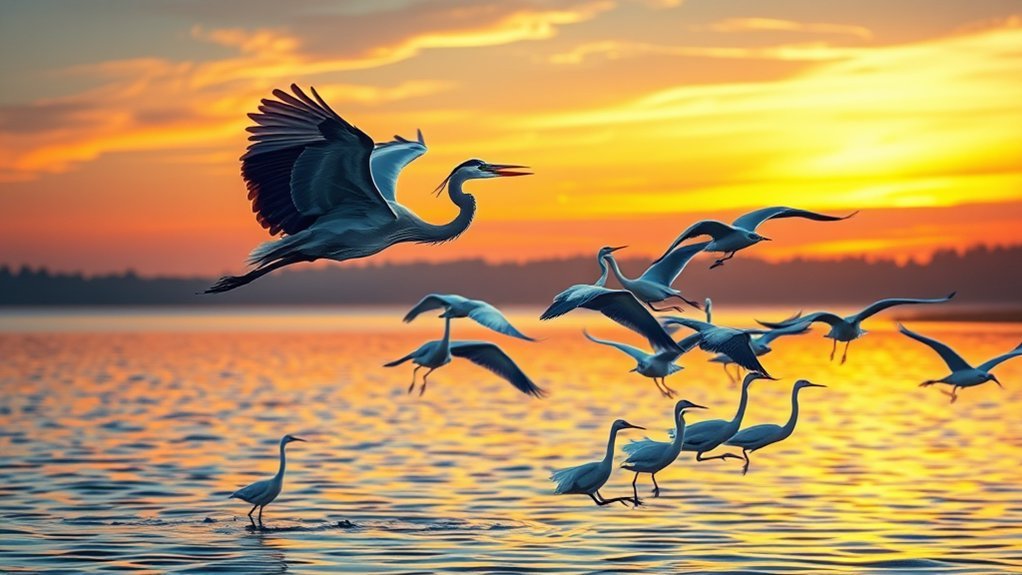
The Great Blue Heron is one of North Carolina's most graceful fishers. It has impressive height and striking blue-gray feathers. This bird is skilled at hunting fish, often standing still in shallow waters and waiting to strike with its sharp beak.
Its long, slender legs help it move through wetlands where fish are abundant.
These herons also show interesting nesting behaviors. They build large, communal nests high in trees, which keeps them safe from predators. This choice highlights their preference for living together.
Watching these beautiful birds can deepen appreciation for North Carolina's ecosystems and the lives of its wildlife.
Whooping Cranes: A Conservation Success Story

The Whooping Crane population is recovering thanks to successful conservation efforts in North Carolina and elsewhere. Once, fewer than 15 cranes existed in the 1940s. Now, collaboration among wildlife organizations, state agencies, and local communities has greatly increased their numbers.
These cranes, known for their striking white feathers and unique calls, thrive in restored wetland habitats.
Community education is crucial. It promotes involvement and encourages local support for these birds. By learning about the significance of Whooping Cranes and supporting conservation work, you contribute to their ongoing success in North Carolina.
Join us in protecting these magnificent birds for future generations.
Red-tailed Hawks: Expert Hunters of the Sky
Five distinct color variations help identify Red-tailed Hawks, making them easily recognizable in North Carolina.
These birds of prey use different hunting methods. They soar high above open fields or perch quietly in trees to spot small mammals and birds below. Their sharp eyesight and stealth allow them to dive quickly for a successful catch.
Red-tailed Hawks also have interesting nesting habits. They often return to the same nesting site each year. Their nests are usually built high in trees or on cliffs.
They create them from sticks and add softer materials for comfort. This dedication to their nesting sites helps them establish a strong presence in North Carolina's diverse ecosystems.
Northern Gannets: Spectacular Seabirds
Northern Gannets are fascinating seabirds that attract attention with their beautiful white feathers and black-tipped wings.
They're skilled hunters, using a unique plunge-diving method to catch fish. These birds travel long distances between their feeding and breeding areas along the Atlantic coast.
- They nest in large groups, displaying interesting social behaviors.
- Their breeding sites are important for conservation efforts, as these areas face environmental threats.
Watching Northern Gannets in their natural habitat brings joy to nature lovers.
It builds a sense of community among those who appreciate the beauty and skills of these remarkable seabirds.
Turkey Vultures: Nature's Clean-up Crew
Turkey Vultures are valuable members of our ecosystem. They act as nature's clean-up crew by feeding on dead animals. This scavenger behavior helps prevent diseases and returns nutrients to the soil.
By doing this, Turkey Vultures contribute to soil health and support the food chain.
When you see a Turkey Vulture flying overhead, remember that it plays an important role in nature. Their excellent eyesight allows them to find carrion easily.
Recognizing their importance encourages respect for these birds and highlights their role in maintaining ecological balance.
The Role of Birds in Ecosystems: Why Big Birds Matter
Birds, especially larger species, play important roles in ecosystems. They impact environmental health and biodiversity.
These birds contribute significantly to ecosystem services, helping maintain nature's balance. By living in various habitats, large birds fulfill essential functions, including:
- Pollinating plants, which supports growth and diversity.
- Dispersing seeds, promoting plant spread and recovery.
- Controlling pests, which keeps food webs stable.
Their presence enriches ecosystems and helps many species thrive. Additionally, large birds often indicate environmental health, signaling changes in their habitats.
Recognizing the vital roles these birds fulfill can deepen your appreciation for their contributions to ecological balance and the interconnectedness of life.
Frequently Asked Questions
What Is the Best Time to Observe Big Birds in North Carolina?
Spring is the best time to see big birds in North Carolina. From March to May, many species return, creating great opportunities for birdwatching. Keep an eye on the sky and visit local parks and wildlife areas to increase your chances of spotting these magnificent creatures. Enjoy the thrill of birdwatching this season!
Are There Any Birdwatching Tours for Seeing These Species?
You can find various birdwatching tours for observing large bird species. Experienced tour guides lead these trips. They share information about the birds and help you connect with other birdwatching fans. This collaborative atmosphere makes the experience enjoyable and educational.
How Can I Help With Bird Conservation Efforts in North Carolina?
You can help with bird conservation in North Carolina by supporting local projects and joining citizen science initiatives. These actions strengthen community involvement and are important for protecting birds and their habitats in the area. Engaging with others in birdwatching, reporting bird sightings, or volunteering with conservation groups can make a big difference. Together, you can enjoy nature while ensuring a healthy environment for birds.
What Habitats Do These Big Birds Prefer in North Carolina?
These large birds prefer a variety of habitats. They thrive in wetlands where food is plentiful. They also choose mountainous areas for nesting. Knowing their habitat needs can help with conservation efforts and enhance your connection to nature.
What Are the Biggest Threats Facing Big Birds Today?
Big birds face serious threats today. Habitat destruction and climate change are the main causes. These issues reduce their nesting areas and food supplies. As a result, their survival becomes difficult. This decline also affects the health of ecosystems where they live. Taking steps to protect their habitats is essential for their future.

Ava is a bird enthusiast and nature lover who has spent countless hours observing and learning about the fascinating world of birds. With a passion for sharing her knowledge and inspiring others to appreciate the beauty of birds, Ava writes about her experiences and insights on avianadmirer.com.