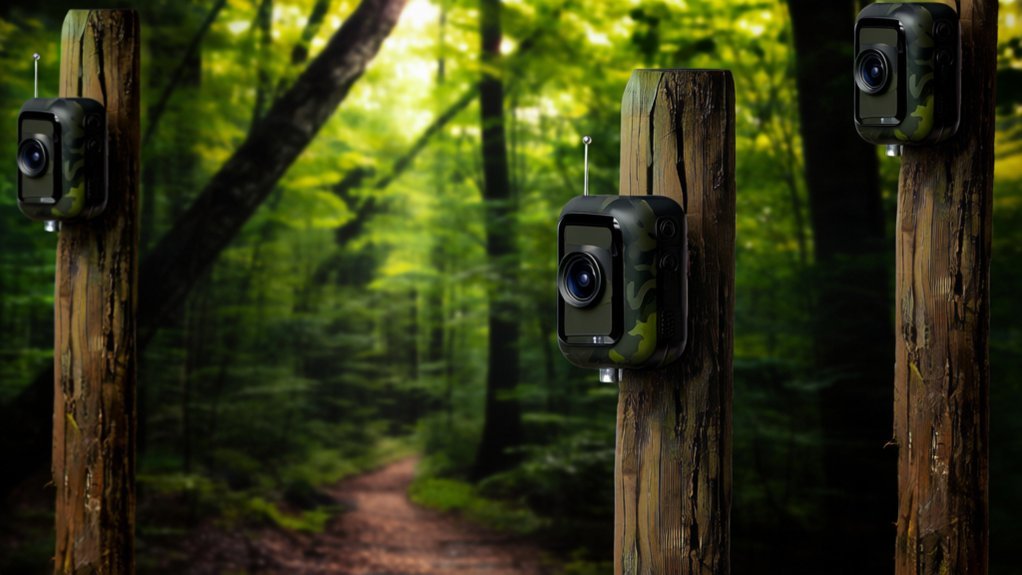
3 Best Trail Camera Style Bird Cameras for Seamless Trail Installation
When choosing a trail camera-style bird camera, you want something that’s easy to install, durable, and offers exceptional features—think weatherproof builds, flexible mounting options, and high-resolution imaging. From cellular connectivity to quick-trigger sensors, these cameras are designed to withstand outdoor elements while giving you clear, actionable footage. The right one boosts your bird-watching game without turning your setup into a hassle, but which will truly meet your needs? That’s where the specifics start to matter.
VOOPEAK 4G LTE Cellular Trail Camera with SIM Card & Live Streaming

- Pre-installed 4G SIM card: The 4G cellular trail camera has a built-in SIM card, which can effectively identify the signal...
- Solar powered, no need to replace batteries: This 4G security camera is equipped with a 6W solar panel and a built-in...
- 360° Solar Camera for Day/Night Surveillance: This trail camera with night vision features 355° pan and 100° tilt...
Last update on 2026-07-13 / Affiliate links / Images from Amazon Product Advertising API
If you want to watch wildlife or check your property from far away, the VOOPEAK 4G LTE Cellular Trail Camera is a good choice. It takes clear 2.5K videos and photos so you can see animals or visitors in detail. It has a built-in SIM card, so it doesn’t need Wi-Fi. This makes it great for quiet places where Wi-Fi isn’t available. Plus, the live streaming feature lets you watch what’s happening right now on your phone.
The camera is built tough. It’s waterproof and can handle rough weather. It’s also solar-powered, so it keeps working without needing many batteries. You can control the camera’s pan and tilt from your phone. It also has motion alerts and night vision so you can see in the dark. This camera is like having a remote wildlife studio in your pocket.
Best For: outdoor lovers, wildlife watchers, and property owners who want reliable remote monitoring with clear photos and videos, plus real-time viewing.
Pros:
- Makes sharp 2.5K videos and photos
- Very strong and waterproof (IP66)
- Supports live streaming and remote control of pan and tilt
Cons:
- Needs a separate data plan after a free trial. Costs extra.
- Only works where cell service is available, so very remote areas might have gaps.
- Setting it up can be a little tricky if you are new to cellular cameras.
This camera helps you see and monitor what’s happening outside, anytime you want.
GardePro E8 2.0 Pro WiFi Trail Camera (4K, 64GB SD, 7800mAh Battery)

- Innovative WiFi Connection: Features super low-power WiFi, compatible with Bluetooth, comes with a free and easy-to-use App...
- Extended Range & Stable WiFi 6 Connection: Powered by WiFi 6 and dual antennas, the E8 2.0 Pro delivers faster, more stable...
- Ultra-Clear Images & Video: Capture vivid, ultra-sharp images and stunning 4K videos with clear, synchronized audio, along...
Last update on 2026-08-27 / Affiliate links / Images from Amazon Product Advertising API
The GardePro E8 2.0 Pro WiFi Trail Camera is a great choice if you want clear pictures and easy remote access. It captures bright 4K videos and sharp 64MP photos. That means you can see all the small details, whether you’re watching for wildlife or checking your property. The camera reacts very fast, within just 0.1 seconds, so it won’t miss quick-moving animals or intruders. It has a wide 120° detection area that covers more ground. With WiFi and Bluetooth, you can connect your phone from up to 165 feet away when outside. Then, you can see what the camera has recorded right in the app. Its built-in rechargeable 7800mAh battery lasts about a year with normal use. This makes it a reliable and eco-friendly choice for outdoor use.
Who should buy it: Outdoor lovers, wildlife watchers, and security people who want high-quality images, remote WiFi access, and a long-lasting battery.
Good points:
- Clear 4K video and 64MP photos for detailed viewing
- Very fast 0.1-second trigger speed
- Battery can last up to a year on a single charge
Things to know:
- WiFi might not work well in thick woods or places with lots of obstacles
- It only connects via hotspot-style WiFi; it cannot connect directly to your home WiFi for internet
- The screen may develop vertical lines over time, making it harder to see
This camera is easy to use and gives you sharp videos and photos. It also lets you check what it sees from far away. It’s a smart choice if you want clear images and convenience in one device.
GardePro A3S Trail Camera (64MP, Waterproof, Fast Trigger)

- Advanced Sensor for Superior Low-Light Performance: Equipped with a Sony Starvis Sensor, this trail camera captures...
- High-Resolution Photos & HD Video with Sound: Equipped with a high-quality optical lens and advanced image sensor, the A3S...
- Low-Power, Eco-Friendly Wildlife Viewing: Simply retrieve the SD card to see what your camera has captured-each visit could...
Last update on 2026-07-13 / Affiliate links / Images from Amazon Product Advertising API
The GardePro A3S Trail Camera is a great choice for people who want clear pictures of wildlife. It takes very sharp photos with 64 megapixels. You can see animals clearly even in complete darkness, thanks to new infrared lights and a Sony Starvis sensor. The camera can take pictures from up to 100 feet away.
It has a super fast trigger speed of just 0.1 seconds. This means it can catch quick-moving animals without missing them. The camera can take up to five pictures each time it detects motion. It works well in all weather. The outside is water-resistant and tough enough to handle rain and snow.
The camera has a small 2.4-inch color screen. It makes it easy to see your photos and set up the camera. The design is simple to use and strong enough to last in the outdoors.
Best For: People who want a durable, high-quality trail camera to watch wildlife day and night.
Pros:
- Takes very clear 64MP photos, even in the dark up to 100 feet
- Fast 0.1-second trigger speed catches quick animals
- Strong, waterproof body for all weather conditions
Cons:
- Needs SD cards and 8 AA batteries (not included)
- Can record videos up to 1296p, but no ultra-high definition
- The small screen may make it harder to see details or set up the camera easily
This camera is simple to use and works well in different weather. It helps wildlife fans and researchers see animals clearly, anytime day or night.
Factors to Consider When Choosing a Trail Camera Style Bird Camera for Trail Installation
When choosing a trail camera for bird watching, you’ll want to look at resolution quality to ensure clear, sharp images, even when zoomed in—imagine catching every feather detail. Night vision features are equally important, as many bird activity patterns happen at dawn or dusk, so you’ll need infrared or low-light capabilities that don’t scare off your feathery subjects. Ultimately, consider how the camera connects, powers, and resists weather—because you’re probably setting it up outdoors, and nobody wants a bird-watching gadget that melts in the rain or runs out of juice mid-sighting.
Camera Resolution Quality
Choosing the right resolution for your trail camera is important if you want clear bird pictures. The resolution is measured in megapixels (MP). Higher MP means sharper images with more details. This helps you see bird features like feathers and eye color. Most bird projects do well with 12MP. But if you want very clear pictures, 20MP or more is better. Keep in mind, bigger images use more storage space and need faster memory cards. Higher resolution also uses more battery power because it takes longer to process the images. If you just check the camera often, lower resolution works fine. But for detailed bird studies, investing in a higher-resolution camera makes a big difference. Find the right balance between resolution, storage, and battery life. This way, your camera will work well and give you good bird pictures.
Night Vision Features
Night vision is a key feature to think about when choosing a trail camera. It helps the camera take clear pictures in the dark or low light. Infrared LEDs are the main tool here. Some LEDs are no-glow, so they don’t show light and keep your camera hidden. Others glow and shine brighter, helping cover larger areas.
The range varies. Some cameras can see up to 65 meters (213 feet) in darkness. This is good for monitoring big outdoor spaces. You can also get cameras with color night vision. These use fill lights to make low-light images look clear, like daytime. They show more details and help you identify animals or objects.
Infrared mode makes black-and-white images. This helps keep your camera quiet and less likely to scare animals away. It’s best if you want to stay hidden.
Trigger speed matters, too. This is how fast the camera takes a picture when something moves. A quick trigger speed means you won’t miss fast-moving animals. The infrared sensor range also affects how well the camera detects movement in the dark. Combining good trigger speed and sensor range makes your camera work better at night.
In short, choose a night vision camera with the right range, good trigger speed, and modes that fit your needs. This will help you get clear, detailed pictures, no matter how dark it gets.
Connectivity Options
When choosing a trail bird camera, think about how you want to get the images. Connectivity options help you see what’s happening in the field.
Cellular-enabled cameras use SIM cards and cellular networks like 3G, 4G, or LTE. They send pictures and videos straight to your phone or computer. This makes it easy to check your camera from anywhere, even far away.
WiFi cameras connect to nearby networks or hotspots. They transfer data quickly and let you see live videos on your device. But remember, WiFi only works within a limited range. You need to be close to the camera for it to work.
Bluetooth cameras pair with your phone quickly. You can change settings or look at small images. But they don’t send live videos or pictures far away. You’ll need to stay close to the camera.
Pick the connectivity type that matches your needs. It makes setting up easier and keeps you in the loop, no matter where the birds are.
Power and Battery Life
Power and battery life may not seem important at first. But they are key for your bird-watching camera. The power source decides how long your camera works without stopping. If you use solar panels and big batteries, your camera can keep going for months or even years. This is possible if the sun shines enough. Some cameras have rechargeable batteries that last for several months. This kind of battery makes life easier.
Keep in mind, features like GPS triggers and recording all the time use more battery. To save power, you can lower the video quality or turn on sleep mode when needed. Good battery use is important. It keeps your camera working well. You don’t want to check the camera and find the battery is dead, especially during busy times for birds. Managing power well makes your camera reliable and low-maintenance.
Weather Resistance Level
When picking a trail camera for bird-watching, weather protection is very important. The camera should have at least an IP66 rating. This means it can handle heavy rain, snow, and dust. If the weather is very harsh, look for cameras with IP67 or IP68 ratings. These can even handle being submerged in water or strong water jets. The materials of the camera matter too. Cameras made with strong plastic or metal last longer and are sturdier. Also, check the seals around the joints, battery compartments, and connections. Good seals keep water out and prevent damage. Remember to check these seals regularly. Keeping the weatherproof parts in good shape helps your camera work well, even in bad weather. This way, you can keep bird-watching no matter what Mother Nature throws at you.
Installation Flexibility
When choosing a trail or bird camera, think about how easy it is to install. Birds like to nest in tricky spots, so you want a camera that can fit well in different places. Look for options like tree brackets, tripods, or sticky mounts. These let you put your camera anywhere and move it easily. Being able to change the angle or direction is also helpful. It helps you catch the perfect shot of a bird swooping or hovering.
Size and weight matter too. A small, light camera is easier to reach high up or in tight spots. Make sure it can stand up to weather. Rain, snow, dust—they shouldn’t break or stop working. Some cameras come with Wi-Fi or Bluetooth. These let you set up or fix your camera without climbing a tree again and again. This saves time and effort and makes your birdwatching more fun.
User Interface Ease
A trail camera that is easy to use can make a big difference. If you are new to birdwatching or don’t want to spend a lot of time adjusting settings, look for simple menus. Clear buttons or touchscreens help you change options quickly. Make sure the screen is bright and easy to read, with icons that show what each button does. Remote controls, like a phone app or buttons on the camera, let you control it from a distance. This is helpful if the camera is in a hard-to-reach spot.
Setup should also be simple. Features like step-by-step guides or setup wizards can help get your camera ready fast. Keep the camera’s software up to date, and check if customer support is quick to help if you need it. Good support and updates keep the camera working well and save you time and worry later.
FAQs
How Long Do Trail Cameras Typically Operate on a Single Battery Charge?
Trail cameras usually operate for about one to six months on a single battery charge, depending on usage, model, and settings like photo frequency and video recording. You can extend battery life by adjusting these settings and using quality batteries.
Are Trail Cameras Suitable for All Weather Conditions?
Trail cameras are generally suitable for most weather conditions, but you should check their waterproof ratings. You need rugged, weather-resistant models to guarantee they operate reliably in rain, snow, or extreme temperatures, preventing damage and ensuring consistent performance.
How Do I Ensure the Camera Is Hidden From Wildlife?
You hide your camera by placing it among leaves, branches, or other natural cover, ensuring it blends seamlessly into the environment. Adjust its angle and camouflage it with surrounding elements, so wildlife remains unaware of its presence.
Can Trail Cameras Be Used for Surveillance Purposes?
Yes, trail cameras can be used for surveillance purposes. You set them up discreetly, activate motion detection, and monitor remote areas silently. Guarantee the camera’s features suit your security needs, and check footage regularly for peak results.
What Is the Average Lifespan of a Trail Camera?
You can expect a trail camera’s average lifespan to be around 1 to 3 years, depending on usage, environmental conditions, and battery quality. Regular maintenance and choosing higher-quality models can extend its durability considerably.

Ava is a bird enthusiast and nature lover who has spent countless hours observing and learning about the fascinating world of birds. With a passion for sharing her knowledge and inspiring others to appreciate the beauty of birds, Ava writes about her experiences and insights on avianadmirer.com.