
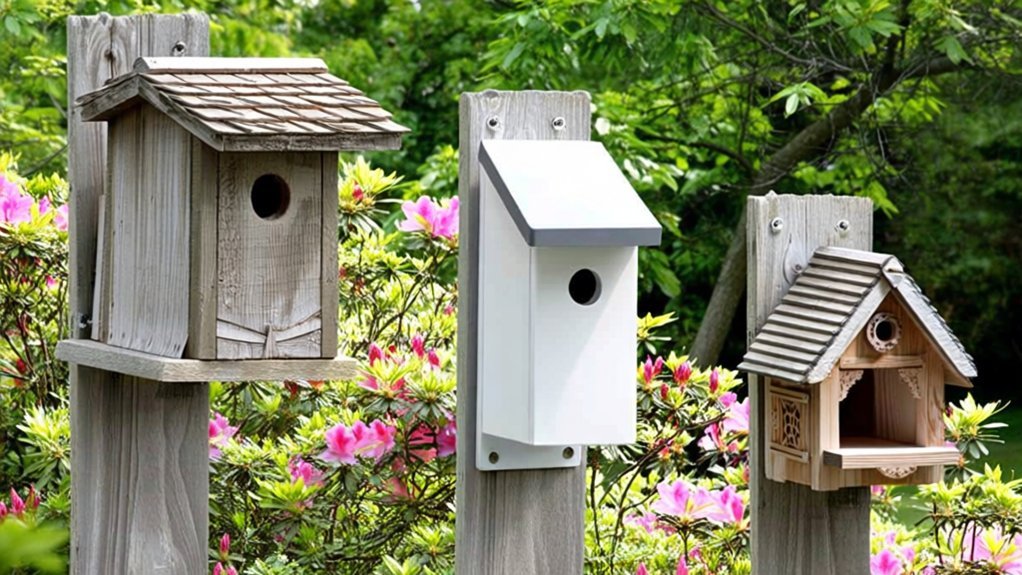
3 Best Bluebird Houses for Spring Nesting Season
As a bird enthusiast, finding the right bluebird house isn’t just about aesthetics; it’s about creating a safe, durable environment for spring nesting. You need a design that withstands weather, keeps predators at bay, and offers easy maintenance—so your feathered friends can settle comfortably. From recycled plastics to composite materials, each option has distinct features tested over time. Curious which models suit your yard best and what factors truly matter? Let’s explore what makes the top picks stand out.
Kingsyard Recycled Plastic Bird House for Outdoors

- DESIGNED FOR BLUEBIRDS: The 1.5-inch entrance hole provides a suitable nesting space for bluebirds and other small...
- PREDATOR GUARD PROTECTION: The reinforced entrance guard helps prevent predators from enlarging the entry hole, adding extra...
- CLEAR VIEWING PANEL: The transparent side panel provides a clear view of the nesting area, allowing you to check nesting...
Last update on 2026-08-07 / Affiliate links / Images from Amazon Product Advertising API
Looking for a birdhouse that can handle all weather? The Kingsyard Recycled Plastic Bird House is a great choice. It’s made from strong recycled plastic, which means it won’t crack or break when it rains, snows, or the sun shines. You can leave it outside all year long.
This birdhouse has a clear side panel. You can look inside without bothering the birds. It also has small holes at the bottom to let air flow, so the birds stay cozy and healthy. A predator guard goes around the entrance to keep out animals that might try to get in.
You can choose between blue or brown. It matches most yards and keeps your feathered friends safe.
This birdhouse is perfect for bird lovers, nature fans, and families. It’s sturdy, eco-friendly, and suitable for all seasons.
Some things to keep in mind: It only comes in two colors, so it might not match every yard. It needs occasional cleaning to stay safe for the birds. Also, it looks different from wooden houses, which can be more decorative.
2 Pack Bird Houses for Outside Clearance with Copper Guard

- 1-1/2" ENTRANCE HOLE SIZE: SISTERBIRD bluebird houses for outside have a properly-sized entrance hole, through this blue bird...
- HIGH-QUALITY MATERIALS: SISTERBIRD birdhouse kits for adults use untreated, unpainted cedar. bluebird nesting box has a rough...
- SAFE HOME FOR FLEDGLINGS: SISTERBIRD Bluebird BirdHouse Box with copper predator guard around the entrance hole can help...
Last update on 2026-07-05 / Affiliate links / Images from Amazon Product Advertising API
If you want to help birds stay safe while nesting outside, a pack of two bird houses can be a great choice. These houses are made from natural cedar wood that handles weather well. Each house has a copper guard around the entrance to block predators like starlings from getting inside. The guards are 1-1/2 inches wide and act as a strong barrier.
These bird houses are easy to put together and clean. You can also paint them if you like, to make them look more colorful or match your yard. They are built to last many seasons and can be used again and again.
These houses are good for attracting small birds like Bluebirds, Wrens, and Chickadees. The size of the entrance hole helps keep bigger birds from entering, so nestlings stay safe. However, some larger birds might not fit through the 1-1/2-inch hole.
These bird houses work well outdoors but may need some touch-ups or occasional cleaning to stay looking good over time. Making custom changes, like painting or decorating, takes a little extra effort.
Spring Melody Bluebird House, Composite Material Nesting Box, Hanging Birdhouse for Blue Bird, Sparrow, Chickadee

- Composite Material Bird House for Bluebirds, Wrens, Chickadees,Finch, Bluejay, Sparrows. Longtime Weather Proof. Envirometal...
- 8.3" H X 6.7" W X 6.7" D. 1.5" Entry Hole. Open Door for Easy Cleaning and Good For Bird Watching.
- Colorful Country Cottage Birdhouse Pretty Designed, Spring Flower Bedding Tune.
Last update on 2026-07-13 / Affiliate links / Images from Amazon Product Advertising API
The Spring Melody Bluebird House is a popular choice for people who enjoy watching birds. It gives small birds a cozy place to build their nests. The house is made from weatherproof composite material. This means it can last up to five seasons, no matter if it rains or the sun shines. The bright, country cottage style with spring flower details makes it a cheerful addition to any garden. The open door makes cleaning easy, so you can keep it tidy for new visitors. With a 1.5-inch entrance hole, it’s perfect for bluebirds, sparrows, and chickadees, but keeps larger birds out. You can hang it up, mount it on a pole, or place it on a roof. This gives you many ways to put it in your yard.
Best For: People who love birds and gardening. It’s a durable, eco-friendly home for small birds like bluebirds, sparrows, and chickadees. The house can be hung or placed in different outdoor spots.
Pros:
- Made from weatherproof composite, so it lasts up to five years.
- Bright, cottage design with spring flowers adds charm.
- Can be hung, mounted on a pole, or placed on a roof for easy setup.
Cons:
- The small entrance door may not fit bigger birds.
- The open door design means you might need to clean it often.
- The composite material looks different from natural wood, which some people might not prefer.
This birdhouse is easy to use and looks nice in your garden. It gives small birds a safe place to nest and helps attract them to your yard.
Factors to Consider When Choosing Bluebird Houses for Spring Nesting Season
When selecting a bluebird house, you’ll want to consider factors like material durability, since a sturdy, weather-resistant design helps protect the nest through spring storms. Entry hole size is essential, as it controls which birds can access the box and keeps unwanted visitors out—think of it as Bluebird’s VIP pass. Ultimately, features like predator protection, easy cleaning, and good ventilation make all the difference in creating a safe, welcoming space for your spring visitors—kind of like giving them a cozy, well-guarded home away from home.
Material Durability
Choosing a strong bluebird house is important if you want it to last through spring’s weather. Look for houses made from tough, weatherproof materials. Good options include recycled plastic, cedar wood, or composite. These materials won’t easily warp, rot, or crack from rain, snow, or sun.
A durable house keeps bluebirds safe and secure year after year. Using recycled materials is good for the environment too. They make the house last longer and help protect nature. Make sure the house is weatherproof. This keeps it stable and stops pests or decay from getting inside.
When picking a bluebird house, choose one made with sturdy, high-quality materials. This prevents the need for repairs and gives bluebirds a safe, cozy space. A strong house means more nests, more bluebird families, and a happy spring for your feathered friends.
Entry Hole Size
A 1.5-inch hole is the best size for bluebird houses. It is just the right size to let bluebirds enter easily. At the same time, it keeps bigger animals like raccoons or cats out. If the hole is too small, bluebirds might find it hard to get in or build nests comfortably. If the hole is too big, it can let in animals that might harm the birds or steal their nests. Keeping the same size helps bluebirds feel safe. Some birdhouses let you change the size of the hole. This is helpful if you want to invite different types of birds or change your nesting area. Picking the right size for the hole is very important. It helps keep the bluebirds safe and encourages them to nest and raise their babies comfortably.
Predator Protection
Protecting bluebird nests from predators takes more than just a small entry hole. Predator guards, like copper strips or extensions around the opening, help keep bigger animals like raccoons and squirrels from enlarging the entrance. Keeping the hole about 1.5 inches wide lets bluebirds in but keeps out larger animals. How you place the nest box also matters. Hang it about 4 to 6 feet high and away from bushes or climbing plants where predators can hide. Some nest boxes have extra shields or extensions for more protection. Adding vents or ridges inside helps young birds get out fast and stay safe. Using these simple tricks helps give bluebirds a safe place to raise their young.
Ease of Cleaning
Keeping your bluebird house clean and safe is easier when it’s designed with good access. You need to check and clean the nest every year to stop bugs and sickness. Look for a house with a door that opens or panels that lift up. These make cleaning simple and quick. A clean-out door or removable floor helps you get rid of old nest material easily. Houses with smooth inside surfaces are also good because dirt and debris won’t get caught. Cleaning after each breeding season helps keep pests away. Use weather-resistant materials so the house stays strong and easy to clean year after year. By choosing the right house, cleaning becomes simple, and your bluebirds stay happy and healthy.
Ventilation & Airflow
Ventilation isn’t the most exciting part of a bluebird house, but it’s very important. Good airflow helps keep the inside temperature steady and controls moisture. If there’s too much moisture, mold can grow. Mold can hurt eggs and baby birds. Small holes on the sides or bottom of the house let air flow in. These holes help keep things cool and dry inside. They also stop drafts from bothering the birds. Proper ventilation lowers humidity, which reduces parasites and sickness. On hot days, it stops the house from getting too warm, protecting the eggs and chicks.
But be careful. Too much airflow can be dangerous. Make sure the holes are protected from predators. Use guards and carefully place openings. Find the right balance so the house has enough fresh air but stays safe and cozy. This way, your bluebirds can raise their families happy and healthy.
Placement & Accessibility
Have you ever wondered where to put your bluebird house? The best spot is about 4 to 6 feet above the ground. Put it high enough to keep raccoons or cats from reaching it. But make sure it’s easy for you to check and clean.
Find a shady place out of direct sunlight. Too much sun can make the nest too hot. Also, place the house so the opening faces away from strong winds and bad weather. This helps keep the babies safe and cozy.
Make sure the house is mounted safely. Imagine if the wind made it fall—no one wants that! Use strong screws or nails so it stays put.
Pick a spot that’s easy for you to open and clean. This helps you take care of the nest and see the birds grow. With these tips, you’ll give bluebirds a happy home and enjoy watching them raise their family.
FAQs
How Do I Attract Bluebirds to My Yard Effectively?
You attract bluebirds by installing a proper nesting box, offering fresh water, and providing native insects or berries nearby. Keep the yard safe, quiet, and free of predators, encouraging them to settle and nest.
What Maintenance Is Required for Bluebird Houses After Nesting?
After nesting, you should remove and clean the bluebird house carefully, removing old debris and replacing it with fresh bedding. Make sure the entrance is clear and stable, then wait a few weeks before the next breeding cycle.
Can Bluebirds Reuse Their Nests Each Year?
Bluebirds can reuse their nests each year if they remain in good condition. However, you should clean out old nests and debris annually to prevent parasites and guarantee a safe, clean environment for returning bluebirds in the spring.
What Predators Should I Watch for Around Bluebird Houses?
You should watch for predators like cats, raccoons, snakes, and squirrels around bluebird houses. Keep the area clear of clutter, use predator guards, and guarantee the entrance is secure to protect nests effectively.
How Deep Should the Entrance Hole Be for a Bluebird House?
You should make the entrance hole about 1.5 inches deep to prevent predators from reaching inside. This size comfortably fits bluebirds and discourages larger animals, helping protect your nest and guarantee a safe, successful nesting season for the birds.

Ava is a bird enthusiast and nature lover who has spent countless hours observing and learning about the fascinating world of birds. With a passion for sharing her knowledge and inspiring others to appreciate the beauty of birds, Ava writes about her experiences and insights on avianadmirer.com.

