15 Beautiful Blue Birds of Wisconsin
Wisconsin is home to many beautiful blue birds. The Eastern Bluebird, Blue Jay, and Indigo Bunting are three notable examples. Each bird has unique feathers and behaviors suited to various habitats, such as forests and cities. By learning about their migrations and nesting habits, we can better understand their roles in the environment and the challenges they face. Are there other blue birds you might see in Wisconsin?
Key Takeaways
Wisconsin features many beautiful blue birds, including the Eastern Bluebird and Indigo Bunting. These birds often inhabit open woodlands and fields. The Blue Jay is notable for its intelligence and social activity. You can find it living in deciduous forests and residential areas.
Migratory birds like the Barn Swallow and Snow Bunting travel great distances and display unique adaptations for survival. Colorful warblers, such as the Blue-winged Warbler and Cerulean Warbler, add to Wisconsin's bird diversity with their bright colors and melodic songs.
Observing these blue birds increases awareness of local ecosystems and supports wildlife conservation efforts in Wisconsin. Enjoying birdwatching can deepen your appreciation for nature while contributing to protecting these species.
Eastern Bluebird
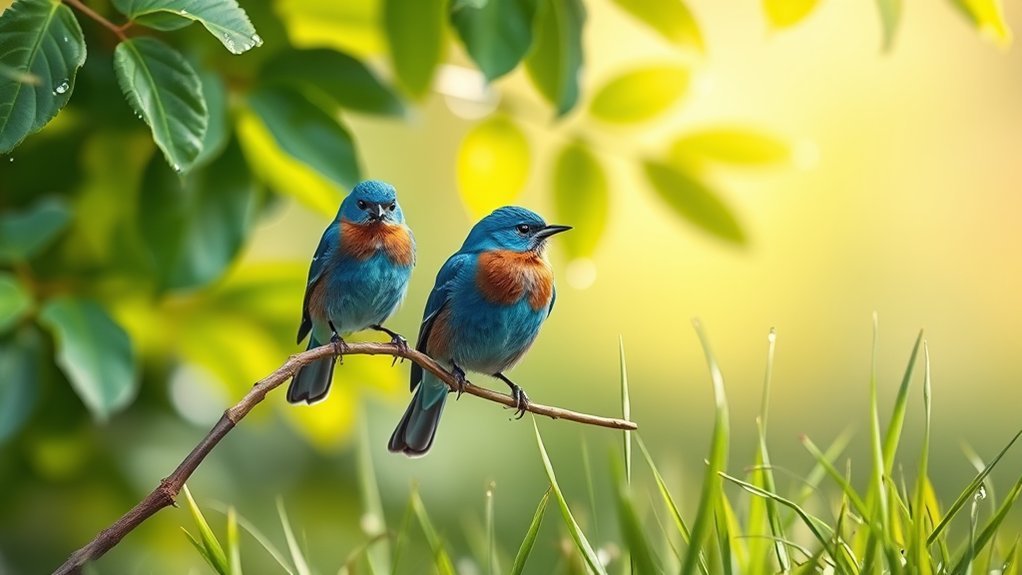
The Eastern Bluebird is a delightful sight in Wisconsin. Many birdwatchers admire these birds each year. They prefer open woodlands and often perch on fence posts or in gardens. Watching their behaviors can be rewarding. They show strong territoriality, especially during breeding season.
For nesting, Eastern Bluebirds prefer tree cavities or nesting boxes, which you can easily maintain in your backyard. They usually lay three to six eggs.
Both parents feed the young. By learning about their behaviors, you can connect with these vibrant birds and enjoy watching them thrive in Wisconsin's beautiful environments.
Blue Jay
Blue Jays are beautiful birds found in Wisconsin. They've bright blue feathers and unique calls.
Here are some common places to see them:
- Deciduous forests – These are their main habitats, rich in food sources.
- Backyards – They often visit bird feeders, especially for peanuts.
- Open woodlands – They search for acorns and insects here.
Blue Jays are intelligent and social birds. They often live in family groups and communicate through loud calls, warning each other of dangers.
Their diet is varied, and they help distribute seeds in their environment.
Watching Blue Jays connects you with nature and enhances your understanding of Wisconsin's ecosystem. Enjoy their presence and learn more about these fascinating birds.
Indigo Bunting
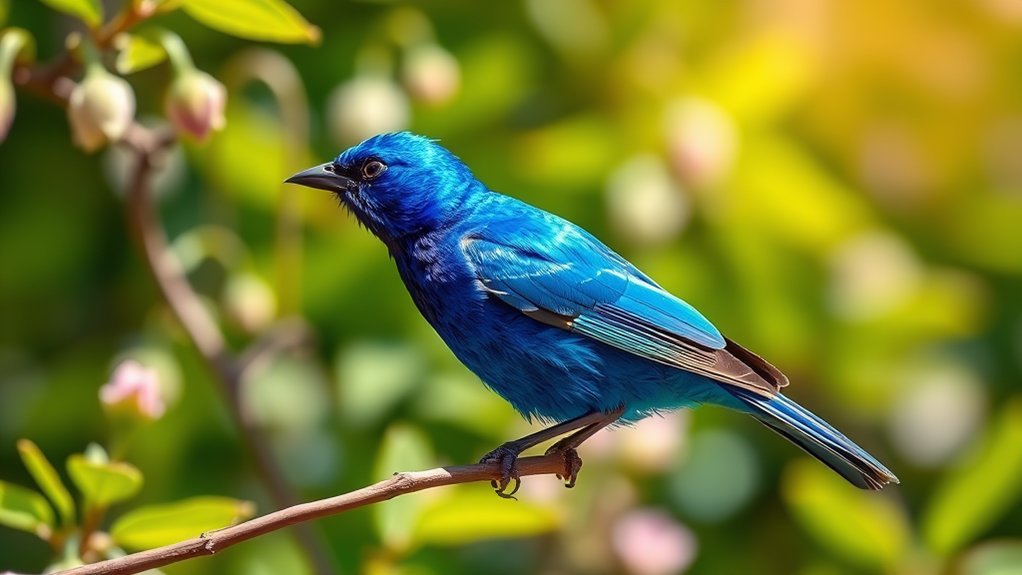
Indigo Buntings are beautiful songbirds found in Wisconsin during warm months. They like open fields, shrubby areas, and woodland edges. Their bright blue feathers make them easy to spot.
Male Indigo Buntings sing to mark their territory and attract mates. Their songs fill the air with joy.
These birds eat seeds and insects, which helps keep the ecosystem healthy. Watching them in nature creates a strong connection to the environment.
Appreciating their unique features enhances your understanding of Wisconsin's birds and supports wildlife appreciation in your community.
Tree Swallow
Tree Swallows are agile birds known for their shiny blue-green feathers and white bellies. They display interesting behaviors and migration patterns:
- Nest Building: Tree Swallows prefer to nest in holes and often use man-made structures for this.
- Eating Habits: Their main food source is insects, which they catch while flying.
- Grouping Behavior: These birds are social and often gather in large groups during migration.
You will see their impressive flying skills as they move quickly through the air.
Every spring, Tree Swallows travel north to Wisconsin, making their return a joyful sight as they come back to their nesting areas.
Barn Swallow
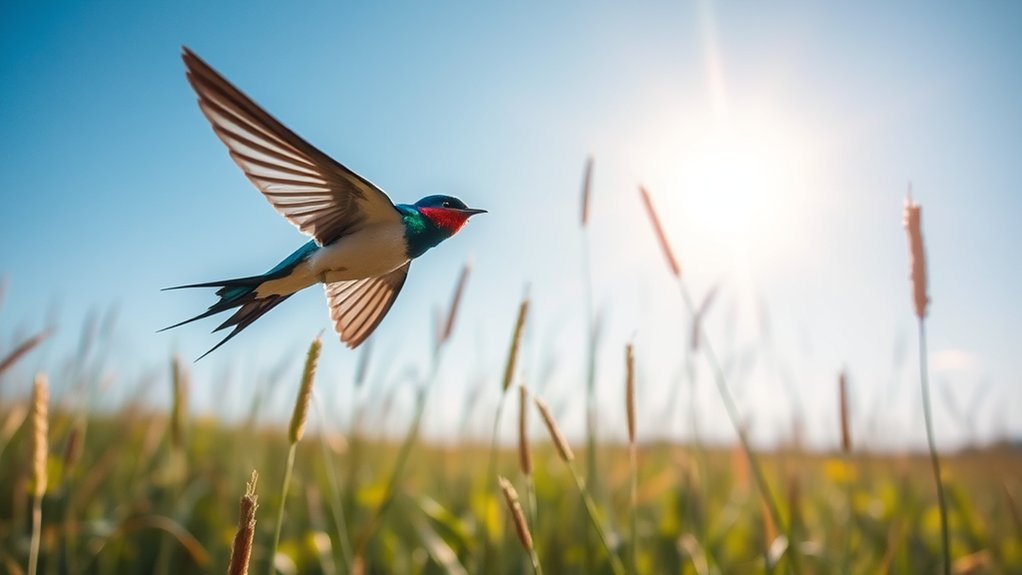
Barn Swallows are often confused with Tree Swallows but have unique traits that set them apart. These birds are known for their impressive flying skills and vibrant blue feathers.
Barn Swallows build mud nests in safe places, like the edges of buildings or under bridges, often returning to the same spots year after year.
In winter, Barn Swallows migrate thousands of miles from North America to South America. This long journey is important for their survival as they look for warmer weather and more food.
Watching Barn Swallows can deepen your connection to nature and help you appreciate their vital role in our ecosystem. They're fascinating creatures that deserve our attention.
Blue Grosbeak
The Blue Grosbeak is a beautiful bird known for its bright blue feathers and strong body. This bird enhances its environment and thrives in different habitats.
Here are three important points about the Blue Grosbeak:
- Behavior: Blue Grosbeaks sing lovely songs, especially during mating and marking their territory.
- Diet: Their diet includes seeds, insects, and berries, showing their flexible foraging skills.
- Habitat: They commonly live in areas with shrubs, open woodlands, and field edges.
Learning about the Blue Grosbeak's behavior and habitat helps you appreciate the diversity of birds in Wisconsin even more.
Cerulean Warbler
When you see a Cerulean Warbler in Wisconsin's forests, its bright blue color and unique song stand out. This small bird migrates and likes deciduous forests with tall trees, particularly where there are many insects to eat.
During its breeding season, the Cerulean Warbler sings soft, flowing notes that bring charm to the forest. You might spot them high in the trees, flitting between branches.
Knowing where Cerulean Warblers live can make your birdwatching more enjoyable. Join other bird lovers to share your sightings and connect with Wisconsin's rich wildlife.
Purple Martin
Purple Martins are striking and social birds. They're popular with bird watchers in Wisconsin. These birds like open areas and are often found in habitats such as urban spaces, fields, and near water.
Here are three interesting facts about Purple Martins:
- They migrate from South America to North America every spring.
- They've a social structure and often nest in colonies.
- Their diet mainly includes insects, which helps control pests.
During migration, Purple Martins travel thousands of miles. This shows their great navigation skills.
Black-throated Blue Warbler
The Black-throated Blue Warbler is a fascinating bird for watchers in Wisconsin. It prefers mature deciduous or mixed forests. This species thrives in areas with dense understories that offer shelter and nesting opportunities.
Look for them in spots with many shrubs and small trees.
In spring and fall, these warblers migrate. They travel from breeding grounds in Canada to wintering areas in the southeastern United States.
During migration, they can be seen moving through the trees and heard with their distinct calls. Connecting with other bird watchers during migration can enhance your enjoyment of these beautiful blue birds and enrich your overall birding adventures.
Lazuli Bunting
Have you ever seen the bright Lazuli Bunting in Wisconsin? This colorful bird stands out with its striking blue feathers.
Here are three important points about this species:
- Habitat: Lazuli Buntings prefer open areas with shrubs and grasses, like fields and edges of streams.
- Migration: They migrate from their breeding sites in North America to winter in Mexico, usually leaving in late summer.
- Identification: Male Lazuli Buntings have vibrant blue plumage. Female Lazuli Buntings have a more subdued brown color, making it easy to tell them apart.
Understanding these characteristics can help you appreciate the Lazuli Bunting more.
If you go outside, you may hear their pleasant songs in Wisconsin's parks and fields. Enjoy your birdwatching experience!
Blue-winged Warbler
While watching colorful birds like the Lazuli Bunting, you may also see the Blue-winged Warbler in Wisconsin. This small songbird has bright yellow underparts and blue wings. It lives in dense, shrubby areas like young forests and overgrown fields.
During the breeding season, from late April to early July, you can hear their beautiful calls as they mark their territory.
These warblers migrate south to Central America after breeding, typically leaving in late September.
Spruce Grouse
If you explore Wisconsin's northern forests, you may see the Spruce Grouse, a bird that thrives in coniferous areas.
Here are some key features of this bird:
- Camouflage: Their feathers match the forest floor, helping them avoid predators.
- Diet: They mostly eat needles from spruce and fir trees.
- Mating Rituals: During mating season, male grouse perform displays that include tail fanning and calls.
Learning about the Spruce Grouse's habitat and behaviors can deepen your appreciation for these birds.
Spotting them can bring joy to birdwatchers and connect you with Wisconsin's ecosystems.
Snow Bunting
The Snow Bunting is a winter bird seen in open fields and snowy roads in Wisconsin. This small songbird prefers Arctic tundra but migrates south in the winter.
When temperatures drop, you may see flocks feeding on seeds in grassy areas and farms. Their bright white feathers stand out against the snow.
During migration, they can travel to southern states in the U.S. Watching Snow Buntings can deepen your appreciation for nature.
Common Grackle
The Common Grackle is a distinctive bird found in Wisconsin during the warmer months. Its glossy black feathers can reflect iridescent colors in sunlight, creating a beautiful sight.
Here are important details about this bird:
- Grackle Behavior: Grackles are curious and often forage in groups, showing social behavior.
- Grackle Habitat: They thrive in various environments like wetlands, parks, and suburbs, preferring open spaces for foraging.
- Diet: Grackles eat insects, seeds, and fruits, making them versatile feeders.
Watching their lively interactions can enhance your appreciation for Wisconsin's birdlife and deepen your connection to local nature.
Belted Kingfisher
The Belted Kingfisher is a striking bird with blue and white feathers. You can often see it near Wisconsin's rivers, lakes, and marshes.
This bird hunts for fish, which is its main food source. It also eats crustaceans and insects, showing that it can adapt to different food sources.
The Belted Kingfisher typically breeds in tree cavities close to water, where the female lays 5 to 7 eggs.
If you enjoy exploring Wisconsin's nature, look for these skilled hunters. Their unique calls and impressive fishing dives make them a vibrant part of the local wildlife.
Frequently Asked Questions
What Are the Best Birdwatching Locations in Wisconsin for Blue Birds?
For great birdwatching in Wisconsin, check out Kettle Moraine State Forest and Horicon Marsh. Visit early in the morning to see bluebirds more clearly. Look for their nesting sites to increase your chances of spotting them. Enjoy the beauty of nature while watching these vibrant birds.
When Is the Best Time to See Blue Birds in Wisconsin?
The best time to see blue birds in Wisconsin is during spring migration and early summer. These seasons provide the peak viewing opportunities. By understanding their seasonal patterns, you can improve your birdwatching experience and enjoyment. Research locations where blue birds are known to gather, and visit during these times for the best chance to spot them.
How Can I Attract Blue Birds to My Backyard?
To attract blue birds, install birdhouses that fit their nesting needs. Set up feeding stations with their preferred seeds. Make sure these are visible in your yard, providing a safe space and consistent food source. By doing this, you can create an inviting environment for blue birds to visit and stay. Enjoy watching these beautiful birds as they come to your backyard!
What Do Blue Birds in Wisconsin Eat?
Bluebirds in Wisconsin eat insects. They prefer caterpillars, beetles, and grasshoppers. In summer, they also like berries and fruits. You can attract bluebirds to your backyard by offering seeds like sunflower and millet.
Are Blue Birds in Wisconsin Migratory or Resident Species?
Blue birds in Wisconsin can be both migratory and resident species. During colder months, many blue birds migrate to warmer areas. Some blue birds, however, decide to stay in Wisconsin year-round. These resident blue birds adapt their feeding and nesting to the local conditions. This behavior allows them to thrive in different weather throughout the year.

Ava is a bird enthusiast and nature lover who has spent countless hours observing and learning about the fascinating world of birds. With a passion for sharing her knowledge and inspiring others to appreciate the beauty of birds, Ava writes about her experiences and insights on avianadmirer.com.