
Backyard Birds of South Carolina: Common Visitors
When you step outside in South Carolina, you can see many types of backyard birds. The Northern Cardinal is bright red and stands out against the green plants. The joyful calls of the Carolina Wren add a nice sound to the area. Watching these birds and how they interact helps you learn about their behaviors and homes. But what other interesting birds might visit your yard and make it lively?
Key Takeaways
- Northern Cardinals are bright red birds. They sing to mark their territory and prefer sunflower seeds at feeders.
- Carolina Wrens are small, active birds. They build nests in dense plants and sing all year to show their territory.
- Eastern Bluebirds are vivid blue and enjoy open spaces. They eat insects and fruits, especially during spring when they nest.
- American Goldfinches are cheerful yellow birds. They often gather in groups and eat seeds, particularly from sunflowers and dandelions.
- Blue Jays stand out with their bright colors and loud calls. They display clever behavior and are common in forests and backyards.
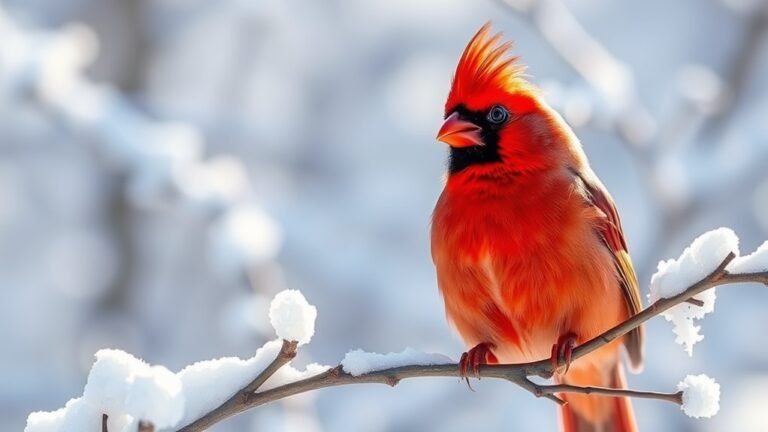
The Northern Cardinal: A Bright Splash of Red

The Northern Cardinal is a bright red bird found in South Carolina. Its striking color and notable crest make it easy to recognize. Cardinals often sit in prominent spots, using their vivid plumage to stand out against the trees and shrubs.
They're protective of their territory and can be heard singing to mark their space.
Cardinals mainly eat seeds, preferring sunflowers and safflower. You can see them at bird feeders, where they use their strong beaks to crack open seeds.
Watching these charming birds can bring joy to your backyard, reminding you of the beauty in nature.
The Carolina Wren: Small but Vocal
While exploring your backyard, you may notice the lively Carolina Wren. This small bird sings bold songs that brighten the air. It moves quickly between shrubs and garden ornaments, making its home in those spaces.
- Carolina Wrens often build their nests in thick plants or birdhouses.
- They're very territorial and sing throughout the year to mark their territory.
- These birds are caring parents and look after their young with dedication.
The Eastern Bluebird: A Symbol of Happiness

Joy fills your backyard when you see an Eastern Bluebird. These colorful birds display bright blue feathers and bring delight to everyone who watches them. They like open spaces and often catch insects or eat fruit. Their happy song brings a sense of peace to the area.
In spring, you can look for Eastern Bluebird nests. They often choose tree cavities or the birdhouses you provide. To help them, make sure the nest boxes are clean and easy to reach.
Watching them care for their chicks is enjoyable and reminds us of the simple joys in life. With these birds in your yard, happiness blossoms around you.
The American Goldfinch: Nature's Sunbeam
The American Goldfinch is a bright yellow bird known for its cheerful songs. These small birds are easy to recognize and often gather in groups, bringing happiness to your backyard.
- Goldfinches mainly eat seeds, especially from sunflowers and dandelions.
- They prefer habitats like weedy fields and open spaces where they can thrive.
- Male goldfinches change their plumage with the seasons, which adds to their charm.
Enjoy spotting these lively birds in your outdoor space!
The Blue Jay: Intelligence and Beauty

The Blue Jay stands out with its vibrant colors and smart behavior. You can find these birds in oak, maple, or pine trees, where their loud calls resonate in the forest.
Watching Blue Jays can be interesting; they're skilled problem solvers and have strong social bonds. You may see them hiding acorns, showing excellent memory skills to find their food later.
Their boldness often leads to interactions with other birds, creating a lively scene in your backyard. Take a moment to enjoy their bright blue and white feathers, showing that beauty and intelligence often go hand in hand in nature.
The House Finch: Adaptable Urban Dwellers
The House Finch is a bird commonly found in urban areas.
Here are some key features of this bird:
- They've bright feathers that add color to city life.
- They enjoy a diverse diet and often visit bird feeders for food.
- Their nesting habits show their ability to thrive in busy spaces.
Watching House Finches can be a rewarding experience.
Their cheerful songs and foraging skills stand out even in crowded streets.
If you see a nest nearby, you'll notice their commitment to their young and the joy they bring to your garden.
The Tufted Titmouse: Charming and Curious
When you visit a South Carolina backyard, you may see the Tufted Titmouse. This small songbird has a unique crest and an active personality. Often, you can find them in pairs as they explore their surroundings. They prefer wooded areas close to oak and maple trees. These trees provide the right habitat for them.
Tufted Titmice like environments with thick leaves. They perch on branches and search for seeds, berries, and insects.
While observing them, pay attention to their interactions. They engage in fun vocalizations that strengthen their social bonds.
The Tufted Titmouse adds a playful vibe to your backyard, encouraging you to enjoy the beauty of nature.
The Mourning Dove: Graceful and Serene
In a peaceful South Carolina backyard, the Mourning Dove stands out with its soft colors and gentle nature. This bird is known for its grace, often seen resting quietly or flying smoothly through the air.
Mourning Doves usually search for seeds on the ground. Their soft cooing calls help create a calm environment. These doves often form strong pair bonds, showing loyalty to their partners.
As you watch them, their soothing song adds tranquility to your space. Mourning Doves offer more than just a pleasing sight; they bring a sense of peace to your yard.
The Ruby-throated Hummingbird: A Tiny Marvel
The Ruby-throated Hummingbird adds energy and color to your South Carolina backyard. This small bird has shiny feathers and fast wingbeats.
To attract these beautiful birds, set up hummingbird feeders with special nectar. Mix four parts water with one part sugar for a tasty treat. Clean your feeders often to keep the nectar fresh.
When you see a Ruby-throated Hummingbird hovering, take a moment to enjoy the view; it's a joyful experience. Their visits bring excitement and joy, reminding you to appreciate nature's beauty.
Frequently Asked Questions
What Types of Feeders Attract South Carolina Backyard Birds?
To attract birds to your backyard, use a variety of seeds. Sunflower seeds and nyjer seeds are popular choices. Pair these seeds with different feeder types, such as tube feeders and platform feeders. Watching which seeds and feeders the birds prefer can create a welcoming space for them. Enjoy the beauty and activity of these feathered visitors in your yard.
Do Different Bird Species Have Specific Nesting Preferences?
Different bird species have specific nesting preferences. They choose certain sites for their nests, such as trees or shrubs. The materials they use to build their nests also vary. Common materials include twigs and leaves. These choices reflect the birds' unique needs and behaviors. Understanding these preferences helps us appreciate the diversity in bird lifestyles.
What Plants Can I Grow to Attract Local Birds?
To attract birds to your garden, plant native and bird-friendly shrubs. These plants provide food, shelter, and nesting areas for birds. By creating this environment, you invite a variety of birds to visit and enjoy your garden. Enjoy watching them flourish in their new habitat.
How Can I Identify Bird Calls in My Backyard?
To identify bird calls in your backyard, first, record the sounds you hear. Play them back to help you recognize patterns. Practice listening often. Use field guides to learn about the birds in your area. You will gradually feel more connected to the birds around you.
What Time of Year Is Best for Birdwatching in South Carolina?
Spring and fall are the best times for birdwatching in South Carolina. During these seasons, many birds migrate, creating a variety of species to observe. You will see colorful birds and experience the joy of connecting with nature. Birdwatchers can share their excitement and enjoy the moments spent outdoors.

Ava is a bird enthusiast and nature lover who has spent countless hours observing and learning about the fascinating world of birds. With a passion for sharing her knowledge and inspiring others to appreciate the beauty of birds, Ava writes about her experiences and insights on avianadmirer.com.