How Often Should I Clean My Bird House?
Cleaning your birdhouse is crucial for a healthy space for birds. Clean it at least once a year, preferably before nesting season starts. Regular cleaning helps prevent parasites and encourages new birds to use your birdhouse. Look for signs like droppings or old nesting materials, which indicate it's time to clean.
Key Takeaways
Clean your birdhouse at least once a year to keep it safe for birds. The best time to do this is in late winter or early spring, just before nesting season starts.
Check for old nesting materials or bad smells. These are signs that you may need to clean sooner than once a year.
If you have multiple birdhouses, schedule cleanings at different times. This helps maintain each house effectively.
Regular cleaning helps birds nest successfully and protects them from diseases.
Importance of Cleaning Your Birdhouse
Cleaning your birdhouse is important for the health of the birds and the durability of the structure.
A clean birdhouse helps keep birds healthy by lowering the chances of parasites and diseases that can grow in dirty spaces. By removing old nesting materials and debris, you create a safer area for new birds. This practice increases the chances of successful nesting; birds are more likely to return to a clean house for breeding.
Regular cleaning also stops mold and bacteria from building up, which can harm both adult birds and their chicks.
Recommended Cleaning Frequency
Clean your birdhouse at least once a year. Late winter or early spring is the best time, before birds start nesting.
Having a regular cleaning schedule ensures your birdhouse stays safe and inviting. This helps the birds stay healthy and strengthens your bond with nature.
During cleaning, remove old nesting materials and debris. These can attract parasites and diseases.
If you have several birdhouses, clean them at different times to reduce disturbance. A well-maintained birdhouse supports local bird populations, allowing you to enjoy their presence and help them thrive.
Signs It's Time to Clean Your Birdhouse
Check your birdhouse regularly to know when it needs cleaning.
Look for old nesting materials or debris inside. If you see leftover twigs, feathers, or droppings, it's time to clean. Waste buildup can attract pests and create problems for future birds.
If you notice mold or smell something foul, act quickly. A clean birdhouse helps keep birds healthy and encourages new ones to move in.
Best Cleaning Practices
Cleaning your birdhouse is essential for keeping it safe and welcoming for birds. First, take out any old nesting materials and debris to ensure cleanliness.
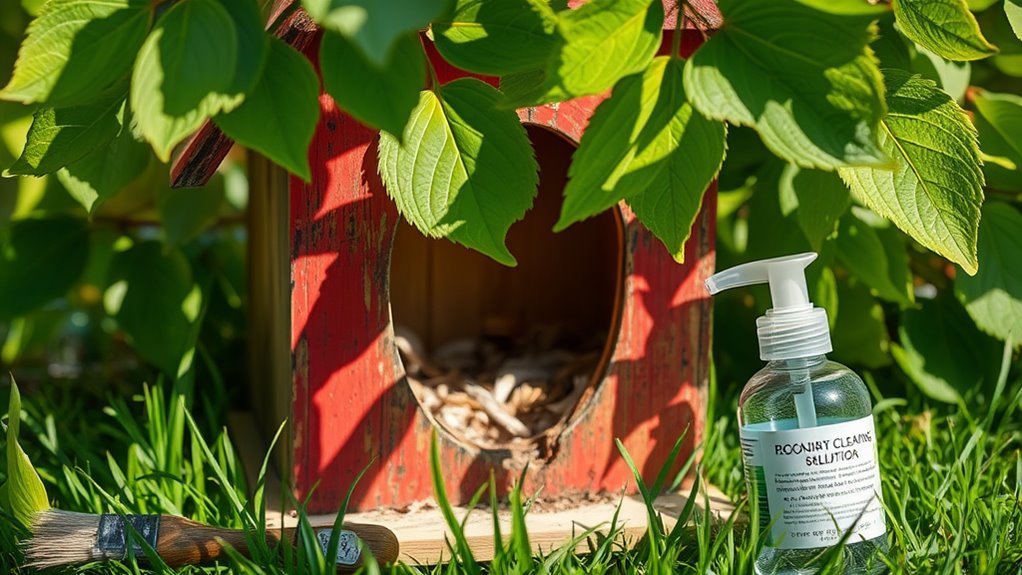
Then, use a gentle cleaning solution made of water and mild soap to scrub both the inside and outside of the birdhouse. Avoid using harsh chemicals, as they can harm the birds.
After cleaning, rinse the birdhouse thoroughly and let it dry completely before putting it back together.
Regular cleaning helps create an inviting space and reduces the risk of spreading diseases among birds. By following these steps, you support a healthy environment for your feathered friends to thrive and return year after year.
Tools and Supplies Needed for Cleaning
To clean your birdhouse, you need some basic tools and supplies. First, get a sturdy scrub brush, a small putty knife, and a bucket for collecting waste. These tools will help you remove debris and disinfect the inside of the birdhouse.
Next, gather your cleaning supplies. Use a mild soap solution or vinegar, as these options are safe for birds and leave no harmful residues.
Wear a pair of gloves to protect your hands from germs and sharp edges. If you're allergic to dust, consider wearing a dust mask.
With these tools and supplies, you can create a clean and safe environment for your birds. This care helps your feathered friends thrive and enhances your enjoyment of their presence.
Seasonal Considerations for Birdhouse Maintenance
Maintaining your birdhouse is important year-round, but seasonal changes affect how and when you should clean and repair it.
Follow these steps to keep your birdhouse safe for birds.
- Spring: Clean the birdhouse thoroughly. This prepares it for new residents.
- Summer: Inspect the birdhouse for any damage. Ensure there's good ventilation to help keep it cool.
- Fall: Remove old nesting materials. This gets the birdhouse ready for winter.
- Winter: Check for leaks or cracks. Make sure the birdhouse is secure against harsh weather.
Encouraging New Residents After Cleaning
After cleaning the birdhouse, the next step is to attract birds to it.
Place the birdhouse in a quiet area, away from busy paths and noise. Ensure it's positioned at the right height, between five to ten feet off the ground, to make it inviting for birds.
Fill the inside with natural materials such as wood chips or straw to create a comfortable nesting space.
Surround the birdhouse with native plants or trees, which can provide food and shelter for the birds.
Keep an eye on the area. If you see birds checking it out, that means you're successfully attracting them to their new home.
Frequently Asked Questions
Can I Use Bleach to Clean My Birdhouse?
Do not use bleach to clean your birdhouse. Bleach can harm birds. Instead, use safer alternatives like vinegar or baking soda. Clean your birdhouse regularly to keep it safe for your feathered friends without using harmful chemicals.
What Types of Birds Prefer Unclean Birdhouses?
Some bird species, like house wrens and sparrows, prefer dirty birdhouses for nesting. They often choose places that other birds avoid. These species find good opportunities in neglected birdhouses, making them their homes.
How Do I Know if My Birdhouse Is Too Dirty?
Your birdhouse may be too dirty if you notice changes in nesting habits. Check for signs like lots of droppings, mold, or debris inside. Keeping your birdhouse clean helps birds feel safe and encourages them to return. Regular maintenance creates a welcoming space for them.
Should I Clean My Birdhouse in the Winter?
Yes, you should clean your birdhouse in winter. Cleaning helps prevent disease. Follow simple cleaning tips to ensure the birdhouse is safe for birds when they return in spring. This creates a welcoming space for them.
Can Cleaning Deter Birds From Nesting?
Cleaning can deter birds from nesting by changing their environment. Birds look for specific conditions to build their nests. If the area is too clean, it may not feel familiar or comfortable for them. This can lead to a lower chance of birds settling in that space.

Ava is a bird enthusiast and nature lover who has spent countless hours observing and learning about the fascinating world of birds. With a passion for sharing her knowledge and inspiring others to appreciate the beauty of birds, Ava writes about her experiences and insights on avianadmirer.com.