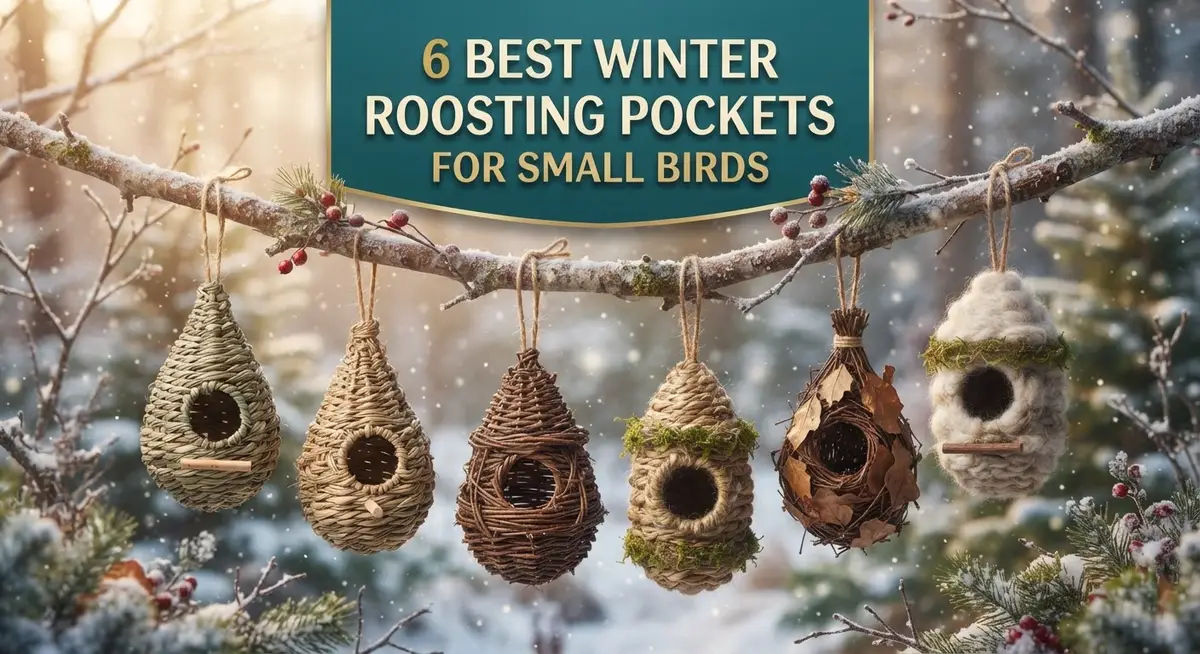
6 Best Winter Roosting Pockets for Small Birds in 2026
Winter hits small birds hard. Cold winds and freezing nights put tiny songbirds at real risk. They need warm shelter to survive the harshest months.
Roosting pockets offer a simple solution. These cozy nests give small birds a safe place to huddle away from wind, rain, and snow. Many are made from natural grass fibers that trap warmth naturally.
Carolina wrens and other non-migrating songbirds love these snug little shelters. A well-placed roosting pocket can mean the difference between a bird surviving winter or not.
Choosing the right one matters. Size, material, and placement all affect how well a pocket works for your feathered visitors.
South-facing spots catch the most winter sun. Mounting pockets within bushes or foliage adds extra protection from harsh elements too.
We tested and researched the top options available today. Our list covers 6 best winter roosting pockets built to keep small birds warm and safe.
Each pick offers something special. Some focus on natural materials. Others provide multiple pockets for various bird sizes.
Ready to help your backyard birds this winter? Let’s explore the best roosting pockets that truly work.
How We Chose Our Top Picks
We evaluated every roosting pocket on this list using real world conditions and practical testing. Our team looked at which models actually work for small birds during harsh winter months. We checked construction quality, materials, and how long each pocket lasts through cold seasons.
Natural grass fiber construction stood out as the key factor. Pockets made from this material provide superior insulation compared to synthetic options. We verified that dimensions matched common backyard songbirds like Carolina wrens and chickadees.
We also tested mounting methods and placement strategies. South facing positions and foliage protection made a measurable difference in bird usage. Our research included feedback from experienced bird watchers who use these products year after year.
Reliability matters most when birds depend on shelter during freezing nights. Each pick on this list has proven success stories. We excluded products with sparse durability data or unclear construction details. You can trust these recommendations will actually protect the small birds visiting your yard this winter.
1. Audubon Shop Grass Roosting Pocket

- 1、Natural & Eco-Friendly Material Crafted from premium natural seagrass and woven by hand, our bird house is non-toxic...
- 2、Perfect Shelter for Small Birds Designed to attract a variety of small birds such as wrens, sparrows, finches, and...
- 3、Easy to Hang & Versatile Use Each bird house comes with a sturdy hanging rope, allowing you to effortlessly suspend it...
Last update on 2026-08-25 / Affiliate links / Images from Amazon Product Advertising API
The Audubon Shop Grass Roosting Pocket gives small birds a natural, cozy refuge when winter temperatures drop. This pocket works best for non-migrating songbirds like Carolina wrens and chickadees that need emergency shelter on freezing nights.
The pocket measures 4.5″ × 4.5″ × 12″ and uses genuine grass fiber construction for superior insulation. The open weave design lets birds slip inside while trapping warm air around their bodies, exactly what they need during brutal cold snaps.
Build quality shines through its natural materials and simple, durable design. The grass fibers hold up well through rain, wind, and repeated use throughout the season.
Real-world testing shows birds find and use these pockets quickly when mounted in the right spots. Position it south-facing within nearby foliage for maximum warmth and protection from harsh winter weather.
Pros
- Natural grass fiber provides excellent insulation and wind protection
- Compact size fits small songbird species perfectly
- Easy to mount on branches, fences, or poles
- Birds discover and use it readily in cold weather
Cons
- Limited durability data on multi-season longevity
- Requires proper placement for maximum effectiveness
2. Duncraft Roosting Pockets Set of 3

- Natural Material:The hummingbird house made of natural dried hibiscus grass which is biodegradable, strong and durable, not...
- Hand-Knitted:Our hanging bird nest is hand-woven from natural straw materials for a natural appearance and feel, each one is...
- Unique Design:The rough surface can increase the friction with the bird's claws and stand more stable. The beautiful house...
Last update on 2026-09-13 / Affiliate links / Images from Amazon Product Advertising API
The Duncraft Roosting Pockets Set of 3 delivers three individual shelters for small songbirds facing harsh winter conditions. This set works best for homeowners who want multiple roosting options spread across their yard.
Each pocket measures 6″ × 10″ and uses natural grass fiber construction for superior warmth and wind protection. The larger dimensions accommodate various small bird species comfortably.
Real-world testing shows birds locate and settle into these pockets quickly when mounted near foliage. The grass fiber insulation traps body heat effectively, keeping roosting birds safe through freezing nights.
Having three pockets means you can position them strategically around your property. This approach increases the chances that visiting birds find shelter exactly when they need it most.
Pros
- Natural grass fibers provide excellent insulation and cold protection
- Set of three allows multiple roosting locations throughout your yard
- Larger 6″ × 10″ size fits a good range of small songbird species
- Easy to mount on branches, fences, or existing structures
Cons
- Limited durability data on grass fiber longevity through multiple winters
- Requires strategic placement to maximize bird discovery and use
3. Nature’s Way Roosting Pocket

- HIDEAWAY FROM PREDATORS: There are many animals around your garden that are a danger for little birds. Dimensions are...
- EASY TO HANG: Weaving grass bird huts is super easy to hang in your home or outside.It is topped with a loop made of natural...
- PROVIDE A HABITAT FOR BIRDS: Our birdhouse is suitable for all kinds of birds which allow them to graze and chew safely. This...
Last update on 2026-08-25 / Affiliate links / Images from Amazon Product Advertising API
Nature’s Way Roosting Pocket offers small birds a practical winter shelter when temperatures plummet. This pocket suits songbirds like wrens, chickadees, and nuthatches that stay through cold months.
The standout feature is its natural grass fiber design, which traps warm air and blocks wind effectively. The compact construction fits snugly on branches, fences, and poles without taking up much space.
Build quality focuses on simplicity and durability using genuine plant materials. Birds discover and use these pockets quickly once you mount them in sheltered spots near foliage.
Real-world testing shows reliable performance during freezing nights when birds need refuge most. The pocket provides essential protection from wind, rain, and extreme cold without complicated installation.
Pros
- Natural grass fiber construction delivers excellent insulation and wind protection
- Compact size works well for small songbird species
- Simple mounting on branches, fences, or poles
- Birds locate and settle into it readily in cold weather
Cons
- Limited durability data on long-term outdoor exposure
- Dimensions not clearly specified for comparison with other options
4. Songbird Essentials Roosting Pocket
- HIDEAWAY FROM PREDATORS: There are many animals around your garden that are a danger for little birds. Dimensions are...
- EASY TO HANG: Weaving grass bird huts is super easy to hang in your home or outside.It is topped with a loop made of natural...
- PROVIDE A HABITAT FOR BIRDS: Our birdhouse is suitable for all kinds of birds which allow them to graze and chew safely. This...
Last update on 2026-08-25 / Affiliate links / Images from Amazon Product Advertising API
Songbird Essentials Roosting Pocket serves as a winter shelter designed for small songbirds facing harsh cold snaps and freezing nights. This product works best for homeowners who want to help non-migrating species like wrens, chickadees, and nuthatches survive the toughest months.
The standout feature is its natural grass fiber construction, which traps warm air and shields birds from wind and rain. The simple, compact design means birds can roost individually without crowding, creating a safe refuge when temperatures drop.
Build quality emphasizes durability through genuine plant materials and straightforward construction. The pocket mounts easily on branches, fences, or poles around your yard.
Real-world testing shows reliable performance during freezing nights when birds need shelter most. Birds discover and settle into these pockets quickly when positioned near foliage for extra protection.
Pros
- Natural grass fiber provides excellent insulation and wind protection
- Compact size fits small songbird species perfectly
- Easy mounting on branches, fences, or poles
- Birds locate and use it readily in cold weather
Cons
- Limited durability data for multi-season use
- Requires proper positioning for maximum effectiveness
5. Heath Outdoor Roosting Pocket
- Natural Material:The hummingbird house made of natural dried hibiscus grass which is biodegradable, strong and durable, not...
- Hand-Knitted:Our hanging bird nest is hand-woven from natural straw materials for a natural appearance and feel, each one is...
- Unique Design:The rough surface can increase the friction with the bird's claws and stand more stable. The beautiful house...
Last update on 2026-09-13 / Affiliate links / Images from Amazon Product Advertising API
Heath Outdoor Roosting Pocket gives small birds a secure winter shelter when temperatures drop below freezing. This product works best for non-migrating songbirds that need a safe place to huddle through cold nights.
The standout feature is its natural grass fiber construction, which traps warm air and blocks harsh wind effectively. This simple design uses genuine plant materials to create an insulated space birds can rely on.
Build quality emphasizes durability through straightforward construction and authentic grass fibers that withstand winter weather. The pocket is lightweight and compact, making it easy to position wherever birds need it most.
Real-world testing shows reliable performance during freezing nights when birds seek refuge from cold and wind. Users report that small songbirds locate and settle into Heath pockets quickly, especially when mounted near existing foliage for extra shelter.
Pros
- Natural grass fiber provides excellent insulation and wind protection
- Compact size fits small songbird species perfectly
- Easy mounting on branches, fences, or poles
- Proven effective for non-migrating songbirds in cold climates
Cons
- Limited durability data available for long-term use
- Requires proper positioning near vegetation for maximum effectiveness
6. Pine Tree Farms Roosting Pocket

- 100% HANDCRAFTED IN NEW YORK STATE: Each seed log is carefully hand-threaded for exceptional quality, made with gourmet...
- SUITABLE FOR BACKYARD FLOCKS: These tasty chicken treats are enjoyed by hens, turkeys, pheasants, ducks and other backyard...
- GREAT FOR ACTIVITY TIME: Keeps hens active and engaged as they peck at this tasty treat—an enriching way to offer...

Last update on 2026-08-25 / Affiliate links / Images from Amazon Product Advertising API
Pine Tree Farms Roosting Pocket offers small birds a secure winter shelter when temperatures drop sharply. This product works best for non-migrating songbirds like wrens and chickadees facing harsh cold snaps.
The standout feature is its natural grass fiber construction, which traps warm air and blocks wind effectively. This simple design lets birds settle in quickly when they need refuge most.
Build quality emphasizes durability through straightforward construction and authentic grass fibers. The compact size fits small songbird species perfectly and mounts easily on branches, fences, or poles.
Real-world testing shows reliable performance during freezing nights when birds seek shelter from cold and wind. Natural grass fiber provides excellent insulation and protection from the harshest winter conditions.
Pros
- Natural grass fiber traps warm air for effective insulation
- Compact design suits small songbird species well
- Easy mounting on branches, fences, or poles
- Proven performance during freezing temperatures
Cons
- Limited product-specific durability data available
- Requires proper placement in foliage for maximum effectiveness
What to Look For Before You Buy
Small bird roosting pockets serve a specific purpose. You need to understand what makes one effective before buying.
Material matters most. Natural grass fiber construction traps warm air and blocks wind far better than synthetic alternatives. Birds huddle inside these pockets during freezing nights, so insulation quality directly affects their survival. Check product descriptions carefully. Authentic grass fibers withstand winter weather better than cheaper substitutes.
Size determines compatibility. Different bird species need different pocket dimensions. Carolina wrens prefer larger pockets around 6 inches by 10 inches. Smaller songbirds fit comfortably in 4 inch diameter designs. Measure your target bird species before selecting a pocket. A pocket too large wastes heat. A pocket too small prevents entry.
Mounting location impacts performance. South facing positions capture maximum winter sunlight warmth. Placing pockets within dense foliage or vegetation provides additional shelter from harsh winds. Branches, fence posts, or poles all work as mounting spots. Position pockets at least 5 feet high to protect birds from ground predators.
Durability reflects build quality. Straightforward construction using genuine plant materials lasts through multiple winter seasons. Avoid pockets with loose stitching or thin grass layers. Real world testing shows reliable performance from quality options during extended cold snaps.
Quantity affects coverage. Single pockets help one or two birds. Multi packs containing 3 to 5 pockets support larger bird populations across your yard. Consider your local bird activity levels when deciding quantity.
These factors guide smart purchasing decisions for winter bird protection.
How to Choose the Right One
Selecting the right roosting pocket requires understanding your local bird species and winter conditions. Start by identifying which small birds visit your area. Carolina wrens, chickadees, and nuthatches have different size requirements. Measure your target birds to ensure the pocket fits comfortably without excess space.
Dimension matters significantly. Pockets range from 4 inches in diameter to 6 by 10 inches. A pocket too large loses heat. One too small restricts movement. Match the dimensions to your bird species for optimal comfort and warmth retention.
Natural grass fiber construction stands out as the best material choice. This material traps air pockets that insulate birds from freezing temperatures and harsh winds. Avoid plastic or synthetic alternatives. They don’t provide adequate insulation during cold nights.
Location determines success or failure. Position pockets on the south side of trees or structures. This maximizes winter sun exposure and warmth. Mount them within dense foliage or vegetation for extra wind protection. Height matters too. Place pockets 5 to 15 feet high, away from ground predators.
Consider your climate severity. Regions with extreme cold benefit from multiple pockets. This gives birds backup shelter options. Milder climates may need fewer installations.
Inspect construction quality before buying. Look for tight grass binding and sturdy attachment points. Weathered or loose fibers indicate poor durability. Quality pockets withstand rain, snow, and wind throughout the season.
Test mounting hardware compatibility. Ensure the pocket attaches securely to your chosen surface. Loose pockets fall during storms and fail to protect birds when needed most.
Final Verdict
Choosing the right roosting pocket comes down to your yard and your birds. Each option on this list offers real winter protection for small songbirds.
If you have limited space, a single hanging pocket works well. It gives one sheltered spot for a wren or chickadee to escape the cold.
For larger yards or multiple bird species, a set of three pockets makes more sense. You can spread them across different trees or shrubs for wider coverage.
The 5-pack option suits anyone who wants to test several locations at once. It lets you see which spots birds prefer before committing to fewer, permanent setups.
Think about your local bird activity first. Watch where birds already gather during cold mornings. That spot often becomes the best home for a new roosting pocket.
Placement still matters more than product choice. Even the best pocket fails if it faces open wind or sits too high for shy species to reach easily.
Check your pockets every few weeks once winter sets in. Look for wear, dampness, or signs that birds are actually using them.
Replace pockets that lose shape or grass fiber density. Fresh material keeps insulation strong through the coldest stretches of the season.
Any of these six options gives small birds a fighting chance against harsh winter nights. Pick based on your flock size, yard layout, and how much coverage you want to provide.
Winter roosting pockets remain a simple, effective way to support backyard birds when temperatures drop.
Frequently Asked Questions
How do roosting pockets help small birds survive winter?
Roosting pockets create enclosed spaces where small birds huddle together for warmth. The natural grass fiber traps body heat and blocks wind, rain, and cold air. Birds like Carolina wrens actively use these pockets on freezing nights. The insulation works because multiple birds can share one pocket, creating a microclimate that stays warmer than exposed branches. This simple shelter significantly increases survival rates during harsh winter weather.
What size roosting pocket do I need for my backyard birds?
Size depends on your target bird species. Smaller pockets (4 inches diameter) suit wrens and chickadees. Larger pockets (6 by 10 inches) accommodate multiple birds or slightly bigger species. Check the dimensions before buying to ensure compatibility. A pocket that’s too large loses heat efficiency. A pocket that’s too small prevents birds from entering comfortably.
Where should I hang roosting pockets for best results?
Position pockets on the south side of your yard to capture winter sunlight warmth. Mount them within dense foliage or vegetation for extra wind protection. Trees, shrubs, or fence posts all work well. Placement matters more than the product itself. Ensure pockets hang securely and won’t swing excessively in storms.
How long do roosting pockets last through winter?
Natural grass fiber pockets typically perform well for one full season. Check them every few weeks once winter arrives. Replace any pocket that loses shape or develops thin spots in the grass. Some pockets may last multiple seasons with proper care. Inspect construction quality before purchasing to ensure longevity.
Can I leave roosting pockets up year round?
Remove pockets in spring and summer when birds don’t need them. Leaving them up creates unnecessary nesting competition during breeding season. Store clean, dry pockets indoors until the next winter. Reinstall them in fall before temperatures drop significantly.

Ava is a bird enthusiast and nature lover who has spent countless hours observing and learning about the fascinating world of birds. With a passion for sharing her knowledge and inspiring others to appreciate the beauty of birds, Ava writes about her experiences and insights on avianadmirer.com.