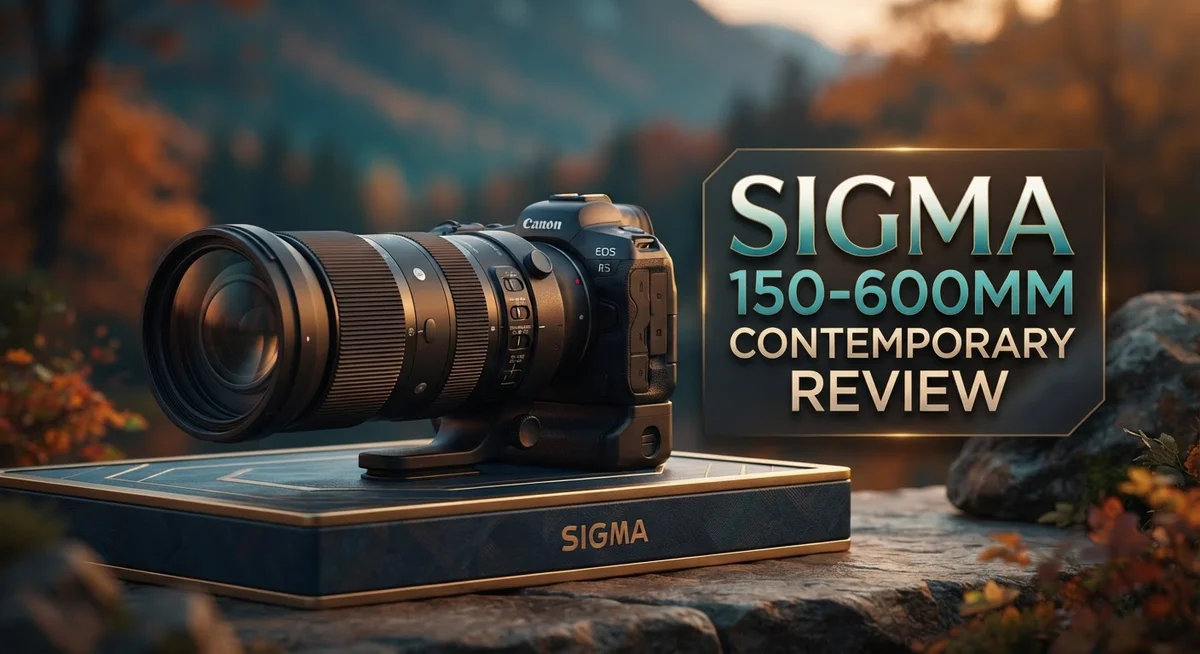
Sigma 150-600mm Contemporary Lens Review: Worth Buying?
Do you want to shoot distant wildlife without carrying heavy gear? The Sigma 150-600mm Contemporary might be your answer.
This lens gives you a huge zoom range. You can capture birds, sports, and wildlife from far away.
Many photographers love this lens for one big reason. It stays lightweight even with its massive reach.
Sigma packed 24 elements into this lens. That means sharp images across the entire zoom range.
The autofocus system works fast and stays accurate. This is a nice surprise since Sigma lenses did not always focus well in the past.
You get strong performance even at wide apertures. This helps in low light situations.
Some photographers need better weather sealing. Others want more focus consistency. This lens has small tradeoffs in those areas.
But most buyers find this lens delivers outstanding results. It works great for beginners and experienced shooters alike.
This review covers everything you need to know. We will explore the specs, real world performance, and how this lens compares to competitors. Let’s find out if it deserves a spot in your camera bag.
In a Nutshell
Here is the quick summary for photographers who want the key points fast.
-
Zoom Range: This lens covers 150mm to 600mm. You get wildlife, sports, and landscape shots in one package.
-
Weight: Sigma made this lens light. Your arms will thank you during long shoots.
-
Optics: The lens stays sharp across the whole zoom range. Corners and edges look clean too.
-
Autofocus: Focus locks fast and stays accurate. This surprises many Sigma users in a good way.
-
Build Quality: Weather sealing is not as strong as the Sports version. Rain and dust need extra caution.
-
Best For: Wildlife photographers and sports shooters who need reach without extra bulk will love this lens. It also works well for beginners who want to try telephoto photography.
This lens balances performance and portability. It fits photographers who shoot outdoors often. You get a versatile tool that handles many situations well.
Optical Performance and Image Quality
When you look through this lens, sharpness remains consistent from 150mm all the way to 600mm. The optical design uses 24 elements spread across 16 groups to control aberrations and deliver crisp images at every focal length.
At the 150mm end, you get excellent edge to edge sharpness. Colors appear accurate and contrast stays high even in challenging light. The lens maintains this quality as you zoom deeper into the telephoto range.
Wide aperture performance stands out here. Even at f/5 to f/6.3, the lens produces clean, detailed images with minimal vignetting. You can shoot in lower light conditions without sacrificing image quality or resorting to high ISO values.
The 9 blade diaphragm creates smooth, pleasing bokeh when you want background separation. Out of focus areas render naturally rather than harshly. This matters when you photograph birds or distant subjects where bokeh enhances the final image.
Chromatic aberration stays well controlled across the zoom range. Purple and green color fringing rarely appears in high contrast areas. The optical formula handles this challenge effectively without aggressive post processing.
Distortion remains minimal throughout the focal length range. Straight lines stay straight whether you shoot at 150mm or 600mm. This consistency makes the lens reliable for various subjects.
The close focus distance of 260cm lets you frame tighter shots even at longer focal lengths. Maximum magnification reaches 1:5, which works well for wildlife subjects where getting physically closer isn’t possible.
Contrast and micro contrast perform admirably. Fine details pop in your images. Feather texture on birds or scales on distant subjects render with impressive clarity.
One thing to note: image stabilization helps at longer focal lengths. The OS system reduces camera shake, letting you hand hold at shutter speeds that would normally require a tripod. This adds practical value when you’re tracking moving subjects.
The lens delivers optical performance that exceeds expectations for the category. Sharpness, color accuracy, and contrast work together to produce images you’ll want to print and share.

- Sigma 150-600mm f/5-6.3 DG OS HSM Contemporary Lens for Nikon F Bundle includes: Backpack, Flash, Memory Card, Card Wallet...
- Versatile Zoom Range for Exceptional Long-Distance Photography Capture stunning detail from a distance with the Sigma...
- Superior Optical Performance with Advanced Lens Elements. Experience incredible clarity and contrast with the lens’s...
Last update on 2026-07-24 / Affiliate links / Images from Amazon Product Advertising API
Build Quality and Design
The Sigma 150-600mm Contemporary feels solid in your hands. The barrel uses quality materials that resist daily wear and tear. The zoom ring turns smoothly without grinding or excessive play.
The lens body measures 10.55 inches long and weighs just over 1.8 pounds. This compact design makes handheld shooting practical for extended periods. You won’t experience arm fatigue during long wildlife sessions or sports events.
The focus ring sits near the front of the lens. It responds quickly to your input and feels responsive during manual focus adjustments. The zoom ring operates with consistent resistance throughout its full range.
Weather sealing represents the main design trade-off on this model. Sigma applied protective gaskets around the focus ring and zoom ring, but sealing does not match the Sports variant. You get basic protection against light rain and dust, yet extended exposure to harsh conditions requires caution.
The lens includes an OS (Optical Stabilization) switch and an AF/MF toggle near the mount. Both controls sit in intuitive locations. Your thumb reaches them without shifting your grip.
The front element sits recessed inside the barrel. This design protects the glass from accidental contact and reduces glare from side lighting. The rear element remains well protected at the mount.
The lens hood attaches firmly and reverses for compact storage. The tripod collar allows smooth panning motion, though some photographers remove it for lighter handheld work. The collar design feels secure without excessive weight.
Build quality reflects Sigma’s reputation for solid construction. Plastic components appear durable rather than cheap. Metal parts show good finishing without obvious defects.
The lens feels balanced on most camera bodies. Weight distribution keeps the center of gravity close to your body, reducing strain during vertical shooting. This ergonomic design matters when you’re tracking moving subjects.
Overall, the Contemporary variant prioritizes lightweight construction and reasonable durability over extreme weather protection. The design succeeds for photographers who value portability and handling ease over professional-grade sealing. Build quality justifies regular use in typical shooting conditions.
Autofocus Speed and Accuracy
The autofocus system on this lens uses Sigma’s HSM (Hypersonic Motor) technology. This motor delivers fast focusing speeds that rival many premium competitors. You’ll notice the lens locks onto subjects quickly, even when you’re tracking moving wildlife or sports action.
Accuracy stands out as a real strength here. The focus stays locked once it finds your subject. This consistency matters most when you’re shooting at 600mm, where even small focus errors become visible in your final image. The Contemporary variant performs atypically well for Sigma autofocus systems, which historically lagged behind Canon or Nikon offerings.
The focus ring placement near the front of the lens makes manual focus adjustments smooth and intuitive. You can fine-tune focus without moving your hand far from the zoom ring. The AF/MF toggle sits conveniently near the mount for quick switching between modes.
One thing to note: the Tamron 150-600mm G2 offers slightly superior focus consistency in certain conditions. However, the Sigma holds its own remarkably well for most shooting scenarios. The Sports variant of this same lens provides marginally faster focus tracking, but the Contemporary version won’t disappoint you in real world use.
The Optical Stabilization (OS) system works alongside autofocus to keep your images sharp. When you enable OS, the lens compensates for camera shake at longer focal lengths. This combination of fast HSM focusing and active stabilization means you can shoot handheld at shutter speeds that would normally require a tripod.
Battery drain remains minimal because the HSM motor consumes less power than older focus mechanisms. Your camera battery lasts longer during extended shooting sessions.
For wildlife photographers tracking birds in flight or sports shooters following fast moving subjects, this autofocus performance delivers reliable results. The speed and accuracy won’t frustrate you, and the focus stays true across the entire 150-600mm zoom range. You get predictable, dependable focusing that lets you concentrate on composition and timing rather than wrestling with focus issues.
Top 3 Alternatives
Tamron 150-600mm G2

- New FLEX ZOOM LOCK mechanism enables the locking of the zoom ring at any position
- Fluorine Coating and improved Moisture-Resistant Construction;Optical Construction : 21 elements in 13 groups
- Lightweight and easy-to-hold tripod mount is compatible with an Arce-Swiss style quick release plate
Last update on 2026-07-24 / Affiliate links / Images from Amazon Product Advertising API
The Tamron 150-600mm G2 offers excellent reach for wildlife and sports photography. This lens delivers sharp images across its entire zoom range. You get fast autofocus performance and reliable image stabilization built in.
The G2 design brings improved optical quality compared to older versions. Weather sealing protects your investment during outdoor shoots. The lens feels balanced on most camera bodies and handles smoothly during extended use.
Canon RF 100-500mm

- Canon USA Authorized. Items Include: Canon RF 100-500mm f/4.5-7.1L IS USM Lens – Full-Frame Telephoto Zoom Lens with Image...
- Extreme Telephoto Reach : Capture distant subjects with stunning clarity thanks to its 100–500mm zoom range—ideal for...
- Sharp Images, Handheld Confidence: With up to 5 stops of image stabilization, you can shoot handheld at long focal lengths...
Last update on 2026-07-24 / Affiliate links / Images from Amazon Product Advertising API
Canon’s RF 100-500mm serves photographers who want versatility without extra weight. This lens covers wide telephoto ranges, making it perfect for various shooting situations. The RF mount connection ensures fast communication with your camera body.
Image stabilization keeps your shots crisp, even at maximum zoom. The autofocus system tracks moving subjects with impressive accuracy. Canon built this lens to work seamlessly with their mirrorless camera ecosystem.
Nikon Z 100-400mm

- Camera compatibility: Compatible with FX and DX format Nikon Z series mirrorless (100mm-400mm on an FX format Z camera...
- Vibration Reduction: Achieves up to 5.5 stops of compensation*. On full-frame Z cameras like Z 5, Z 6, Z 6II, Z 7 or Z 7II...
- Autofocus: Two high-speed STM stepping motors move in sync with each other in near silence for thrilling close focusing...

Last update on 2026-07-24 / Affiliate links / Images from Amazon Product Advertising API
The Nikon Z 100-400mm brings professional-grade performance to Nikon’s mirrorless platform. This telephoto zoom handles both stills and video work effectively. The lens provides exceptional clarity from 100mm all the way to 400mm.
Nikon included weather sealing to handle demanding shooting conditions. The autofocus operates quietly and precisely, making it suitable for wildlife photography. Photographers appreciate the smooth zoom ring and responsive focus ring design. This lens integrates perfectly with Nikon Z camera bodies, giving you access to advanced autofocus features and in-body stabilization benefits.
Weather Sealing and Durability
Weather sealing on the Contemporary variant represents the main design trade-off you’ll encounter. Sigma prioritized lightweight construction here, which means the sealing sits below what you get on the Sports model.
The lens features basic weather resistance rather than full protection. Rubber gaskets seal the focus ring and mount connection points. The front element sits recessed inside the barrel, which offers some protection from rain and dust. You won’t find extensive sealing on every moving part like you would on professional-grade equipment.
This lens works best in dry or lightly damp conditions. Heavy rain or prolonged exposure to moisture requires caution. If you shoot frequently in harsh weather, the Sports variant delivers superior protection at the cost of additional weight.
The lens hood attaches firmly and reverses for compact storage. This design choice helps keep moisture away from the front element during transport. The recessed front element also means less direct exposure when you’re shooting outdoors.
Durability shows solid construction throughout the barrel and internal mechanisms. The 24 element optical design sits protected inside a robust housing. The focus ring placement near the front keeps the barrel structure intact. Sigma’s reputation for reliable build quality carries through in this Contemporary model.
Dust resistance performs adequately for most shooting situations. The sealed mount prevents debris from entering the camera body. Extended use in sandy environments or dusty conditions still demands care and regular cleaning.
The Optical Stabilization system operates smoothly and contributes to overall lens longevity. Moving elements inside the barrel function reliably over thousands of shots. HSM autofocus technology generates minimal mechanical stress on internal components.
For general outdoor photography, travel, and occasional wildlife work, the weather sealing proves sufficient. Landscape photographers and birders in moderate climates will find no issues. If you work consistently in challenging conditions or need maximum protection, consider the Sports variant instead.
Regular maintenance keeps your Contemporary lens performing well. Store it in a dry location. Use lens caps and a protective bag during transport. These simple steps extend the lifespan significantly.
Value for Money and Pricing
The Sigma 150-600mm Contemporary delivers exceptional performance without forcing you to compromise on essential features. This lens stands out because it combines professional-grade optics with a lightweight design that won’t exhaust your shoulders during long shooting sessions.
What makes this lens compelling is its optical consistency. The 24 elements spread across 16 groups work together to produce sharp images from edge to edge. You get minimal distortion and strong color rendition across the entire zoom range. The 9 diaphragm blades create smooth bokeh when you need background separation in your compositions.
The autofocus system performs like you’d expect from a premium lens. Sigma’s HSM motor locks onto subjects quickly and holds focus reliably during action sequences. This accuracy matters most when you’re tracking fast moving subjects like birds or sports athletes. The focus ring sits near the front of the barrel, giving you intuitive manual focus control when needed.
Battery efficiency adds real value to your shooting experience. The HSM motor consumes minimal power compared to older focus mechanisms. You’ll spend less time swapping batteries during extended outdoor sessions. This becomes important during multi day trips where you can’t easily recharge.
The optical stabilization system keeps your images sharp even when you’re handholding at slower shutter speeds. Combined with the HSM autofocus, this feature reduces the number of missed shots in challenging lighting conditions. You get practical stabilization that actually works in real world situations.
One honest trade off exists here: weather sealing is basic rather than extreme. The Contemporary variant prioritizes lightweight construction over full environmental protection. You’ll want to avoid heavy rain and prolonged moisture exposure. For dry conditions and light drizzle, the lens handles fine.
The build quality reflects Sigma’s solid reputation. Internal mechanisms feel durable, and the sealed mount prevents dust from entering critical components. The reversible lens hood stores compactly and attaches firmly to the barrel.
This lens rewards photographers who want serious optical performance without carrying excessive weight. Whether you shoot wildlife, sports, or distant landscapes, the Contemporary variant delivers the core capabilities you need for compelling long distance photography.
Pros and Cons
The Sigma 150-600mm Contemporary shines in several critical areas. Lightweight construction stands out immediately. You get a hyper-telephoto zoom that doesn’t exhaust your arms during extended shooting sessions. The optical performance remains consistent across the entire zoom range, which matters when you’re working at 150mm or pushing toward 600mm.
Autofocus accuracy deserves special mention. Sigma typically struggles here, but this lens performs like a premium option. The HSM motor responds quickly to focus demands. You’ll appreciate the smooth manual focus ring for fine-tuning adjustments without disrupting autofocus operation.
The optical stabilization system keeps images sharp during handheld shooting. You can work at slower shutter speeds without sacrificing sharpness. This flexibility helps in low-light conditions or when you’re tracking moving subjects.
Construction quality feels solid throughout. The barrel resists dust effectively for standard shooting conditions. The lens hood attaches securely and reverses for storage convenience. Internal mechanisms show durability that justifies regular professional use.
Now for the limitations. Weather sealing represents the main compromise. This lens offers basic weather resistance rather than the full protection you’d find in the Sports variant. Light rain poses minimal risk, but heavy moisture requires caution. Prolonged exposure to damp conditions demands protective measures.
The variable aperture (f/5 at 150mm, f/6.3 at 600mm) narrows light-gathering ability as you zoom. This affects low-light performance and your ability to create shallow depth-of-field at longer focal lengths.
Focus consistency occasionally varies in specific conditions. The Tamron 150-600mm G2 delivers slightly superior reliability if focus precision under challenging circumstances matters to your work.
The Contemporary variant prioritizes optical excellence and portability over environmental protection. This lens excels for photographers who work primarily in controlled conditions or who don’t regularly encounter severe weather. Wildlife and sports shooters in dry climates find tremendous value here. Those operating in harsh environments should consider the Sports version instead.
Who Should Buy It
The Sigma 150-600mm Contemporary suits wildlife photographers who need serious reach without carrying excessive weight. You’ll appreciate this lens if you shoot birds, distant animals, or sports from the sidelines.
This lens works best for photographers who prioritize optical sharpness and autofocus speed over maximum weather protection. If you shoot mostly in controlled conditions like studios, indoor venues, or dry outdoor settings, the Contemporary variant delivers exactly what you need. You won’t feel limited by its basic weather sealing during normal shooting days.
Travel photographers love this lens because it balances performance with portability. The compact design means you can pack it in a camera bag without strain. You get genuine telephoto power without the bulk of heavier alternatives.
The Contemporary version appeals to enthusiasts upgrading from kit lenses or older telephoto zooms. You gain professional optical quality and accurate autofocus performance that rivals lenses costing significantly more. The HSM motor responds quickly to focus demands, which matters when your subject moves unpredictably.
Consider this lens if you shoot events where subjects remain at moderate distances. Wedding photographers capturing ceremonies from the back of a venue find the 150-600mm range invaluable. Sports photographers covering outdoor activities appreciate the optical stabilization keeping images sharp during handheld shooting.
You should skip this lens if extreme weather sealing ranks as your top priority. Photographers working in heavy rain, coastal spray, or dusty environments should explore the Sports variant instead. That model offers superior environmental protection at the cost of increased weight.
The Contemporary model suits your needs if you value optical performance and handling comfort above rugged durability. You want a lens that focuses accurately, renders details sharply across the frame, and doesn’t exhaust your arms during extended shooting sessions.
This lens fits photographers who understand the trade offs between protection and practicality. You accept that basic weather resistance means exercising caution during damp conditions. In exchange, you get a lightweight, optically excellent telephoto zoom that performs consistently across its entire range.
Final Verdict
The Sigma 150-600mm Contemporary earns its spot as a smart choice for telephoto shooters. It delivers sharp images across its entire zoom range. That alone makes it stand out from many rivals.
This lens rewards photographers who value glass quality over rugged armor. If you shoot landscapes, wildlife, or distant subjects in normal conditions, it performs beautifully. The lightweight build means you’ll actually carry it more often.
Compare this to the Sigma Sports version. That model offers tougher weather sealing and steadier focus tracking. But it weighs more and feels bulkier in your hands.
The Tamron 150-600mm G2 also deserves a mention here. Many shooters praise its focus consistency in tricky situations. Still, the Sigma Contemporary holds its own with sharper optics in several tests.
Think about how you shoot before deciding. Do you chase birds in rain and fog often? Then the Sports variant or Tamron G2 might suit you better.
Do you shoot mostly in dry conditions or controlled environments? The Contemporary version will serve you well. It gives you excellent image quality without unnecessary bulk.
This lens fits photographers moving up from basic telephoto zooms. It also works well for anyone who wants reach without strain. Long shooting days feel easier with less weight on your shoulder.
Wildlife photographers, sports shooters, and travel enthusiasts all find something to love here. The autofocus keeps pace with moving subjects reliably. Sharp results come naturally with this lens.
Some buyers may want more weather protection. That’s a fair trade off to consider. But for most everyday shooting scenarios, this lens performs above expectations.
The Sigma 150-600mm Contemporary proves that smart engineering beats brute strength. It focuses on what matters most: sharp images, reliable autofocus, and comfortable handling. Those priorities make it a strong pick for many photographers today.
Choose this lens if optical performance and portability top your list. Skip it only if extreme weather resistance is nonnegotiable for your work.
Frequently Asked Questions
Does this lens work well for wildlife photography?
Yes, it works very well. The 600mm reach lets you capture distant subjects without disturbing them. Autofocus speed stays accurate even in challenging light. The optical stabilization system keeps handheld shots sharp. Many wildlife photographers choose this lens because it delivers the reach they need without excessive weight.
What’s the difference between the Contemporary and Sports versions?
The Sports variant has stronger weather sealing and better focus consistency in tough conditions. The Contemporary prioritizes optical sharpness and lighter weight instead. If you shoot mostly in dry or controlled settings, the Contemporary performs excellently. Choose the Sports model only if you regularly shoot in rain, fog, or dusty environments.
How does this compare to the Tamron 150-600mm G2?
Both lenses offer 600mm reach and solid optics. The Tamron delivers superior focus consistency and faster autofocus in some situations. The Sigma Contemporary gives you lighter weight and excellent optical performance. Your choice depends on whether you prioritize focus reliability or portability.
Can I use this lens for sports or events?
It works for sports at moderate distances. The variable aperture (f/5 to f/6.3) means less light reaches the sensor as you zoom in. Indoor sports in low light become challenging. This lens excels at outdoor events where subjects stay at reasonable distances and lighting is decent.
Is the autofocus reliable?
Yes, autofocus performs well for a Sigma telephoto lens. It tracks moving subjects smoothly and locks quickly. Focus consistency occasionally varies in specific conditions, but most users report solid performance. You’ll get reliable results in typical shooting scenarios.

Ava is a bird enthusiast and nature lover who has spent countless hours observing and learning about the fascinating world of birds. With a passion for sharing her knowledge and inspiring others to appreciate the beauty of birds, Ava writes about her experiences and insights on avianadmirer.com.