3 Best Weatherproof Bird Cameras for Harsh Climates
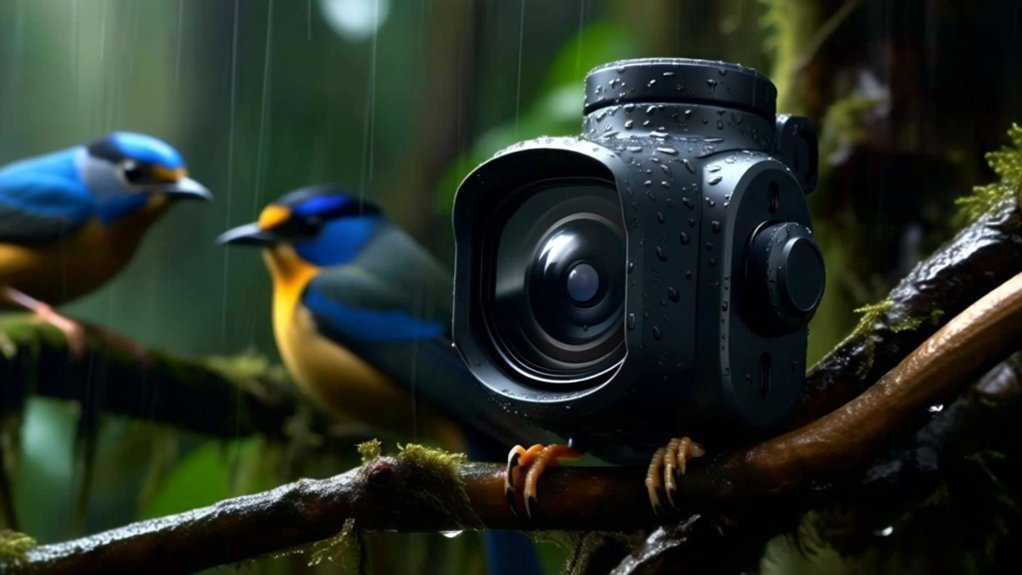
If you’re serious about capturing stunning bird footage in tough weather, choosing the right weatherproof camera is essential. These devices withstand snow, rain, storms, and dust—thanks to high IP ratings like IP66 or IP67—and include features like robust, corrosion-resistant shells, water-repellent lenses, and rugged mounts. With advanced night vision, high-resolution sensors, and AI bird identification, they let you observe nature without interruption. Curious which models truly stand up to harsh climates? Let’s explore the top options.
Smart Bird Feeder with Camera, Solar Powered & AI Bird Identification

- Advanced AI Bird Recognition & Real-Time Alerts: Homiefans smart bird feeder with camera identify over 10,000 bird species...
- 2.5K High-Definition 130° Wide-Angle Bird Feeder Camera: Enjoy crystal-clear, close-up views of your feathered friends with...
- All-in-One Design with Large Capacity & Solar Power: This smart bird feeder features a bird bath and bird standing stands...
Last update on 2026-10-14 / Affiliate links / Images from Amazon Product Advertising API
If you love birdwatching and want to see birds in a new way, the Smart Bird Feeder with Camera is a great choice. It uses technology to make birdwatching more fun. The feeder has a clear 2.5K HD camera with a wide lens, so you can see your bird visitors up close and in detail. It can recognize over 10,000 bird species using AI, and it sends alerts to your phone whenever a bird comes to visit.
The Solar Power system makes it eco-friendly, so you don’t have to worry about changing batteries. The feeder also has a big food tank, so you can fill it less often. Setting up the feeder is quick and simple, helping you create a home for birds in your backyard. Whether it’s raining or sunny, the feeder keeps working, bringing you closer to nature.
Best For: Bird lovers who want to see and identify many different birds in their yard with the help of smart technology.
Pros:
- Uses AI to identify more than 10,000 bird species.
- Has a high-quality 2.5K HD camera and wide lens for clear images.
- Runs on solar power, so it’s eco-friendly, and has a big food tank to feed birds longer.
- Easy to set up for quick backyard fun.
Cons:
- Doesn’t support 5GHz WiFi, so internet options may be limited.
- Needs an SD card to save photos and videos, which you need to buy separately.
- It costs more than basic bird feeders without smart features.
This smart bird feeder makes birdwatching more fun and interactive. It’s a perfect tool for anyone who wants to learn about birds and enjoy their beauty every day.
Humbirdy-Bird Feeder with Camera, 8MP HD Video & Photos

- True 4K Ultra HD Smart Bird Feeder with Camera- Experience bird watching like never before with smooth,true 4K...
- No Subscription & Free AI Bird Identification- Enjoy lifetime access with no monthly fees.Powered by advanced AI, Humbirdy...
- Edit & Share Smooth Slow Motion Bird Moments- Record high-frame-rate videos at 1080P 120fps for wild birds, then easily turn...
Last update on 2026-07-05 / Affiliate links / Images from Amazon Product Advertising API
The Humbirdy-Bird Feeder with Camera is a great tool for bird lovers. It has a bright 4K Ultra HD camera that takes clear videos and photos. Whether it’s daytime or nighttime, HDR mode makes the images bright and detailed. The camera also has a slow-motion feature at 120fps. This helps you see how birds flap their wings or fly.
The feeder uses AI detection. It can recognize different bird species and send you alerts when new birds visit. This makes watching birds more fun and educational. The metal body is weatherproof, so it can stand rain, wind, and cold. You can install it easily and power it with solar or USB. Sharing your videos with friends is simple too.
This bird feeder is perfect for anyone who wants to see birds in high detail and learn more about them. It is tough enough for outdoor use and easy to set up.
Pros:
- Takes sharp 4K videos and bright HDR photos.
- Uses AI to spot bird species and send alerts.
- Made from weatherproof metal, easy to install anywhere.
Cons:
- Seed loading can be tricky; it may need some improvement.
- The lens and solar panel need regular cleaning for best performance.
- Setting it up might take some time, especially for beginners.
If you love watching birds and want clear videos and fun facts, this feeder makes it easy and exciting.
birdsnap PAV-Bird Feeder with Camera 2K HD, 64GB Card, AI Bird Species Identification, Solar Powered, Live Video Recordings

- 📲【2K Live Bird-Watching】 Featuring a 2K HD camera with a 155°ultra-wide-angle lens, this bird feeder camera...
- 🎤【3 Versatile Attachments & Squirrel-Proof】 The smart bird feeder includes a 1.8L large-capacity seed container plus...
- 💾【32GB Storage Card Free to Save Videos】 Comes with a 32GB memory card that stores over 20,000 automatic 10-second...
Last update on 2026-08-28 / Affiliate links / Images from Amazon Product Advertising API
The BirdSnap PAV-Bird Feeder with Camera is a great choice for bird lovers and nature fans. It has a 2K HD camera that captures clear videos. The wide 160° view helps you see lots of birds at once. The camera works during the day and night with full-color night vision.
This feeder uses AI to identify over 10,000 bird species. When a bird visits, it sends you a quick alert. You also get plenty of space—well over 40,000 short videos—on the 64GB SD card. The feeder runs on solar power and has a 5200mAh battery. It keeps working even when the weather gets tough.
Best For: bird watchers, outdoor lovers, and families who want a smart, reliable way to watch birds.
Pros:
- Clear 2K HD videos with a wide 160° view
- AI identifies thousands of bird species and sends alerts
- Powered by solar with a long-lasting battery
Cons:
- Sometimes the AI might wrongly identify a bird
- Squirrels can still get to the feeder, even with deterrents
- The app can be a little tricky to learn at first
This feeder is easy to set up and fun to use. It helps you see and learn about birds in your yard. Whether you’re a beginner or an experienced birdwatcher, this camera feeder makes bird watching simple and exciting.
Factors to Consider When Choosing a Weatherproof Bird Camera for Harsh Climates
When picking a weatherproof bird camera for harsh climates, you’ll want to pay close attention to durability, waterproof ratings, and temperature resistance—think of it as giving your camera a tough, cozy jacket that endures the elements. Power solutions matter too; options like solar panels or long-lasting batteries ensure your camera stays energized during storms or chilly nights, while high clarity in rain guarantees you won’t miss a single feathered visitor. Consider these factors carefully, and your camera will be ready to brave the weather, capturing plenty of avian antics without a fuss.
Durability and Material
When choosing a bird camera for bad weather, look at what it’s made of. The camera should have an IP65 rating or higher. This means it can handle dust and heavy rain. The outer shell is usually made from tough metal or strong plastic. These materials help protect the camera from bumps, rust, and big changes in temperature.
UV-resistant coating is also important. It stops the sun from damaging the camera or making it fade. This coating keeps the camera looking good for a long time. Materials that insulate against heat and cold help the camera work well in very hot or cold weather.
Sealed gaskets or O-rings are small parts that stop water from getting inside. They keep the delicate parts safe from water damage. Using strong, well-made materials makes sure the camera can handle tough weather. This way, it will keep capturing great bird shots, no matter how rough the weather gets.
Waterproof Ratings
Waterproof ratings show how well a bird camera can handle water and dirt. Ratings like IP65, IP66, and IP67 tell you how protected the camera is. Higher numbers mean better protection. An IP65 camera can handle water jets from any direction. That means it can survive rain and splashes. IP66-rated cameras can handle stronger water jets. They are good for heavy rain or stormy weather. IP67-rated cameras can even be put in water up to 1 meter deep for 30 minutes. This makes them perfect for very wet places or flooding.
Choose the right rating based on where you will put the camera. If the area gets lots of rain or storms, pick a higher rating. Higher ratings protect the camera better but can cost more. Know how harsh your weather is. This helps you pick the right waterproof rating. That way, your bird camera will stay safe and work well, no matter the weather.
Temperature Resistance
When choosing a bird camera, it must handle different weather conditions. Cold and hot temperatures can harm cameras that aren’t built for them. Look for a camera that works well between -20°C and 60°C (-4°F to 140°F). This range makes sure the camera works in very cold or very hot weather.
The outside of the camera should be strong. Use tough metal or good weather-resistant plastic. These materials help stop heat from hurting the camera, especially on hot summer days or chilly winter nights. Inside, the parts should stay safe from temperature changes. Features like heat sinks or temperature sensors can stop the camera from overheating or freezing.
The camera should be sealed tightly. A rating like IP65 or higher shows it resists dust and water. This keeps moisture and dust out, even if the weather changes a lot. Batteries should also be made for extreme temperatures. Some cameras have heating parts that help keep them working smoothly during cold weather.
In short, a good bird camera must resist temperature changes. It should be sturdy, sealed tight, and have parts that stay safe no matter the weather.
Power Solutions
To keep your bird camera working well in bad weather, you need the right power setup. Solar panels work great if the sun is shining. They give your camera steady power and don’t need much recharging. When it’s cloudy or winter, solar power can slow down. In those times, rechargeable batteries are a good backup. You can charge these batteries with a USB cable. Look for cameras with good weather protection, like an IP65 rating. This stops dust, rain, snow, and cold from hurting the camera’s inside parts.
High-quality videos and night light use more energy. So, pick cameras with power-saving features, like low-power standby modes. These help your camera stay on longer without needing a new battery. Always choose a power plan that keeps your bird camera working, rain or shine.
Camera Clarity in Rain
Rain can make it hard to get clear shots of birds with your camera. But choosing the right camera can help you get good pictures, even when it’s wet outside. Look for cameras that focus well and have image stabilization. These features help keep your photos sharp in windy or rainy weather. Cameras with special lens coatings, like water-repellent layers, stop raindrops from making your images blurry. High-resolution sensors are useful too. They let you see small details, even in cloudy or rainy skies. Make sure the camera is weatherproof, rated IP65 or higher. This keeps water out and protects the inside parts. Night vision or infrared features help you take sharp pictures in the dark and rainy nights. All these features help you enjoy birdwatching, rain or shine.
Mounting and Placement
To keep your bird camera safe and working well outside, how you mount it matters a lot. Pick a camera that can be mounted in different ways, like on a wall, a tree, or a pole. This gives you more options for placing it in different outdoor spaces.
Where you place the camera is also important. Put it high enough so it won’t be easily knocked down. Angle it so it can see the birds clearly. Keep it in a spot that’s protected from rain, snow, and strong wind. This will help it stay dry and work better.
Make sure your mount stays locked in place. Some mounts have lock systems to stop the camera from shifting, even in storms. Place the camera where the sun won’t cause glare, and where it won’t get too hot or cold. Shade or cover can help with this.
Use hardware made from materials like stainless steel or strong plastic. These resist rust and corrosion. This keeps the mount sturdy and protects your camera for a long time.
Pest and Animal Resistance
If you want your weatherproof bird camera to survive in nature, you need to choose its features carefully. Look for cameras made with rust-resistant metals or tough plastics. These materials protect the camera from rain, humidity, and decay. Make sure the camera has strong seals and gaskets. These parts stop water and dust from getting inside and harming the electronics.
Wild animals like squirrels and birds can try to peck or chew on your camera. To stop this, find cameras with physical shields. Baffles, cages, or metal mesh coverings block animals from causing damage. Heavy-duty mounts and secure screws help keep the camera in place. These prevent wind or animals from knocking it down or dislodging it.
Some cameras also have special features. Ultrasonic sounds or motion sensors can scare away animals without you having to do anything manually. These add extra protection and help keep pests away easily.
Choosing the right features makes your bird camera last longer and stay safe in outdoor conditions. It also helps prevent animals from damaging your equipment, so you can watch birds comfortably all year.
Maintenance Requirements
When picking a weatherproof bird camera for tough climates, easy maintenance is key. Look for cameras with simple designs. For example, cameras with accessible lenses make it easy to clean. Sealed ports help keep dirt and dust out, so your camera stays clear. Long-lasting batteries or solar panels mean you won’t have to charge it often. This saves you time and keeps your camera ready to go. Use cameras made from materials that resist rust and extreme weather. This helps them last longer and need fewer repairs. Choose models that let you replace parts easily. Simple access makes cleaning and fixing straightforward. Also, check if the camera can send alerts or updates via an app. This helps you spot problems early, so your camera stays in good shape. Overall, a good weatherproof bird camera is easy to care for and built to last in tough conditions.
FAQs
How Durable Are Weatherproof Bird Cameras Against Extreme Temperatures?
Weatherproof bird cameras are designed to withstand extreme temperatures, so you can confidently set them up in harsh climates. They use rugged materials and advanced insulation, ensuring durability and reliable performance regardless of scorching heat or freezing cold.
What Maintenance Is Required for Cameras in Harsh Weather Conditions?
You should regularly clean your camera lenses and housing, check seals for wear, update firmware, and guarantee power sources remain functional. Additionally, inspect mounting points and wires for damage, especially after storms or extreme weather.
Do These Cameras Affect Bird Behavior or Nesting?
These cameras typically don’t disturb birds or nestings when correctly installed and maintained. You should position them discreetly, avoid intrusive noise, and use minimal light to make certain they don’t negatively influence bird behavior or nesting habits.
Are There Specific Mounting Options for Unstable or Windy Locations?
Yes, you can use adjustable mounts and fixed brackets designed for unstable or windy locations. These options help secure your camera firmly, reducing movement and ensuring clear footage, even in challenging conditions.
How Long Do Battery and Solar Panels Typically Last in Severe Climates?
In severe climates, batteries typically last 3-6 months, and solar panels can provide continuous power if properly positioned and maintained, but extreme weather may reduce their efficiency, requiring regular checks and potential replacements to guarantee consistent operation.

Ava is a bird enthusiast and nature lover who has spent countless hours observing and learning about the fascinating world of birds. With a passion for sharing her knowledge and inspiring others to appreciate the beauty of birds, Ava writes about her experiences and insights on avianadmirer.com.