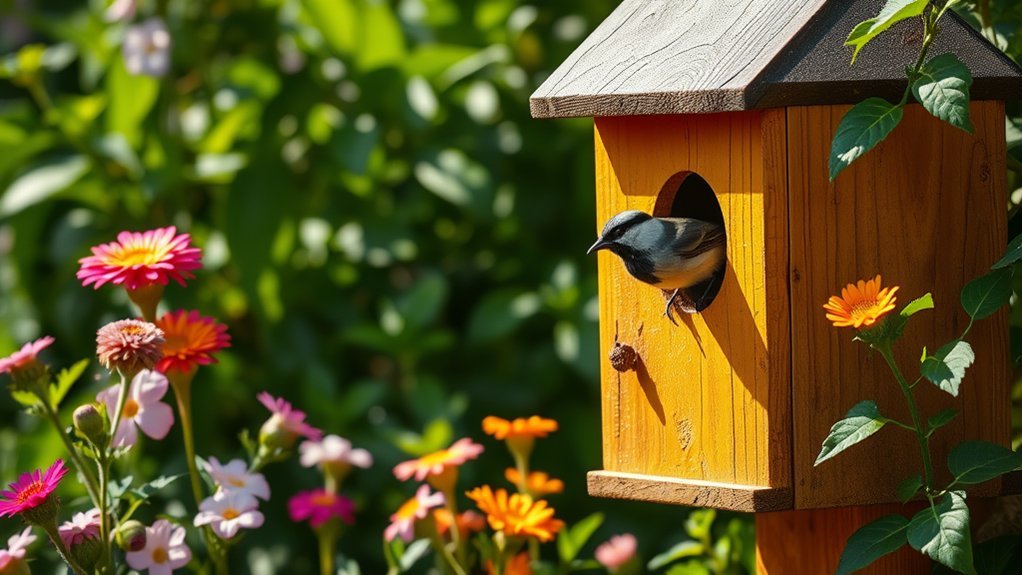
Do Birds Like Hanging Birdhouses? Attracting Cavity Nesters
If you want to attract cavity-nesting birds to your yard, hanging birdhouses can be effective. These birdhouses provide safe nesting options for species like bluebirds and wrens. To be successful, consider the following factors: placement and materials. Proper placement ensures visibility and safety, while the right materials help protect the birds. By paying attention to these details, you can increase your chances of inviting these beautiful birds into your outdoor space. What features make a birdhouse appealing?
Key Takeaways
Birds are drawn to hanging birdhouses, especially cavity-nesters like bluebirds and wrens. Placing these birdhouses 5 to 10 feet above ground protects them from predators and boosts nesting success. Make birdhouses from untreated wood, such as cedar or pine, to ensure they last and provide a safe space for birds. Position them in open areas with nearby perches to attract specific species. Regular maintenance, like cleaning and adding fresh nesting materials, helps create a welcoming environment for birds. Enjoy watching these beautiful creatures thrive in your backyard!
Understanding Cavity-Nesting Birds
Cavity-nesting birds, such as bluebirds and woodpeckers, are important for our ecosystems.
These birds prefer to nest in natural hollows or man-made structures to lay eggs and raise their young. Knowing their preferences can help you create a welcoming backyard for them.
Bluebirds favor open areas with nearby perches, while woodpeckers look for older trees to drill into for nesting. By providing appropriately-sized birdhouses, you can support these birds.
Observing their nesting habits can increase your appreciation for them and help you develop a friendly environment where they can thrive.
The Benefits of Hanging Birdhouses
Hanging birdhouses has clear benefits for both birds and your garden. Elevated birdhouses help protect cavity-nesting birds from ground predators, making their environment safer.
Using quality materials like untreated wood or cedar ensures that birdhouses last longer and support bird health. These sturdy homes can attract specific species of birds, promoting a variety of wildlife in your yard.
Placing birdhouses in strategic spots invites different birds and adds vibrancy to your outdoor space. This not only enhances your garden's appearance but also connects you more closely to nature.
Observing birds from your yard can be a rewarding experience, allowing you to enjoy the beauty of wildlife up close.
Best Bird Species to Attract With Birdhouses
What bird species can you attract with birdhouses? If you want to invite lovely visitors, consider bluebird houses. These houses can welcome Eastern and Western Bluebirds, which bring vibrant colors to your garden.
Wrens prefer houses with small entrances and cozy spaces. House Wrens and Carolina Wrens will find these homes appealing.
To succeed in attracting these birds, place the houses in open areas near suitable foraging spots. Both bluebirds and wrens seek the shelter and security that birdhouses provide.
Ideal Placement and Design for Birdhouses
To attract birds to your garden, start with proper placement and design of birdhouses. Hang birdhouses 5 to 10 feet high to keep them safe from predators and accessible for birds.
Choose untreated wood, like cedar or pine, for good durability and insulation. Avoid using metal or painted surfaces, as they can get too hot.
Make sure to include ventilation and drainage to keep the birdhouse healthy.
Design the entrance hole size and position based on the bird species you want to attract. Following these simple guidelines will create a welcoming space for your feathered friends, allowing them to feel at home in your garden.
Maintaining a Bird-Friendly Environment
To maintain a bird-friendly environment, consistent effort is key.
Start by planting bird-friendly species, including local wildflowers and berry-producing shrubs. These plants provide food and shelter, attracting insects and serving as cover for nesting birds.
Regularly inspect your birdhouses. Clean them and replace old nesting materials to support healthy breeding cycles.
Create a space with fresh nesting materials, like dried grasses, twigs, and feathers, so birds can easily find what they need when they're ready to nest.
Frequently Asked Questions
Can I Paint My Birdhouse, and What Colors Are Safe?
You can safely paint your birdhouse. Use non-toxic, water-based paints. Light colors attract birds, while dark colors absorb heat. Choose colors wisely to make nesting spots appealing. Avoid harmful chemicals to create a safe space for birds.
How Often Should I Clean My Hanging Birdhouse?
You should clean your hanging birdhouse at least once a year. The best time to clean it is after the nesting season. Cleaning helps keep the birdhouse hygienic and encourages birds to nest there without the risk of parasites or debris. Regular maintenance supports a healthy environment for your feathered friends.
What Materials Are Best for Building Birdhouses?
When you build birdhouses, choose strong woods like cedar or pine. These materials last long and resist the weather. You can also use insulation materials like reclaimed wood or cork. They help keep the temperature stable inside the birdhouse. A comfortable environment attracts many bird species and makes them feel at home. Enjoy the process of creating a safe space for birds!
Are There Specific Predators I Should Be Aware Of?
Be aware of common predators that can threaten your birds. Cats, raccoons, and hawks can make nesting difficult for them. Knowing these dangers allows you to create safer spaces, increasing the chance of having a lively bird community. Protecting your birds is important for their well-being and your enjoyment of nature.
How Can I Tell if Birds Are Nesting in My Birdhouse?
To check if birds are nesting in your birdhouse, look for signs like twigs or feathers at the entrance. You may also see birds visiting frequently or hear them calling. These behaviors suggest that a nest is nearby. Observing these signs will help you know if your birdhouse is being used for nesting.

Ava is a bird enthusiast and nature lover who has spent countless hours observing and learning about the fascinating world of birds. With a passion for sharing her knowledge and inspiring others to appreciate the beauty of birds, Ava writes about her experiences and insights on avianadmirer.com.