
North Carolina State Bird: The Majestic Cardinal
The cardinal is the state bird of North Carolina. It is known for its bright red color and is an important species in the ecosystem. The cardinal's diet mainly consists of seeds and insects. It usually lives in wooded areas, gardens, and parks. Additionally, cardinals are social birds that often form flocks. They face challenges such as habitat loss and food scarcity. Protecting their habitat is essential to ensure their survival. How can we help maintain this beautiful bird's population?
Key Takeaways
The cardinal, found in North Carolina, has bright red feathers. It represents joy, devotion, and love. Male cardinals display striking red color, while female cardinals have muted brown tones for protection.
Cardinals live in different environments like forests and city gardens. This makes them easy to see for people in North Carolina. They form strong bonds, often pairing for life and sharing care for their young.
It is important to protect cardinals from losing their homes and the effects of climate change. Conservation efforts help ensure their continued presence in the state.
Overview of the Cardinal
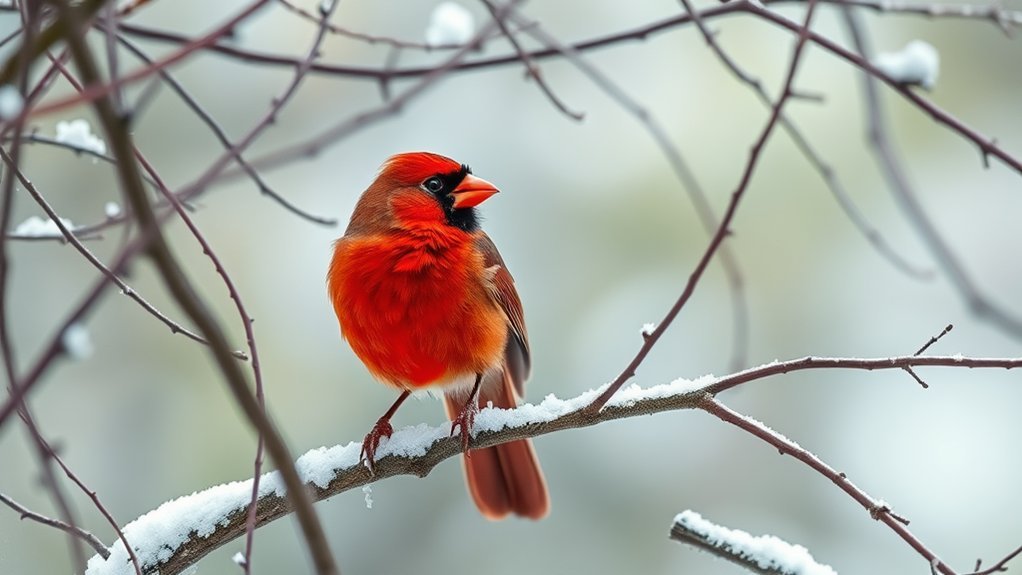
The cardinal is known for its bright red feathers, but it represents more than just beauty. Cardinals symbolize joy, devotion, and love. Many people feel a strong emotional connection to these birds. Their presence can bring feelings of comfort and a sense of belonging, making them beloved by nature enthusiasts.
However, cardinals face threats from habitat loss and climate change. Conservation efforts are vital to protect their populations. You can help by supporting local wildlife programs and planting native species. This participation aids in preserving these beautiful birds and the meaningful symbols they represent.
Physical Characteristics
Cardinals are easy to recognize due to their distinct physical traits. Male cardinals are known for their bright red feathers and a black mask around their face. This bold color helps attract mates.
Female cardinals have a more muted appearance, featuring shades of brown with hints of red. This difference in color helps them blend in with their surroundings, especially when nesting.
Both male and female cardinals can show slight color variations based on age or environment. Learning about these characteristics enhances your appreciation for cardinals and their role in nature.
Habitat and Distribution
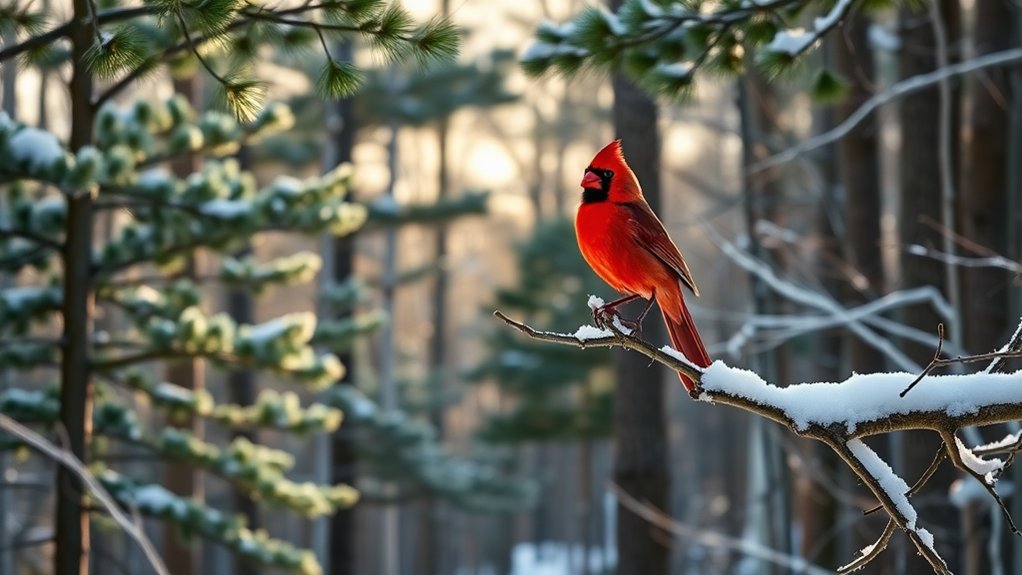
Cardinals thrive in wooded areas, shrublands, and gardens.
They prefer dense underbrush that provides cover from predators.
Forest ecosystems are ideal for them.
Urban environments also support cardinals, as they adapt well to parks and residential yards.
You can attract cardinals to your backyard by providing food sources like seeds and berries.
Adding suitable plants will create a welcoming habitat.
Understanding where cardinals flourish helps you connect more with nature.
Their presence enriches local ecosystems and offers a sense of belonging, reminding you of nature's beauty.
Cardinal Behavior and Social Structure
Cardinals display interesting behaviors and social structures in their habitats. They've a clear social hierarchy, where dominant males hold prime territories. These males actively defend their areas, especially during mating season. They use loud calls and bright displays to deter competitors.
In family groups, cardinals show cooperation. Parents and fledglings work together, which helps them thrive. This family structure creates stronger bonds and offers safety for the young birds.
Learning about these behaviors enhances your appreciation for cardinals. Their social interactions play a key role in their survival in the wild.
Diet and Feeding Habits
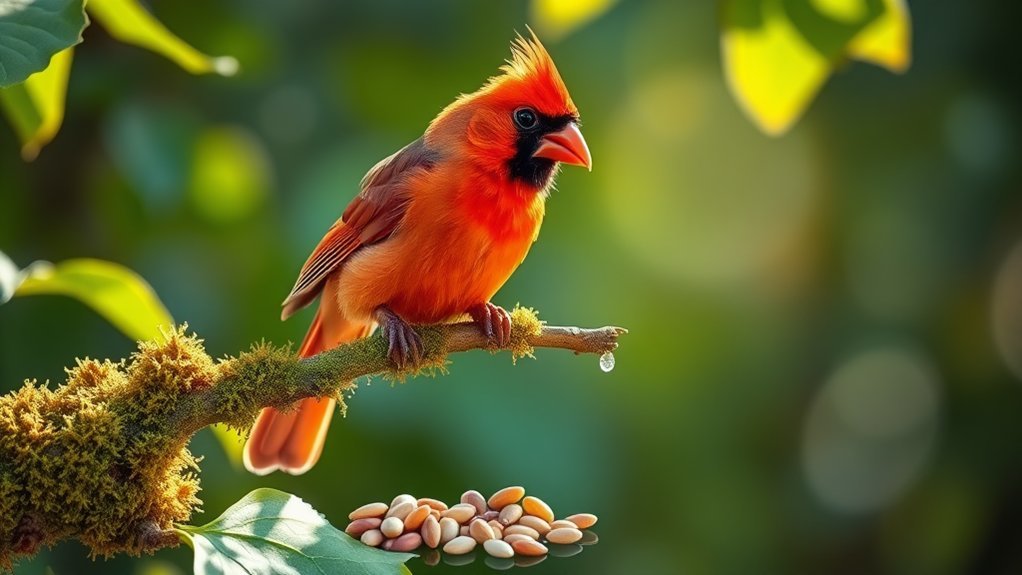
Many birds thrive on a varied diet, including cardinals.
Cardinals primarily eat seeds, fruits, and insects. They adapt their diets based on the seasons and what's available in their environment.
In spring and summer, they seek protein-rich insects to meet their energy needs. In fall and winter, they shift to consuming seeds and berries.
This flexible diet helps them survive and coexist with other birds.
Breeding and Nesting
The breeding season of cardinals highlights their adaptability and commitment to family. During this time, they demonstrate specific nesting behaviors. They select dense shrubs or trees to build their nests.
- Nests are made with twigs, grass, and leaves.
- Female cardinals usually lay 3 to 4 eggs.
- The eggs are often pale blue with speckles.
- Both parents take turns incubating the eggs and feeding the young.
- Fledglings typically leave the nest after about 10 days.
These practices show their dedication to raising their young and their ability to thrive in various environments.
Recognizing these details deepens your appreciation of cardinals and reinforces your connection to nature.
Migration Patterns
Cardinals are birds that mostly live in temperate regions. They show interesting migration patterns that highlight their ability to adapt. Many cardinals don't migrate and stay in the same location all year.
However, some groups living in northern areas where winters are harsh may migrate south when temperatures drop and food becomes harder to find. This movement helps them seek warmer climates and more food.
Instead of moving based on strict geographical lines, cardinals often migrate based on where food is available. By studying these patterns, we can see how cardinals thrive in different conditions.
Their ability to adjust to environmental challenges showcases their resilience and survival skills.
The Cardinal's Song
Understanding cardinals' migration and adaptability helps us appreciate their song. The cardinal's song is beautiful and serves as important communication. Their distinctive song variations include whistles, pitch changes, and tone differences. These variations have specific purposes such as attracting mates and establishing territory.
Cardinals use their rich, melodious calls in neighborhoods. Their songs create a sense of belonging for those who hear them. For example, they produce territorial calls to ward off intruders and mating calls to attract partners.
Additionally, seasonal changes affect their vocal patterns. Recognizing the significance of these calls enhances our understanding of the cardinal's role in our hearts and ecosystems. Cardinals bring joy and connection to our environment with their unique songs.
Cultural Significance in North Carolina
Cardinals are important to North Carolina's culture. They stand for joy, resilience, and community spirit. As the state bird, the cardinal symbolizes state pride and helps residents feel connected.
Its bright red feathers show the passionate nature of North Carolinians. The bird's cheerful song brings comfort during tough times and adds joy during happy moments.
Communities celebrate the cardinal at local festivals, highlighting unity and strength. You can find cardinals in various local art and crafts, making it a beloved symbol.
Valuing the cardinal reflects shared values and a rich cultural heritage in North Carolina.
The Cardinal in Art and Literature
The cardinal is a bird that inspires many artists and writers. Its bright red feathers symbolize passion, love, and energy. The cardinal's song brings happiness and represents self-expression. This bird appears in various artistic forms, helping us feel connected to nature and each other.
- Poets often use cardinals to symbolize hope.
- Painters showcase the bird's vibrant colors against snowy backgrounds.
- Folk artists include the cardinal to represent family unity.
- Writers depict the cardinal as a sign of change.
- Many spiritual beliefs see the cardinal as a messenger from those we love.
These creative expressions strengthen our bond with this beautiful bird.
Conservation Efforts
Many people feel a strong connection to the cardinal. This connection inspires art and literature, showing why it's important to protect this bird.
Conservation efforts focus on monitoring cardinal populations and protecting their habitats. By tracking these populations, conservationists can find trends and threats. This helps them create effective strategies for protection. Habitat protection is essential, as it keeps natural areas safe for nesting and feeding.
You can help by supporting local conservation groups. You can also advocate for policies that protect cardinal habitats. Planting native plants in your yard can attract cardinals.
Your actions not only help the cardinal but also build community spirit. Together, we can ensure that future generations enjoy the beauty and song of these vibrant birds.
Observing Cardinals in Nature
Observing a cardinal in nature can be a rewarding experience for bird watchers. Follow these tips to improve your chances of spotting these colorful birds.
- Choose the right time: Early mornings and late afternoons are the best times to see cardinals.
- Use binoculars: Binoculars help you see the birds up close without disturbing them.
- Identify their call: Learning their distinct songs can help you find them.
- Look in shrubby areas or near bird feeders: These spots are where cardinals like to gather.
- Be patient: Stay quiet and still to increase your chances of a sighting.
Enjoy your time observing cardinals in their natural habitat!
Tips for Attracting Cardinals to Your Backyard
Attracting cardinals to your backyard can make bird-watching enjoyable.
Start by choosing the right spot for your feeder. Hang it in a quiet area near shrubs or trees. Cardinals like to feel safe while they feed.
Next, select the right seeds. High-quality sunflower seeds, safflower seeds, or a cardinal mix are ideal. These seeds attract cardinals.
Clean the feeder regularly and refill it to ensure there's always food available.
You can also plant native plants around your yard. These plants provide cover and food, making your yard more appealing to cardinals.
Frequently Asked Questions
What Is the Lifespan of a Cardinal in the Wild?
In the wild, cardinals usually live between 3 and 5 years. Some cardinals can live up to 15 years. Their life expectancy depends on their behavior and habitat. A steady food supply and good shelter can help them survive longer.
Are Cardinals Monogamous?
Yes, cardinals are typically monogamous. They form strong bonds during mating seasons. These birds often return to the same partners each year. This behavior creates a stable environment for their offspring.
How Do Cardinals Communicate With Each Other?
Cardinals use calls to communicate. These calls serve several purposes. They mark territory, attract mates, and strengthen social bonds. By watching cardinals interact, you can see how they build relationships and maintain their communities. Each call has a specific meaning, adding to the rich social life of these birds.
Can Cardinals Survive Harsh Winter Conditions?
Cardinals can survive harsh winter conditions. They adapt by growing thicker feathers to keep warm. They also seek shelter in dense trees and bushes. This helps them keep their body heat and find food during winter.
What Predators Threaten Cardinal Populations?
Cardinals face threats from various predators. Hawks can catch adult cardinals, which poses a significant risk. Raccoons and snakes target cardinal eggs and chicks in nests. Knowing these threats helps you understand the challenges cardinals face in their habitats. Observing these birds can be a rewarding experience, especially knowing the struggles they encounter. Enjoy watching cardinals, and consider how you can help protect their nests from common threats.

Ava is a bird enthusiast and nature lover who has spent countless hours observing and learning about the fascinating world of birds. With a passion for sharing her knowledge and inspiring others to appreciate the beauty of birds, Ava writes about her experiences and insights on avianadmirer.com.