
Why Cardinals Abandon Feeders: 8 Common Reasons
If you see that cardinals are missing from your feeders, several reasons might explain this change. It's important to examine what you provide, how the feeder is built, and the area around it. Look into the quality of the food and the safety of the nearby environment. Knowing these factors can help improve your setup and encourage cardinals to return. Let's look at these common reasons more closely.
Key Takeaways
Cardinals may stop visiting feeders for several reasons:
- Low-Quality Seeds: Cardinals prefer high-quality seeds. Poor seed mixes do not attract them and provide less nutrition.
- Feeder Design: Feeders that are cramped or have poorly positioned feeding ports can make feeding difficult for cardinals.
- Predator Presence: If there are nearby predators, cardinals do not feel safe, which keeps them away from feeders.
- Inconsistent Feeding: Cardinals like consistent food sources. Irregular feeding schedules can lead to fewer visits.
- Lack of Shelter: Cardinals need nearby vegetation for cover. If they feel exposed, they may avoid feeders.
Finding ways to improve feeders and provide quality food can help attract cardinals back.
Poor Food Choices
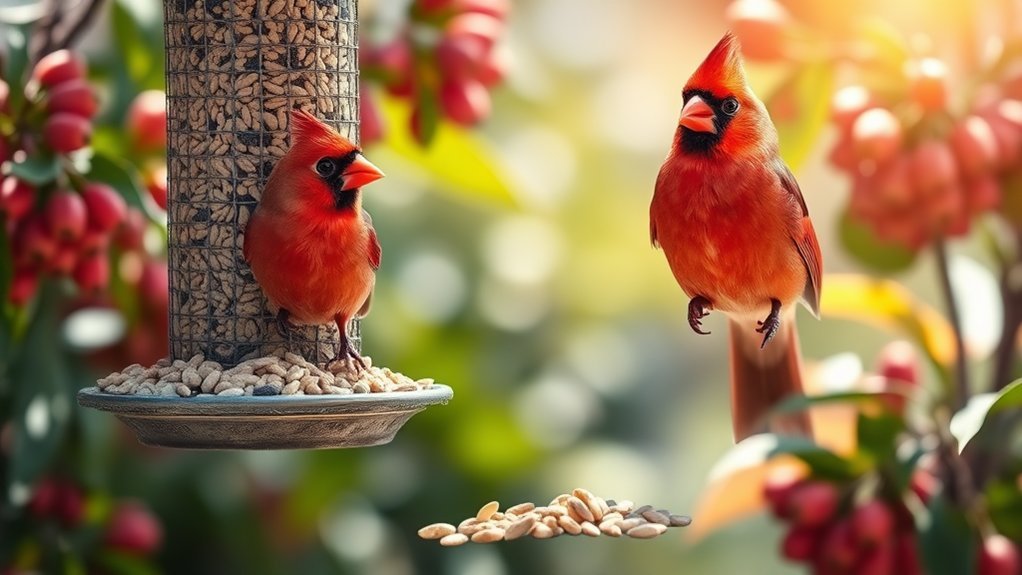
One common reason cardinals stop visiting feeders is poor food choices. To attract these colorful birds, you need to offer food they prefer.
Cardinals mainly like seeds, especially sunflower seeds, which are nutritious. If you use low-quality seed mixes or foods that don't meet their needs, you'll likely see fewer cardinals.
They need a balanced diet to stay healthy, so providing fresh, high-nutritional seeds can make their feeding experience better.
Inadequate Feeder Design
To attract cardinals to your feeders, focus on both food and feeder design.
A small feeder can make cardinals feel cramped and unsafe, causing them to avoid it. The feeder should have perches and seed trays that fit their size and feeding needs.
If the trays are too shallow or the feeding ports are poorly placed, cardinals may struggle to eat and choose another location. An effective feeder not only displays food but also provides a comfortable space for cardinals to feed.
Lack of Shelter
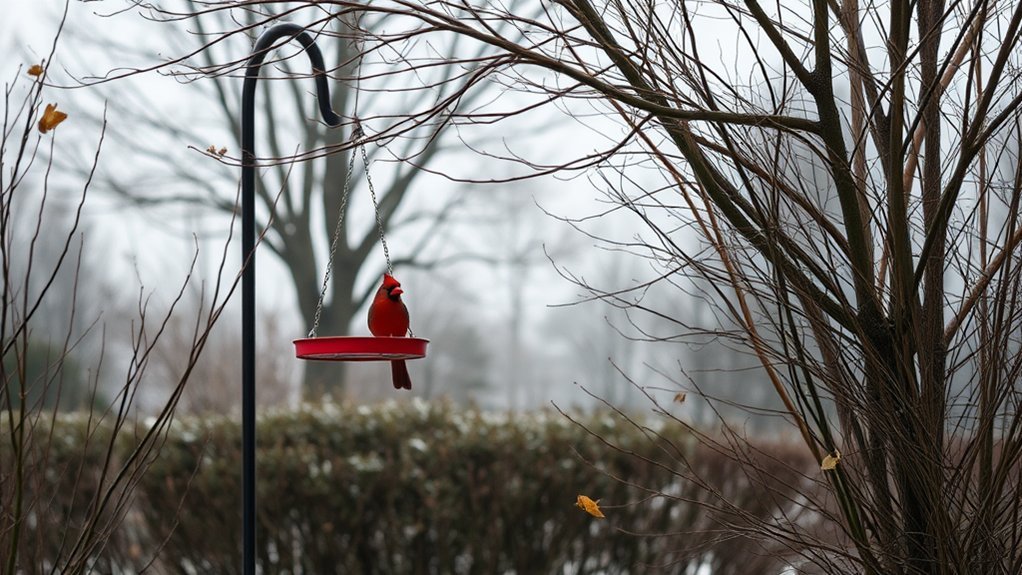
Cardinals are striking birds, but they can be selective about where they eat. A key factor in their choice is the availability of shelter. These birds prefer to find food in safe areas. If your feeder isn't close to thick plants or other protective features, they may not visit it.
Nesting is a crucial aspect for cardinals. They need nearby shelter to raise their young safely. When looking for seeds or berries, they seek cover to stay away from possible dangers. If they don't find adequate shelter, they might see your feeder as unsafe.
This can drive them to look for other food sources that provide more protection. To attract these birds to your feeder, consider increasing the nearby vegetation. This can create a welcoming environment for them to feed regularly.
Nearby Predators
When cardinals see nearby predators, they often leave your feeder. Predators like hawks or neighborhood cats make them feel unsafe. Their instinct is to find shelter instead of risking danger.
Even if cardinals visit often, they stay alert to threats around them. If predators are frequent, you may notice fewer visits. Cardinals choose safety over feeding.
To help them return, place your feeder where they feel less exposed to danger and can quickly find cover. This gives cardinals a sense of security, allowing them to enjoy their meals without fear.
Feeding Frequency
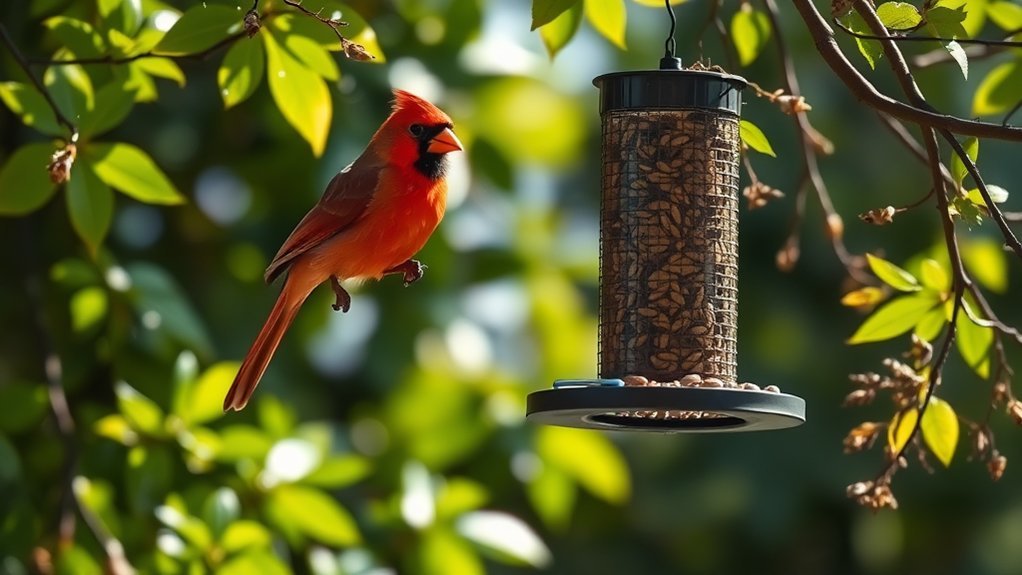
Cardinals are sensitive to their environment, including how often food is available. A consistent feeding schedule is important for their nutrition.
If you refill feeders at irregular times, cardinals may not view them as reliable food sources. They prefer routine, so establishing a regular feeding pattern encourages frequent visits.
If food runs out too fast or remains stale too long, cardinals might look for food elsewhere. By maintaining a well-timed feeding frequency, you support their health and create a welcoming habitat.
This helps cardinals feel secure and encourages them to return to your space.
Seasonal Changes
As seasons change, cardinals adjust their feeding habits based on food availability and environmental conditions.
During migration, they often leave feeders to find more abundant food sources in new areas.
In spring, their focus shifts to nesting sites, prioritizing insects and natural seeds that are crucial for their young.
In autumn, when food is scarce, some cardinals return to feeders for extra nourishment.
Recognizing these seasonal patterns helps you create a welcoming space for cardinals year-round, allowing them to thrive at your feeders.
Cleanliness Issues
Keeping feeders clean is important for attracting and keeping cardinals. Dirty feeders can have mold, leftover seeds, and bacteria, which can harm birds. If cardinals come to a dirty feeder, they can catch diseases that may make them want to stay away.
To ensure a safe place for them to eat, clean your feeders every few weeks with warm, soapy water, especially during rainy periods. By making cleanliness a priority, you invite cardinals to visit and improve your birdwatching experience.
This simple act helps you connect with nature and enjoy the vibrant community of birds around you.
Competition From Other Birds
To attract cardinals, keep your feeder clean.
However, other bird species can affect their visits. Birds like blue jays and starlings can intimidate cardinals. These dominant birds may make cardinals feel unwelcome in your yard.
To help cardinals, use feeders that restrict access to larger birds. By creating a safer environment, you can encourage cardinals to return and enjoy the food you offer.
Frequently Asked Questions
Do Cardinal Feeders Need to Be Placed in Specific Locations?
Cardinal feeders need careful placement for the best results. Place them near trees or shrubs for cover. This gives cardinals a safe way to approach the feeder while watching for dangers. Good placement encourages more visits from these birds.
Can Cardinal Preferences Change Over Time?
Yes, cardinal preferences can change over time. Seasonal shifts and nutritional needs impact their behavior. This change causes them to look for different feeding places or food types throughout the year. Adjust your food offerings to meet their needs.
How Can I Attract Cardinals if They're Avoiding My Feeder?
If cardinals are avoiding your feeder, try planting native plants that provide food sources. Experiment with different types of seeds or feeder designs to attract them back to your yard. Keep your feeder clean to make it inviting. Set up a birdbath nearby for them to drink and bathe. By making these changes, you can create a welcoming environment for cardinals.
Do Cardinals Feed at Different Times of the Day?
Cardinals have clear feeding times. They often feed in the morning and again in the evening as the light decreases. Their feeding schedule can change based on food availability and weather conditions. Observing these patterns can enhance your birdwatching experience.
What Types of Food Do Cardinals Prefer Most?
Cardinals enjoy sunflower seeds and safflower seeds because these seeds have a high oil content. To attract more cardinals to your backyard, you can focus on providing these types of seeds in your feeding strategy. This choice helps create an engaging environment for birdwatching, making your outdoor space lively and colorful. Enjoy watching these beautiful birds as they come to feed!

Ava is a bird enthusiast and nature lover who has spent countless hours observing and learning about the fascinating world of birds. With a passion for sharing her knowledge and inspiring others to appreciate the beauty of birds, Ava writes about her experiences and insights on avianadmirer.com.