Identifying Blue Birds With Orange Chests: Species Guide
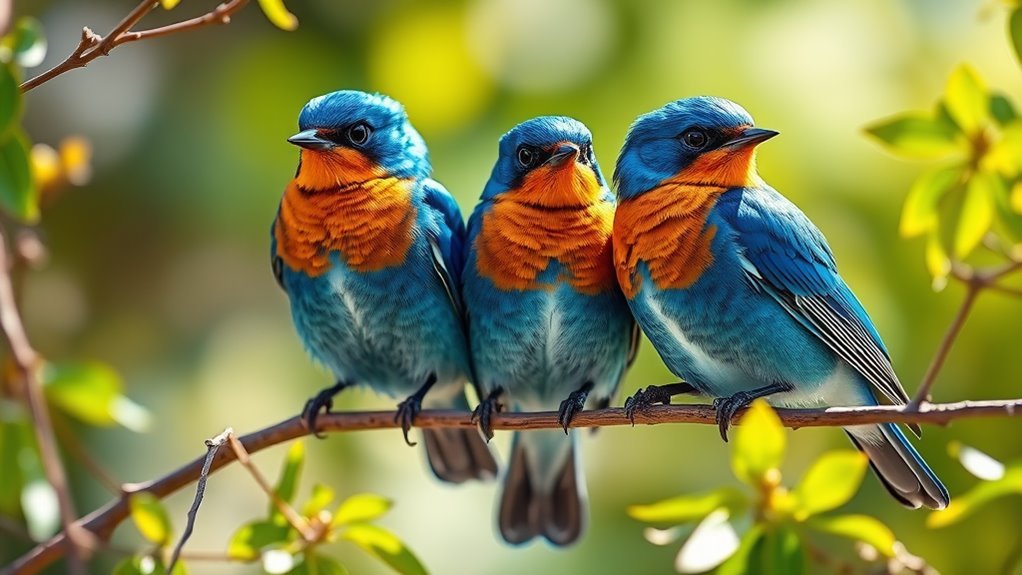
Identifying blue birds with orange chests is an enjoyable activity. You will find species like the Eastern Bluebird and the Lazuli Bunting. These birds have bright colors that catch the eye. Observing where they live and how they behave can deepen your knowledge. To tell them apart, pay attention to their specific features. Each bird has traits that show how they adapt to their surroundings. What new facts might you learn about these fascinating birds?
Key Takeaways
- The Eastern Bluebird has a bright orange chest. It usually lives in open woodlands and farmlands.
- Lazuli Buntings are small birds with orange chests. You can find them in scrublands and open fields in the western U.S.
- Both of these birds have colorful feathers that help them stand out.
- Eastern Bluebirds sing melodiously, while Lazuli Buntings sing boldly during their mating season.
- When birdwatching, look for Eastern Bluebirds in tree cavities or artificial boxes. Lazuli Buntings often stay near low shrubs.
Eastern Bluebird
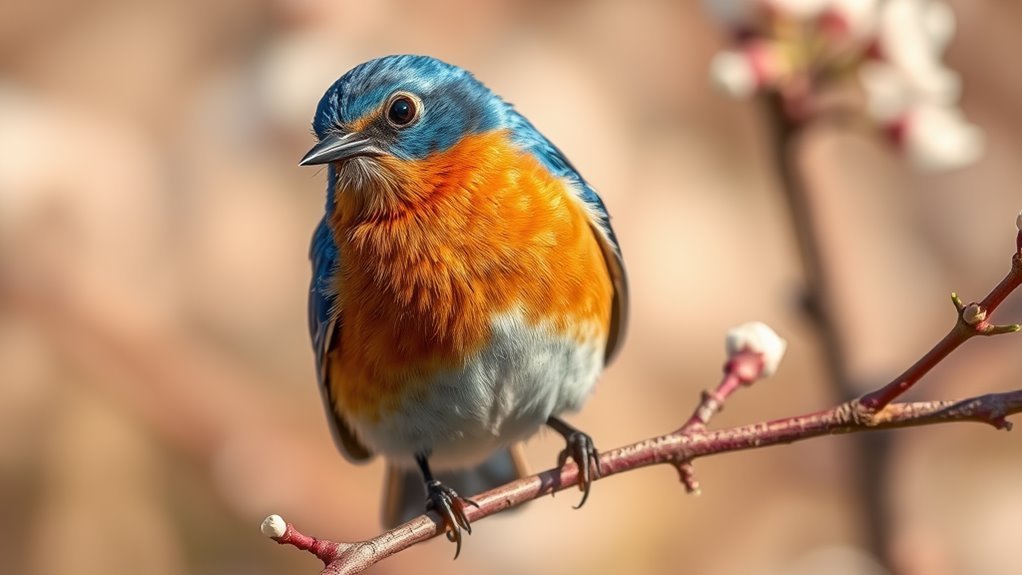
The Eastern Bluebird has vibrant colors. Its orange chest contrasts with its cobalt blue feathers.
This bird lives in open woodlands, fields, and farmlands. You can often spot them on fences or low branches. They catch insects in mid-air, showcasing their hunting skills.
Eastern Bluebirds sing melodious songs that fill their territory. They nest in tree cavities or artificial boxes, showing their ability to adapt.
Blue Grosbeak
The Blue Grosbeak is a striking bird that attracts many birdwatchers. This species lives in shrubby areas and open woodlands in the southern United States and parts of Mexico. Its habitat is vital for its survival.
When you see these birds, you'll notice their bright blue feathers and large bills, which help them eat seeds and insects.
The Blue Grosbeak has bold feeding habits, often searching for food in dense bushes. Their beautiful songs can be heard during mating season, which adds to their charm.
To see these birds, visit their favorite habitats at dawn or dusk for the best chance to spot and hear them.
Indigo Bunting
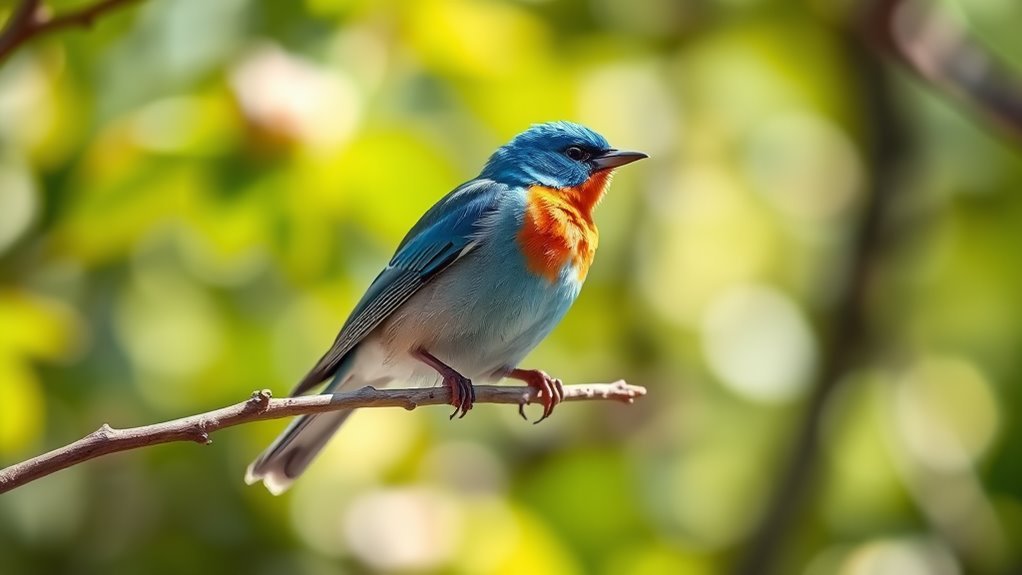
The Indigo Bunting stands out with its bright blue feathers, especially during the breeding season.
These birds prefer habitats like weedy fields, open woodlands, and shrubby edges, where they find shelter and food.
Their diet consists mainly of seeds, insects, and berries, which they eat based on what's available in each season.
Watching how they feed can help you understand their role in nature.
To attract Indigo Buntings to your yard, plant native shrubs and flowers that provide their food sources.
This connection with their environment can increase your appreciation for these beautiful birds and their importance in the ecosystem.
Tree Swallow
The Tree Swallow has beautiful blue-green feathers on its back and a white belly. This makes it easy to spot in open areas.
These birds migrate long distances to find warm weather and good places to nest. In the spring, they travel north to wetlands and fields where insects are plentiful.
Tree Swallows like to nest in natural holes or human-made structures. They build their nests using grasses and feathers.
These birds enjoy being around each other and often nest in groups, which helps them create a community. Watching how they interact and adapt to their surroundings can deepen your appreciation for these stunning blue birds.
Lazuli Bunting
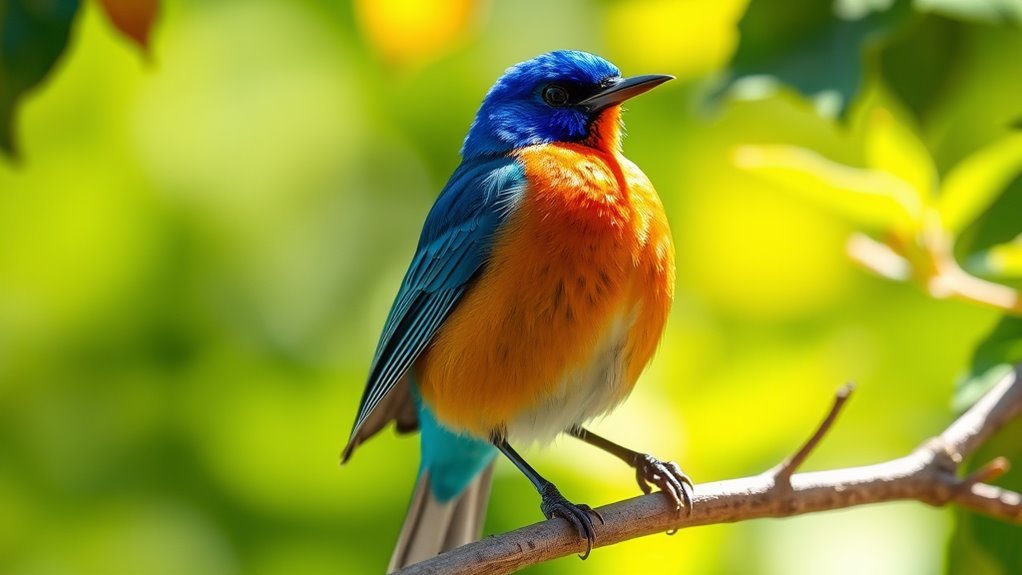
Lazuli Buntings are small birds known for their bright blue feathers and orange chests. They live in scrublands, open fields, and near streams in the western United States.
These birds are often seen near low shrubs or on the ground looking for seeds and insects. Male Lazuli Buntings sing loudly during mating season. Their songs help attract females and mark their territory.
Watching these birds in their natural environment can improve your birdwatching experience and connect you to the ecosystem that supports them.
Blue Jay
The Blue Jay is a bird known for its bright blue feathers and unique crest. It commonly appears in eastern and central North America. These clever birds live in various places like forests, parks, and neighborhoods. Their striking presence often captures the attention of people nearby.
When you watch Blue Jays, you'll see their interesting social behavior. They're curious and make loud calls, sometimes imitating other birds. This adds to their appeal. Blue Jays often feed together and store food for later use.
Barn Swallow
Barn Swallows fly swiftly through the sky. They've sleek bodies and forked tails. You can often see them flying over fields and near water, showcasing their aerial skills.
By learning about barn swallow behavior, you gain a greater appreciation for these birds. They're social and like to gather in groups, especially during migration.
Barn Swallows nest in various places, such as barns, under bridges, and in building eaves. They construct mud nests that are well-made.
They prefer nesting sites near human structures, showing their connection to our environment. By observing their behavior and habitat, you expand your knowledge and connect to the wildlife around you.
Blue-throated Hummingbird
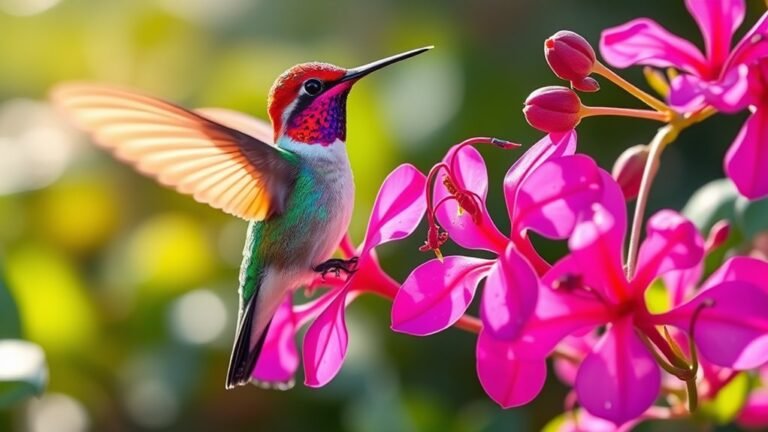
While birdwatching in your backyard or park, you may see the Blue-throated Hummingbird. To identify it, look for its bright turquoise throat and green back. These small birds live in areas with many flowers and open spaces.
- Size: About 4 to 5 inches long.
- Habitat: Prefers dry areas like canyons and woodlands.
- Diet: Mainly drinks nectar and eats small insects.
- Behavior: Known for flying displays during courtship.
- Nesting: Builds cup-shaped nests in horizontal tree branches.
Knowing these details can improve your birdwatching experience and help you appreciate nature more.
Enjoy the beauty of the Blue-throated Hummingbird!
Frequently Asked Questions
What Habitats Do These Birds Prefer for Nesting?
Birds prefer nesting habitats that provide enough materials and the right conditions for their young. They seek areas with dense foliage, nearby water sources, and protective cover. These features help create a safe environment for raising their chicks.
How Can I Attract These Birds to My Backyard?
To attract birds to your backyard, place bird feeders with their favorite seeds. You can also plant native shrubs and trees to create a natural habitat. This will make your yard inviting for birds, encouraging them to visit often. Enjoy watching them as they come to feed and explore!
What Do These Birds Typically Eat in the Wild?
In the wild, these birds eat a variety of foods. They primarily search for insects, fruits, and seeds. Their main food sources are berries and different types of insects. These foods provide important nutrients that help maintain their bright colors and give them energy.
Are There Any Conservation Efforts for These Species?
Conservation efforts are important for protecting species. Many initiatives focus on habitat protection to help these animals thrive. You can engage with local organizations and support their work. This involvement creates a sense of community and responsibility for wildlife preservation. Together, we can make a difference.
What Is the Best Time of Year to Observe Them?
To observe them effectively, focus on the spring migration period. During this time, their behavior becomes more active, which makes it easier to spot them. You will see vibrant displays and hear sounds as they return to their breeding grounds. This season is the perfect time for birdwatching enthusiasts to enjoy the sights and sounds of nature.

Ava is a bird enthusiast and nature lover who has spent countless hours observing and learning about the fascinating world of birds. With a passion for sharing her knowledge and inspiring others to appreciate the beauty of birds, Ava writes about her experiences and insights on avianadmirer.com.