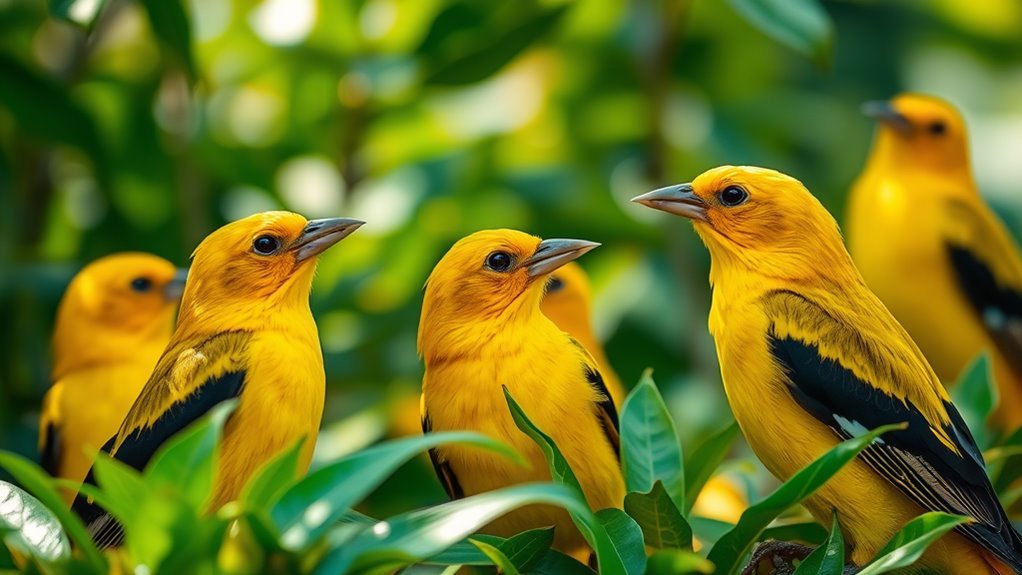
Yellow Birds With Black Wings: Species Identification Guide
When you see yellow birds with black wings, you can identify them by their unique colors and behaviors. Each species, like the Common Black-vented Oriole and the Black-winged Cuckoo-shrike, has special traits that highlight their roles in nature. These birds are not just interesting to look at; they can also show us important information about the health of our environment. What do these signs tell us about our ecosystems?
Key Takeaways
The Black-vented Oriole has a bright yellow body and black wings. It is commonly found in open woodlands and gardens.
The Eurasian Golden Oriole has a similar color pattern. This bird migrates thousands of kilometers from Europe and Asia to Africa.
The Black-winged Cuckoo-shrike stands out with its black wings and yellow body. It catches insects using a perch-and-pounce method.
Birdwatching opportunities are available in many habitats. Use field guides to identify species accurately. Familiarize yourself with their calls for better identification.
Arrive early and stay still to improve your birdwatching experience. This allows you to observe bird behaviors and interactions closely.
Overview of Yellow Birds With Black Wings
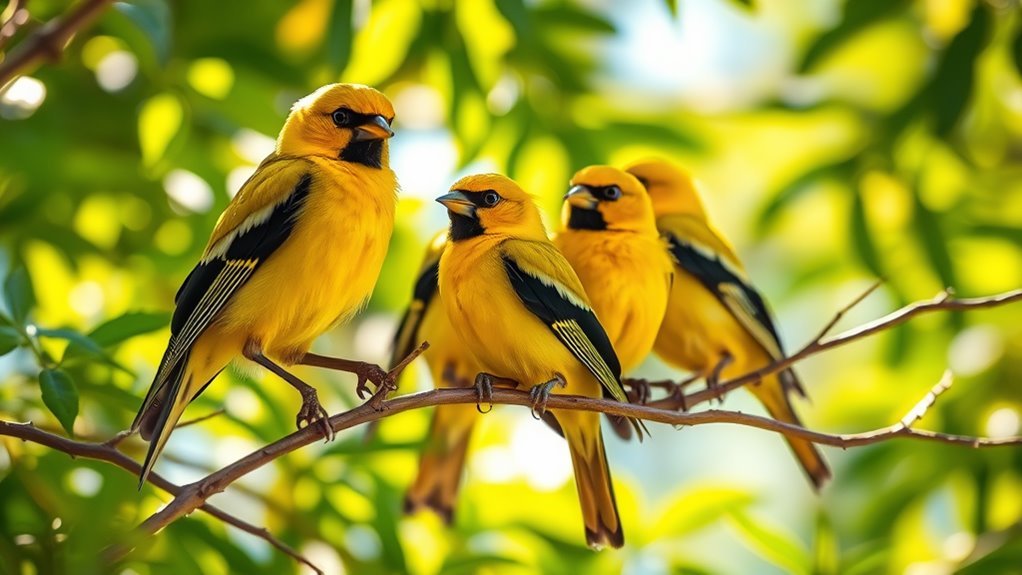
Yellow birds with black wings attract attention due to their bright colors. These birds, such as the Black-vented Oriole, are easy to spot and are popular among birdwatchers. Their unique color patterns help identify them in the wild.
Many of these birds migrate long distances. They change their routes based on the seasons and food availability. Watching their movements can show us how healthy the environment is and how climate changes affect wildlife.
Connecting with these species can deepen your appreciation for nature. Engaging with birdwatching allows you to join a community of enthusiasts who share your interest in these beautiful creatures.
Common Black-vented Oriole
The Common Black-vented Oriole (Icterus wagleri) is a beautiful bird known for its bright yellow body and black wings. Birdwatchers and nature lovers admire its striking appearance.
This bird often forages in trees and shrubs. You can find them in open woodlands and gardens. They've sharp eyesight to spot insects and fruits.
Their diet mainly consists of insects, such as caterpillars and beetles, but they also enjoy berries. This shows their ability to adapt to different food sources.
They're social birds, often seen in pairs or small groups. Their social behavior adds to their appeal, making them a joy to observe in nature.
Eurasian Golden Oriole
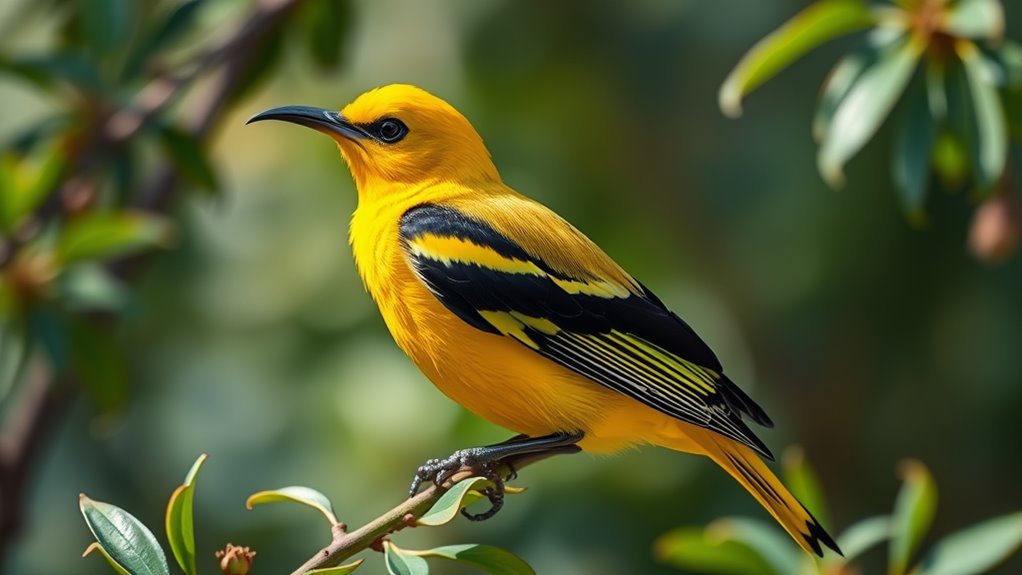
Eurasian Golden Orioles (Oriolus oriolus) stand out with their bright yellow feathers and unique black wing pattern.
They eat a varied diet that includes fruits, insects, and caterpillars, which they find in treetops during the warm months.
These birds migrate thousands of kilometers from Europe and Asia to Africa for the winter.
They change their feeding habits based on the available food during their journey.
Watching their behavior and listening to their calls helps you learn more about these beautiful birds and their important role in nature.
Black-winged Cuckoo-shrike
The Black-winged Cuckoo-shrike (Coracina melaschista) has unique features that attract birdwatchers and ornithologists. Its black wings contrast sharply with its bright yellow body. This color difference helps attract mates and warn predators.
When feeding, the cuckoo-shrike uses a perch-and-pounce method to catch insects. Its call consists of sharp notes that indicate territory.
Observing this bird can deepen your understanding of local wildlife and connect you with others who share your interest in birds.
Yellow-thighed Finch
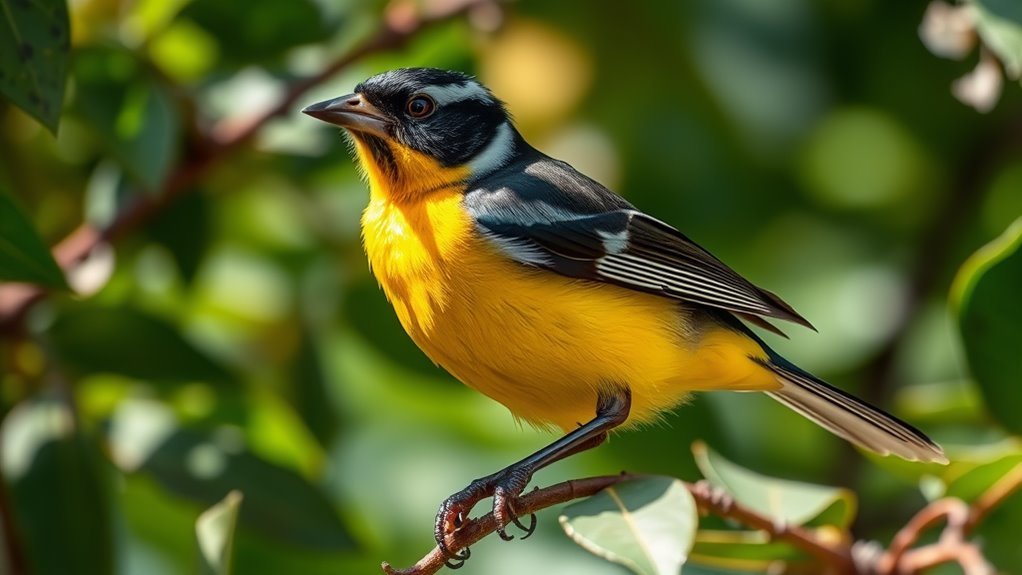
The Yellow-thighed Finch (Rhodonessa corydoras) is a colorful bird found in tropical regions.
It has bright yellow underparts and black wings, making it easy to spot once you know what to look for. However, its feathers can vary depending on its habitat, which might make identification tricky.
Here are some interesting features of the Yellow-thighed Finch:
- It displays a lively flutter of wings during its mating rituals.
- Its cheerful calls can be heard in dense forests.
- It shows playful behavior as it moves around tree branches.
- It often travels in social flocks.
- It plays an important role in its ecosystem.
Learning about the Yellow-thighed Finch is rewarding.
These birds are intelligent and fascinating, making them a joy to observe.
Lesser Goldfinch
The Lesser Goldfinch (Spinus psaltria) has bright yellow feathers and distinctive black wings.
These birds are mainly found in the western United States, where they live in various environments, including cities. They mainly eat seeds from plants like dandelions and sunflowers and often forage in groups.
Some populations migrate south during colder months to find warmer areas. Birdwatchers can identify Lesser Goldfinches by observing their feeding habits and seasonal movements.
This awareness can enhance your appreciation of these lively birds in their natural settings.
Blackburnian Warbler
The Blackburnian Warbler (Setophaga fusca) is a small songbird known for its bright colors. Birdwatchers and ornithologists admire this warbler, especially during migration. It travels from North America to Central America for the winter.
These warblers have energetic foraging habits. They find insects on leaves with skill.
- Their colorful feathers inspire awe.
- Their song brings happiness.
- Each sighting is a special moment.
- Watching their migration is a stunning event.
- You join a community of bird enthusiasts.
Learning about Blackburnian Warbler migration patterns helps you appreciate this bird and its important role in nature.
Black-and-yellow Silky Flycatcher
When you see a Black-and-yellow Silky Flycatcher (Myiarchus cinerascens), you'll notice its bright colors and quick movements.
This bird has special nesting habits. It builds its nest in thick bushes and performs rituals to attract mates. The male's vivid plumage helps draw in partners during breeding season.
These flycatchers mainly eat insects. They catch their food in mid-air with impressive speed.
They often sit on tall branches to look for insects before swooping down to grab them. Learning about these behaviors can help you appreciate these birds more and feel connected to the variety of birds around you.
Identification Features
To recognize a Black-and-yellow Silky Flycatcher, observe these key features:
- It has bright yellow underparts and striking black wings.
- A distinct black cap gives it an elegant look.
- The long, slender tail feathers enhance its graceful flight.
- It produces unique vocalizations during mating.
- Its migration patterns typically involve seasonal moves to warmer areas.
These characteristics will help you identify this beautiful bird easily.
Preferred Habitats
The Black-and-yellow Silky Flycatcher prefers subtropical and tropical forests. These areas provide dense vegetation and plenty of food, making them ideal for nesting.
The birds like to stay near streams and in tree canopies, where they build strong nests from plants. During harsh weather, they often move to lower elevations. Knowing these habitat details helps you appreciate the connection between the flycatcher and its environment.
Respecting their preferred habitats allows you to enjoy watching their captivating behavior in the wild.
Tips for Birdwatching and Spotting
To spot birds like the Black-and-yellow Silky Flycatcher, knowing their habitats is important.
Here are some tips to improve your birdwatching experience:
- Find local birding spots to visit.
- Arrive early for the best chance to see birds.
- Use field guides to help identify different species.
- Stay still to watch bird behavior closely.
- Share your birdwatching experiences with others.
Using binoculars with a good zoom can also help you see these beautiful birds better.
Enjoy your time observing and learning about birds!
Frequently Asked Questions
What's the Best Time of Year to Spot These Birds?
To spot these birds, spring and fall are the best times. During these seasons, their migration patterns align with their natural habits. Observing them in spring and fall increases your chances of seeing their colorful displays and unique behaviors. Enjoy the experience of birdwatching during these peak seasons!
Are Yellow Birds With Black Wings Endangered?
The population of yellow birds with black wings differs by region. Conservation efforts are in place to protect them. However, habitat loss is a serious threat to their survival. It is important to stay informed and support these efforts.
What Role Do These Birds Play in Their Ecosystem?
These birds are important for pollination. They help plants reproduce and increase biodiversity. Their presence shows that ecosystems are healthy. By protecting their habitats, we support the environment. This action benefits all living things, including humans.
Can Yellow Birds With Black Wings Mimic Other Bird Calls?
Some yellow birds with black wings show different calls, improving communication within their species. They can mimic sounds made by other birds. This skill helps them interact socially, attract mates, and ward off competitors in their natural environment.
How Do I Attract These Birds to My Backyard?
To attract birds to your backyard, set up bird feeders with sunflower seeds. Also, plant flowers like coneflowers. These actions provide food and shelter, making your yard a welcoming space for these birds. Enjoy watching them visit regularly!

Ava is a bird enthusiast and nature lover who has spent countless hours observing and learning about the fascinating world of birds. With a passion for sharing her knowledge and inspiring others to appreciate the beauty of birds, Ava writes about her experiences and insights on avianadmirer.com.